Commercial Roof Replacement Atlanta: Plan for Minimal Business Disruption
MEGA MEGA • November 12, 2026
Schedule your commercial roof replacement Atlanta project with minimal business disruption. Learn timelines, materials, and phased planning from local experts.

A failing commercial roof in Atlanta can shut down your daily business operations overnight. You need a fast solution that protects your stock and keeps your staff safe from the elements. A smart plan helps you avoid long delays and high repair costs.
Call 470-333-7863 today for a free commercial roof inspection and consultation. Our team will help you plan a replacement that keeps your business running.
Managing a big project requires you to think about how your building works every day. Start by understanding replacement timelines to plan the work during your slow season. The first step is to see how long each part takes.
Commercial Roof Replacement Atlanta: How Long Does a Commercial Roof Replacement Take in Atlanta?
Knowing how long a project lasts is vital for any firm. Most commercial roofing systems reach the end of their life after about 20 years. For a business in Atlanta, a new roof is a big step that needs a clear plan. We focus on giving you a firm timeline so you can keep your shop or office open.
Key Factors in Your Project Timeline
The size of your building is the main factor. A small retail shop takes less time than a huge warehouse. For example, some large jobs in the Metro area cover over one million square feet. Such big projects take more weeks than a standard roof. The type of roof you choose also matters. We work with both TPO and modified bitumen systems for our clients. TPO is light and fast to put in, while bitumen often needs more layers and care. Local weather is another thing we watch. Atlanta rain can pause a job at any time. We check the sky and plan work around the clouds to keep the building dry. High-rise buildings in Downtown Atlanta also take more time. Moving tools and items up many floors adds hours to the day.
The Value of Early Planning
To avoid a stop in your work, you must plan ahead. You should talk to your team and your crew before any tools touch the roof. The Federal Emergency Management Agency (FEMA) says that
help reduce the risk of a full stop in your business. This prep work includes getting permits and checking local building codes. Total Roof Solutions has been in this field for over 16 years. We know the rules and the ways to speed up the work. A good start prevents a loss of money later. You can learn more about
your roof to help you decide the best time to start.
Why a Clear Timeline Matters
A long delay can hurt your cash flow. If a roof is old, it might leak and damage your stock. Most systems over 20 years old will need a full change to stay safe. By setting a schedule, you can tell your staff and your customers what to expect. This keeps everyone happy and safe. Our team looks at the slope, the age, and the type of your current roof. We then give you a full plan that fits your needs. This way, you can get a new roof without the stress of a sudden shut down. We take pride in our work and our place in the Atlanta area.
A typical commercial roof replacement takes 2-6 weeks depending on building size, material choice, and weather conditions. The tear-off phase takes 1-3 days, deck prep takes 2-5 days, and membrane installation takes 3-10 days. Your project manager will give you a firm timeline after the free inspection.
Phased Project Planning to Minimize Operational Interruption
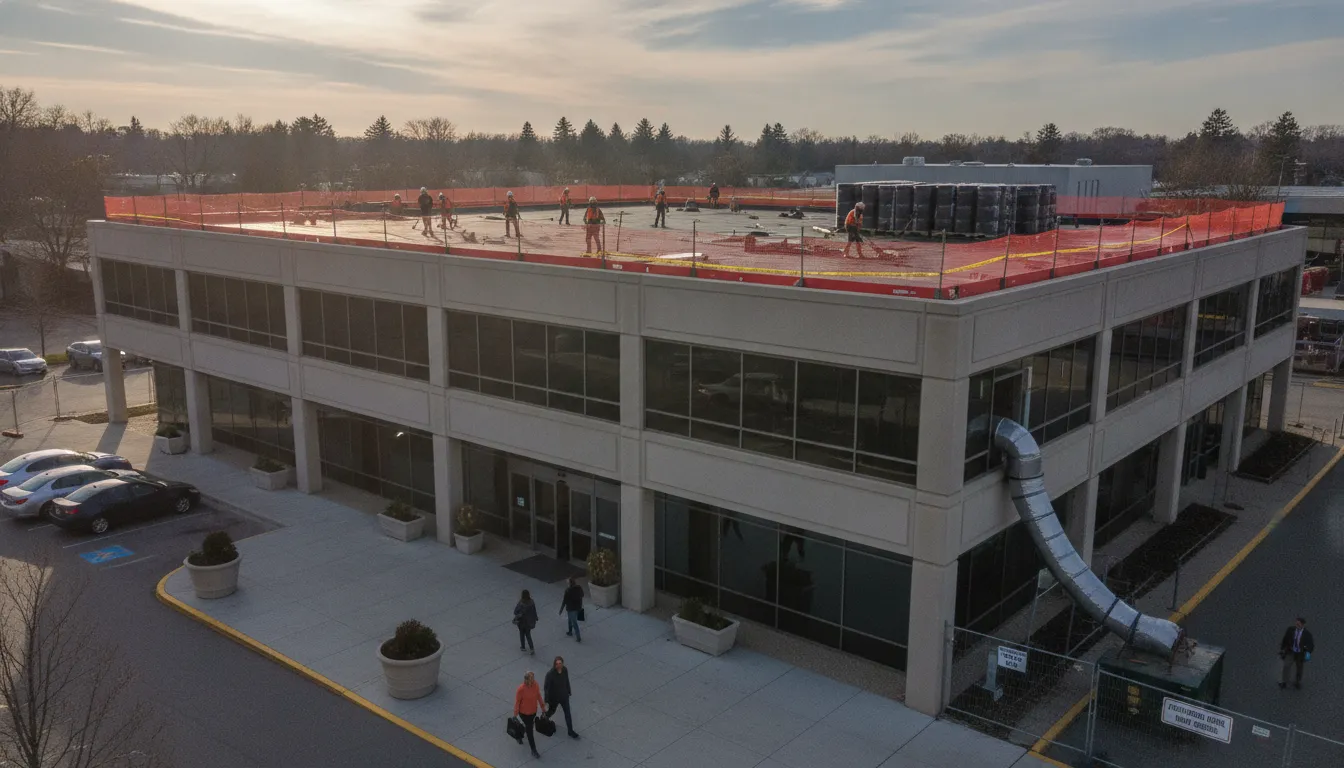
A commercial roof replacement in Atlanta can be a large task, but it does not have to stop your daily work. Good planning is the key to keeping your business open while crews are on the roof. By using a phased approach, your team can manage risks and keep your staff safe.
Strategic site assessment
The first step is a full review of your building and its daily use. A business continuity plan helps find risks to your work before the project starts. Your team should walk the site with the crew to mark busy doors and parking areas. This step ensures the work meets the 2018 International Building Code. It also helps protect your building and assets.
Phased zone approach
Instead of working on the whole roof at once, the project is split into zones. This allows your business to stay open in one area while crews work on another. Good talk with tenants and staff is vital for these projects to succeed. Crews move from one zone to the next, which keeps noise and dust away from your active spots.
- Pre-construction assessment: We review the roof slope and base to plan for permit needs and safety.
- Phased zone approach: The roof is split into sections so work stays in one small area at a time.
- After-hours scheduling: We can work on weekends or at night to avoid busy business hours.
- Weather contingency planning: We track local storms and seal the roof each day to prevent leaks.
- Final inspection and handoff: A full walk-through ensures the new roof meets all standards and warranties.
Communication and safety
Clear talk between you and your roofing partner helps minimize disruption to your company. You should give tenants and workers a clear timeline of when each zone will be under work. This helps people plan for noise or changed parking. Safety signs and clear paths keep everyone away from the work area until the job is done.
When Should You Schedule Your Commercial Roof Replacement?
Timing a commercial roof replacement Atlanta project is a vital choice for any local business owner. The local climate plays a major role in how well new roofing materials bond. It also dictates how fast work crews can finish the job. By planning your project well in advance, you can avoid the busy parts of the year. This helps keep your daily work running smoothly. Early action also helps you secure good prices for supplies before costs rise.
Yearly Weather Impacts in Georgia
The weather in Georgia can be hard on both roofing crews and the supplies they use. Spring often brings heavy rains and storms that can stall a large project for days. In contrast, the high heat of an Atlanta summer can make it hard for workers to stay safe. It also stops certain glues from setting well.
Many experts suggest setting a roof project for the late fall or early winter. These months often offer drier days and cool air that help crews work fast. Proper timing ensures the roof stays sealed from the first day of the build.
Permit Rules and Lead Times
You must also plan for the time it takes to get local state signs off. In DeKalb County, a building permit application is a needed step for any full roof project. These forms must follow the 2018 International Building Code and include specific data about your site.
Checking these factors in a commercial roof replacement early prevents delays in starting the work. A complete permit package should include several key items:
- A clear scope of work that defines the type of system being used.
- Detailed specs for the roof slope, substrate, and base layer.
- Maker details and standards for the new roofing system.
- Aerial maps or roof plans that show the current state of the building.
- Sealed drawings from a professional engineer if you plan to add new rooftop gear.
The Value of Early Planning
Waiting for a major leak to appear is a risky move that often leads to higher costs and more stress. Sudden repairs are not only pricey but can also force you to shut down your business without notice. Total Roof Solutions provides a free check to help you find small signs of wear before they turn into large failures.
This early model allows you to plan your replacement during a slow period for your business. It also gives you the peace of mind that your building meets all 2018 life safety codes and state building rules. By acting now, you protect your assets and ensure your team stays safe under a strong, new roof.
Communicating with Tenants and Stakeholders During Construction
Clear communication is the most important part of a complex commercial roof replacement. It helps keep everyone safe and allows the business to stay open. Proper planning ensures that employees and tenants know what to expect. This reduces stress and prevents surprises during the project.
Setting a Clear Timeline
You should give tenants advance notice before any work starts. For most commercial roofing projects in Atlanta, a two-week lead time is best. This gives businesses time to adjust their schedules. You must share key dates for the start of the job and the expected end date. Clear signs and emails can help keep everyone informed about the project status.
Effective communication is vital for protecting operations and life safety during a commercial roof replacement Atlanta. One client note from a multi-tenant high-rise project highlighted how rare it is to find a contractor who excels in tenant communication. When everyone knows the plan, the project moves faster and with fewer complaints.
Managing Site Safety and Noise
Safety zones must be set up to protect people on the ground. This often means blocking off certain parking spots or access points. You should talk with stakeholders about these changes early. Managing noise is also a top goal. Roofing work is loud, so you may need to plan the most noisy tasks for off-hours or early mornings to help tenants stay focused.
Debris and dust controls are also needed during the tear-off phase. Professional crews use barriers to keep the site clean and safe for the public. Following local building codes and safety rules protects both the workers and the people in the building. Clear safety protocols are a key part of any professional roofing job.
What Happens During the Commercial Roof Replacement Process?
A commercial roof replacement in Atlanta is a big project that needs a clear plan. Business owners should know what to expect to avoid stress. The work moves through a few stages. It goes from the first check to the final sign-off. Each step makes sure your building stays dry and safe. Good planning for a commercial roof replacement in Atlanta helps you keep your shop open while we work. Based on FEMA guidelines, working closely with your roofer is the best way to cut risks.
First inspection and picking supplies
The process starts with a full look at your current roof. Our team checks for leaks, soft spots, and old damage. We find out if a fix is enough or if you need a new roof. If your roof is more than 20 years old, a new one is often the best choice. At this stage, we help you pick the best supplies. TPO is a top pick because it reflects heat and resists tears. Modified bitumen is another great choice for flat roofs. We help you weigh the factors in a commercial roof replacement to find the right fit. We also provide full labor and factory warranties to protect your work.
Tear-off and deck prep
Once the parts arrive, the real work begins. The crew takes off the old roof layers down to the deck. This is a loud and busy part of the job. We clear away all trash to keep the site clean. We then check the roof deck for rot or rust. Any weak spots must be fixed or replaced before we go on. A strong deck is the base for your new roof. After the deck is ready, we add the base sheets or insulation. This layer helps with power costs. It also gives a smooth surface for the top layer. Every step must follow the 2018 International Building Code and Georgia rules.
Membrane setup and final details
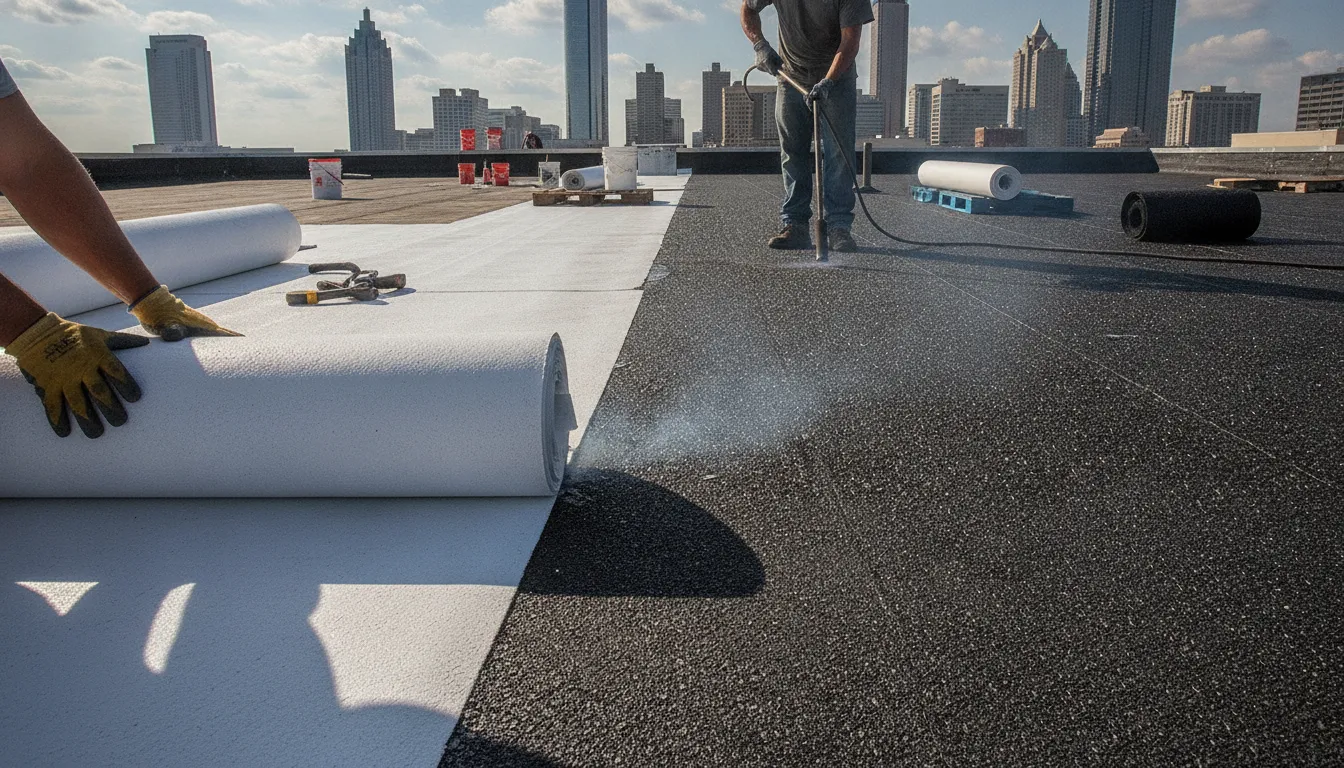
The next step is to lay the main roof layer. For TPO roofs, we use hot-air tools to weld the seams. This creates a single, waterproof sheet over your whole building. For modified bitumen roofs, we use a torch to melt the sheets onto the base. This way makes a very thick and tough seal. After the main roof is down, we work on the flashing. Flashing goes around pipes, vents, and walls to stop leaks. This is a key part of the waterproofing process. Last, we do a full walk-through. We check every seam and seal to make sure the job is perfect. We want your commercial roof replacement in Atlanta to last for a long time.
TPO vs. Modified Bitumen: Choosing the Right System
When planning a commercial roof replacement Atlanta, choosing the right material is critical for long-term performance and budget alignment. Two of the most widely specified options for flat and low-slope roofs are Thermoplastic Polyolefin (TPO) and Modified Bitumen (Mod Bit). While both offer excellent waterproofing protection, they differ significantly in their material composition, installation methods, and performance characteristics.
TPO is a modern, single-ply reflective membrane known for its exceptional energy efficiency and ease of installation. Modified bitumen, on the other hand, is a time-tested, multi-ply asphalt-based system that excels in durability and puncture resistance. Understanding how these two systems compare across key operational dimensions will help you make an informed investment for your commercial property.
Comparison Dimension | TPO (Thermoplastic Polyolefin) | Modified Bitumen (Mod Bit)
Material Composition. Single-ply synthetic rubber/plastic blend membrane (reinforced with polyester scrim).. Multi-ply asphalt modified with rubber (SBS) or plastic (APP) polymers, reinforced with fiberglass or polyester.
Installation Method. Mechanically attached, fully adhered, or induction welded; seams are hot-air welded.. Applied in multiple layers using torch-down, hot asphalt mopping, cold-process adhesive, or self-adhering sheets.
Energy Efficiency. Excellent; highly reflective white/light surface reduces cooling loads and mitigates urban heat island effects.. Moderate to low; naturally dark surface absorbs heat unless treated with a reflective mineral granule surfacing or elastomeric coating.
Puncture and Impact Resistance. Moderate; the single-ply membrane can be vulnerable to sharp debris, intense hail, or heavy foot traffic.. High; multi-ply configuration and thick bitumen layers provide superior resistance to physical damage and high-traffic wear.
Average Lifespan and Warranty. 15 to 20+ years depending on thickness (mil) and installation quality.. 20 to 25+ years due to redundant multi-ply layering and robust structural thickness.
For buildings with high solar exposure and active cooling costs, TPO is often the superior choice for a commercial roof replacement Atlanta. Conversely, for facilities with regular rooftop traffic, heavy equipment maintenance, or older roof structures requiring redundant waterproofing layers, modified bitumen remains an incredibly reliable and resilient choice.
Frequently Asked Questions
Do I need a permit for a commercial roof replacement in Atlanta?
Yes. In areas like DeKalb County, you must submit a building permit application that shows the scope of work. According to DeKalb County guidelines, this includes data about the materials and manufacturer details. All projects must follow the 2018 International Building Code and Georgia state rules. This helps ensure safety and makes sure the work meets local laws.
How much does a commercial roof replacement cost in Atlanta?
Total costs for a commercial roof depend on the building size, material choice, and current roof condition. Because every project has unique needs, professional roofers do not give fixed prices without a site visit. You should schedule a free inspection to get a clear quote for your building. This allows the contractor to find hidden issues and suggest the best roofing system for your specific budget.
Does a new commercial roof come with a warranty?
Yes. A professional roofing contractor will provide both manufacturer and labor warranties once the project is finished. Manufacturer warranties cover flaws in the roofing material itself. Labor warranties protect you against errors during the work. These guards help keep your new roof secure for many years. Always review these papers carefully to understand what specific parts and services are covered.
Can I keep my business open during a commercial roof replacement?
Most businesses can stay open if the contractor uses a phased plan. This way of working allows the crew to finish one part of the roof at a time. This limits noise and keeps doors clear. According to FEMA guidelines, good talks between the owner and the roofer are vital to keep your business running. Proper planning helps you avoid big stops to your daily work while the new roof is put in place.
When should I consider a commercial roof replacement?
You should think about a new roof if your current system is more than 20 years old or shows signs of major leaks. Roofs that have reached this age often need total replacement to prevent damage to the building. Regular checks can find small issues before they become big leaks. If repairs are no longer enough to stop water from entering, it is time to look at a full replacement.
Plan your Atlanta commercial roof replacement today
Waiting until the next big rain to check your roof could lead to sudden shut downs, lost sales, and costly repairs that take many weeks. A small leak now can grow into a major problem that hurts your building and your income if you do not fix it soon. By choosing to act today, you can get a new roof on your own time instead of waiting for a bad leak to stop your work. Our local crew knows how to keep your site safe and dry so that your staff and guests stay happy while we finish the job. Our commercial roofing services focus on keeping your site open so the work does not get in the way of your daily needs.
Ready to schedule your inspection? Call 470-333-7863 to schedule a free commercial roof inspection and consultation today.
Choosing Roofing Materials for Georgia Heat and Storms: Best Roofing Materials for Residential Homes