What to Do If Wind Blows Shingles Off Your Roof
MEGA MEGA • November 9, 2026
Learn what to do if wind blows shingles off your roof: protect people and belongings, document visible damage, and arrange a safe roof assessment.

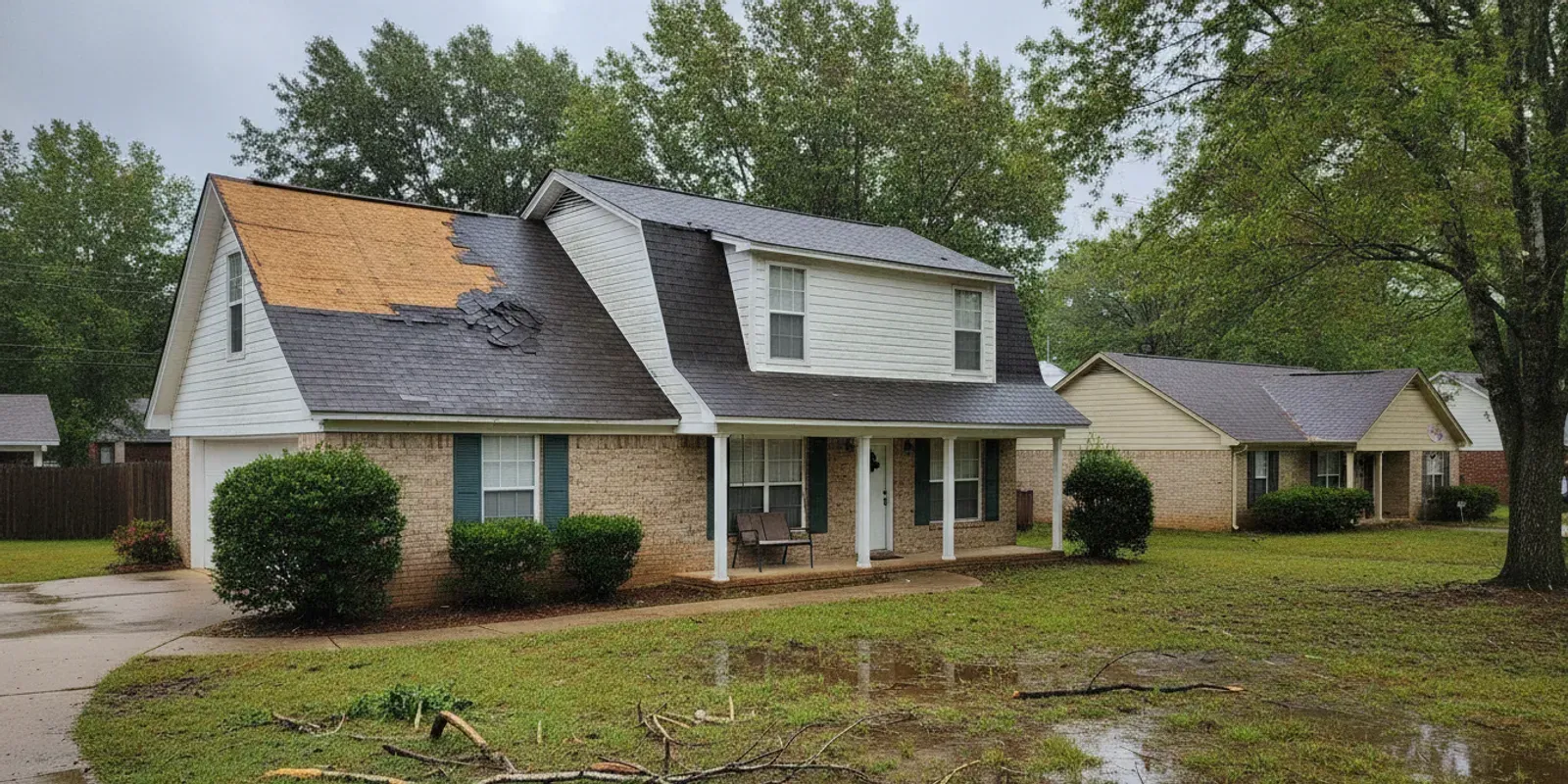
If you are asking what to do if wind blown shingles off roof, start by protecting people and preventing further indoor damage. Wind may expose underlayment or decking, but a view from the ground cannot reveal the full condition of the roof. Do not climb up to count shingles or attempt a rushed repair. Take safe steps indoors, record what you can see, and arrange a professional assessment.
What should you do first after shingles blow off?
Check for hazards before looking for damage. If a power line is down, stay far away from the wire and any debris it may touch. Keep children and pets inside. Avoid standing under a sagging roof edge, hanging branch, or section where loose roofing could fall. If a tree or large limb is on the house, do not approach it to inspect the roof.
If water is entering, move people and valuables away from the affected room. Place a bucket under a drip only if there is no sagging ceiling above it and you can reach the spot safely. Move furniture, electronics, rugs, and other belongings out of the way. If water is near a light, outlet, or appliance, avoid touching the equipment and stay clear of the area. Leave the room if the ceiling is bulging or appears unstable, and seek appropriate emergency help if conditions warrant it.
Ready.gov’s emergency preparedness guidance emphasizes making safety the priority during and after severe weather. That matters more than getting a close-up photo or protecting a possession. A roof assessment can wait until conditions are safe.
How can you check visible damage without climbing?
Look from inside the home, through a window, or from a safe place in the yard. Binoculars or a phone camera’s zoom may help you see the roof surface without approaching it. Note missing or lifted shingles, exposed dark areas, damaged flashing, branches, or roofing pieces on the ground. This is a preliminary observation, not a complete inspection: some damage is not visible from below.
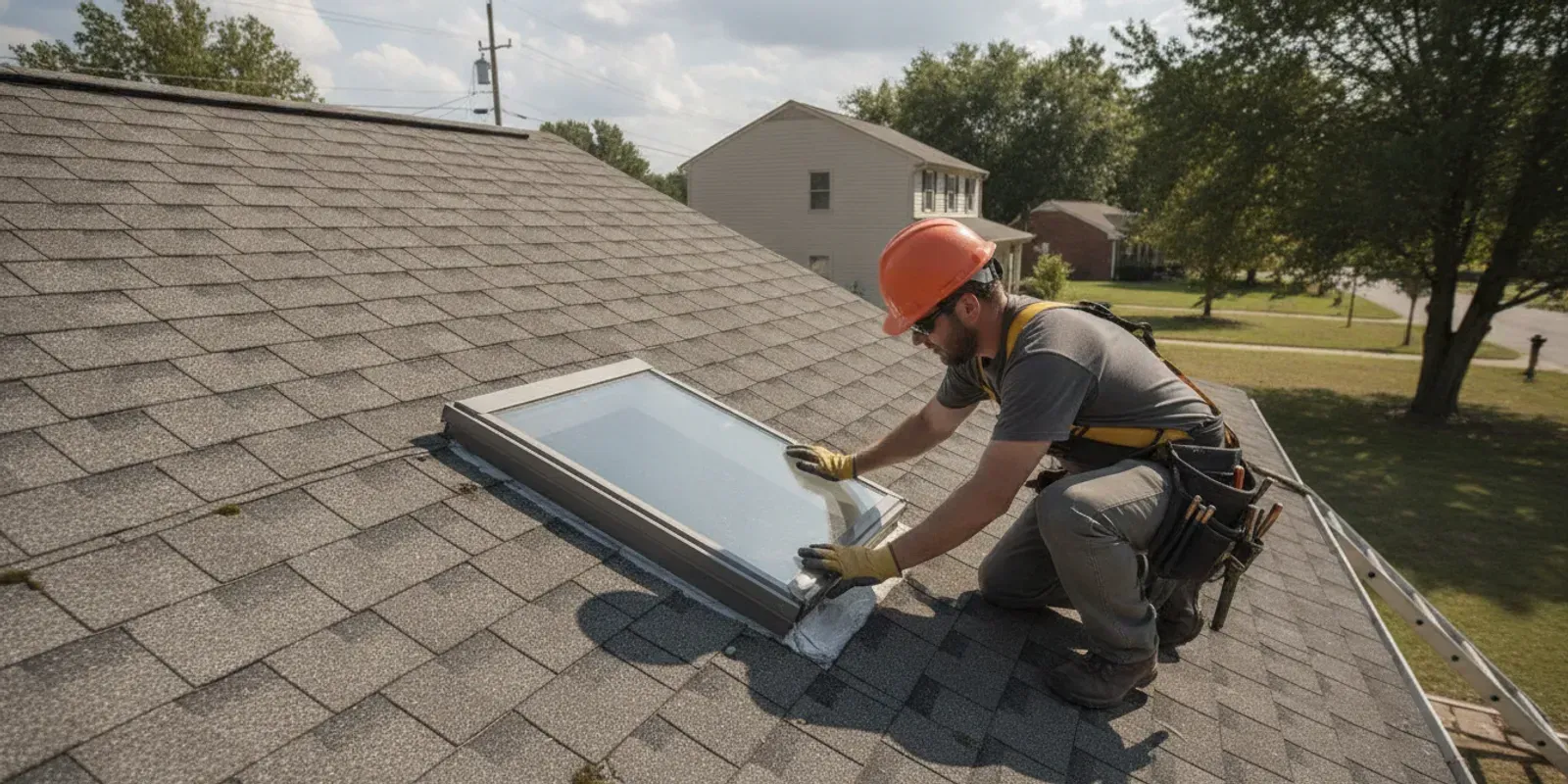
Do not climb a ladder, walk on the roof, pull on loose material, or try to retrieve fragments. Wind can loosen shingles beyond the obvious opening, and a wet or debris-covered surface can be difficult to navigate. A ladder near a damaged edge is not a safe shortcut. Leave fallen branches in place if reaching them would put you beneath a damaged roof or near electrical hazards.
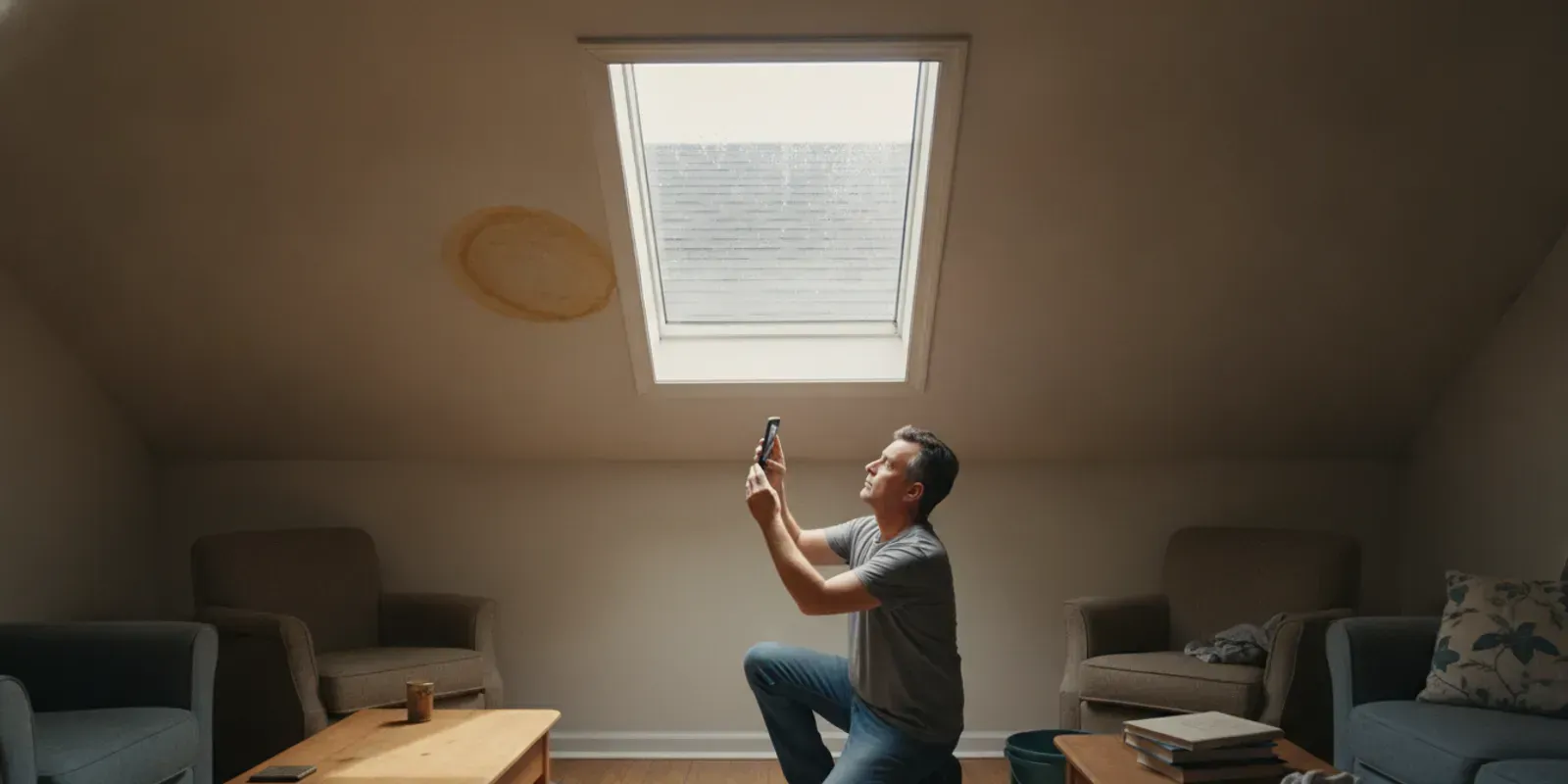
From inside, check ceilings and upper walls below the affected roof area. Look for new stains, damp drywall, peeling paint, or water around a chimney or skylight. A stain’s position does not necessarily identify the exact roof entry point; water can travel along framing before appearing indoors. If you need help understanding the clues, read this guide to finding a roof leak.
What should you document for the roofer and insurer?
Once the area is safe, make a short record while the details are fresh. Write down the storm date and approximate time, when you first noticed the damage, whether rain entered, and which rooms or belongings were affected. Take pictures from safe locations only. Do not risk a fall to capture a better angle.
- Photograph visible roof damage from more than one safe position, if possible.
- Photograph roofing pieces or branches on the ground, plus interior stains and damaged belongings.
- Keep the original images and note when you took them.
- List the rooms and items affected, and note what you moved or covered.
- Save receipts for reasonable emergency supplies or temporary mitigation.
Keep estimates, invoices, messages, and claim correspondence together. If you contact your insurer, ask what steps and records it requires. Coverage depends on the policy and the insurer’s review of the cause and extent of damage. A roofer can describe observed conditions, but does not decide whether a claim is covered. See what to check about wind damage and insurance for questions to raise with your insurer.
What can you do about a leak while waiting for help?
Focus on interior protection rather than roof repair. Move belongings, set a container under a drip when safe, and use towels or plastic sheeting to protect items. Empty a bucket as needed. If water is spreading near electrical fixtures, do not remain in the area to manage the leak. Avoid placing a container beneath a ceiling that is sagging or bulging.
Do not climb onto the roof to spread a tarp or nail down a shingle. Exterior tarping requires access and secure fastening, and a storm-damaged surface may be wet, loose, or unstable. Applying roofing cement as a hurried permanent fix may conceal damage or complicate later work. Ask a qualified professional whether temporary exterior protection is appropriate and what it can reasonably protect.
Temporary stabilization and permanent repair serve different purposes. Stabilization aims to reduce exposure until the roof can be assessed and lasting work arranged. It may not address nearby shingles, flashing, underlayment, or decking. Ask which area is being covered, what conditions could limit the protection, and whether a follow-up visit is needed. If water has reached the interior, review roof leak repair considerations.
How soon should you arrange a roof assessment?
Contact a roofing professional promptly when you see an opening, notice water entering, or expect more rain. When you call, describe the property location, visible damage, interior water, and any hazards such as a fallen branch or downed line. Share only photos taken from a safe location. Ask whether the company serves your area and whether it can discuss emergency stabilization, roof tarping, or wind damage repair.
A professional can check surrounding shingles and roof components that cannot be evaluated from the ground. Homeowners can learn about residential roof repair and roofing service in Henry County. If you are outside that area, ask directly whether your address is within the service area.
Missing shingles alone do not prove that the whole roof needs replacement. The appropriate scope depends on the number and location of affected areas, the condition of nearby materials, and what an on-site assessment finds. Ask the roofer to explain why a targeted repair, broader repair, or replacement is being considered. This repair and replacement overview can help you prepare questions, but a general guide cannot diagnose your roof.
How do temporary protection and permanent repair differ?
Temporary protection
A temporary measure is intended to reduce additional exposure while you wait for assessment or lasting work. It might involve covering a particular opening or containing water indoors. Ask what exact area is covered, how the work is secured, and what weather or roof conditions may limit it. Treat it as a short-term bridge, not proof that the roof is fully repaired.
Targeted shingle repair
If the damage is limited and surrounding roofing is suitable, a contractor may recommend replacing affected shingles or repairing a related component. Ask how nearby shingles, flashing, underlayment, and any visible decking will be checked. A small visible gap does not guarantee that only a small area was affected, so ask what the inspection found beyond the opening.
Broader repair or replacement
More extensive damage or other observed wear may lead to a broader scope. Ask which conditions make a small repair unsuitable, and whether the recommendation addresses storm damage alone or additional issues. Request a written scope that identifies the areas and materials included. Ask what hidden conditions could change the work and how any change will be discussed. You can view examples of roofing projects in the project gallery, but the right plan for your home depends on its own assessment.
What should you ask before work begins?
Before authorizing work, make sure you understand its purpose and limits. Useful questions include:
- Which roof areas and components show damage, and how were they assessed?
- Is this visit for temporary stabilization or permanent repair?
- What does the written scope cover, and what does it leave untouched?
- Which materials and labor are included in the estimate?
- Could hidden conditions change the scope, and how will that be explained?
- What photos, receipts, or other records should I keep?
- If temporary protection is installed, what follow-up work may still be needed?
Request a written description and keep copies of estimates, messages, and invoices. Do not sign blank forms or agree to work you do not understand. If you are making an insurance claim, ask your insurer about required documents and claim steps. The roofer can describe what is visible and what work is proposed; the insurer makes its own coverage determination.
How can you prepare for another storm?
After immediate damage is addressed, note any recurring leaks or shingles that have lifted or shifted and discuss them during maintenance. Keep gutters clear only when this can be done safely from the ground or by a qualified person. Have branches that threaten the home evaluated and trimmed safely. Do not climb or use tools near overhead wires.
Keep a basic response kit somewhere accessible: a flashlight, towels, a bucket, plastic sheeting for belongings, and a folder or digital location for photos and receipts. These items do not prevent roof damage, but they make a first response more organized. Identify rooms beneath roof areas that leaked before, and consider moving valuables away if severe weather is expected.
Routine maintenance cannot make a roof storm-proof. It can help you notice concerns before the next storm and give you a useful history when discussing repairs. If you are unsure about the roof’s condition, ask about an appropriate assessment rather than waiting for water to appear indoors. Homeowners seeking an estimate can review how to request a roof estimate.
What common mistakes should you avoid?
Stress after a storm can make a quick fix seem appealing. A short pause to check the risks can prevent a minor property problem from becoming a more serious one. Avoid these common missteps:
- Going onto the roof to count losses. A ground view may be incomplete, but climbing creates a fall risk and is not required before calling for help.
- Waiting for a ceiling stain before acting. An exposed roof area can admit water even if no interior mark is visible yet. Arrange an assessment when you see a gap, rather than treating the absence of a stain as proof that the roof is dry.
- Assuming one missing shingle means replacement is necessary. The visible damage alone cannot determine the full scope. Ask for an explanation based on the roof’s condition.
- Assuming a temporary cover completes the repair. A cover may reduce exposure but leave other components unchecked. Confirm what permanent work, if any, remains.
- Discarding records or making a coverage assumption. Keep images, receipts, estimates, and insurer communications; ask the insurer directly about the policy and process.
These distinctions keep decisions grounded in what is actually known. You can act promptly without making a permanent repair decision from a few shingles on the ground.
Frequently asked questions about shingles blown off by wind
Should I go onto the roof to see how many shingles are missing?
No. The roof may be wet, unstable, or more damaged than it appears from below. Take safe photos and arrange for a qualified professional to assess it.
Can I put a tarp over the damaged section myself?
Do not climb onto a roof to install a tarp. Protect belongings indoors and ask a professional whether temporary exterior protection is appropriate and what it can cover.
Will homeowners insurance pay for missing shingles?
Coverage depends on your policy, the cause, and the insurer’s review. Document what you observe and ask your insurer about its process rather than assuming a particular repair will be covered.
Do a few missing shingles mean I need a full replacement?
Not necessarily. The right scope depends on the damage and the condition of surrounding roofing. Ask for an explanation of the repair and replacement options after an assessment.
What if I cannot see a hole but notice a ceiling stain?
A stain can indicate water intrusion even when no opening is visible from the yard. Document it, keep people away from any sagging ceiling, and arrange an assessment to trace the source safely.
When wind removes shingles, protect people first, limit interior damage without taking roof-access risks, and document what you can safely see. Prompt professional assessment can clarify whether temporary protection or lasting repair is appropriate.