Skylight Replacement Service: When to Call a Professional
MEGA MEGA • November 4, 2026
Learn when a skylight replacement may be better than a patch, what roof and interior work can involve, and how to compare a clear, useful estimate.

A skylight replacement service may be worth considering when a leak returns, the unit is visibly damaged, or the skylight no longer fits the condition of the roof around it. But a water stain by itself does not prove the skylight has failed. A useful decision starts by identifying the source, then comparing a focused repair with replacement of the unit and the roof connections around it.
When is replacement more sensible than another repair?
Replacement deserves consideration when the problem appears to involve the skylight itself, when the same leak keeps returning after repairs, or when the roof work needed to address the issue is extensive enough that a new unit should be evaluated too. A repair may still be appropriate if the unit is sound and the defect is limited and identifiable. A roofer needs to examine the actual conditions before recommending either option.
Start with the history, not a guess about the cause. Note when the water appears, where it first becomes visible indoors, whether the symptom changes with weather, and what repairs have already been attempted. For example, a drip that returns at the same corner after a sealant application is useful evidence to share, but it does not establish whether the source is the skylight, flashing, nearby shingles, or another roof detail.
- Repeated leaks: Water returns after a prior repair, especially when the earlier work addressed only an exposed seam. The contractor should investigate the water path and explain what the earlier repair did and did not cover.
- Visible unit damage: Cracked glazing, a damaged frame, or an opening mechanism that no longer works may make a surface patch an incomplete answer. Ask whether the part can be repaired and whether the proposed work preserves the unit's intended operation.
- Age-related deterioration: If several parts of the assembly show wear, ask whether isolated work is likely to address the concern or whether replacement should be compared as an option. Do not assume age alone decides the question.
- Roof work is already planned: A roofing project is a practical time to assess how the skylight and flashing meet the roof covering. Coordination does not mean the skylight must automatically be replaced.
- Interior symptoms continue: Staining, bubbling paint, softened drywall, or a musty odor near the opening calls for investigation. Interior damage can show where water became visible without revealing where it entered.
A repair-versus-replacement decision is strongest when it names the diagnosed problem and describes how the work addresses it. If the source is uncertain, ask what evidence would help establish it. Repeating a patch without understanding why the previous one did not hold can leave the underlying issue unaddressed. For a broader look at roof work decisions, see this guide to balancing roof repair and replacement.
What can cause moisture around a skylight?
A skylight is more than glass. It sits in a roof opening, and water management depends on the unit, flashing, underlayment where applicable, roof covering, and installation details working together. Water may enter at the transition around the unit, beneath roofing material, or higher on the roof and travel before appearing indoors. As a result, a ceiling stain beside a skylight does not always point directly to a failed skylight.
Flashing helps direct water around the opening and onto the roof surface. Its configuration depends on the unit, roof slope, roofing material, and installation. A bead of sealant on an exposed edge may hide a symptom without correcting a connection beneath the shingles. The reverse is also possible: a flashing problem may be repairable while the skylight itself remains in usable condition.
Moisture on the room-facing side of the glazing may be condensation rather than rain entering through the roof. Indoor humidity, ventilation, and temperature differences can affect condensation. Record whether the moisture appears during or after rain, in cold weather, or at times when there has been no precipitation. Note whether it covers the interior surface or appears as a localized drip. Those observations are clues to discuss, not a home diagnosis.
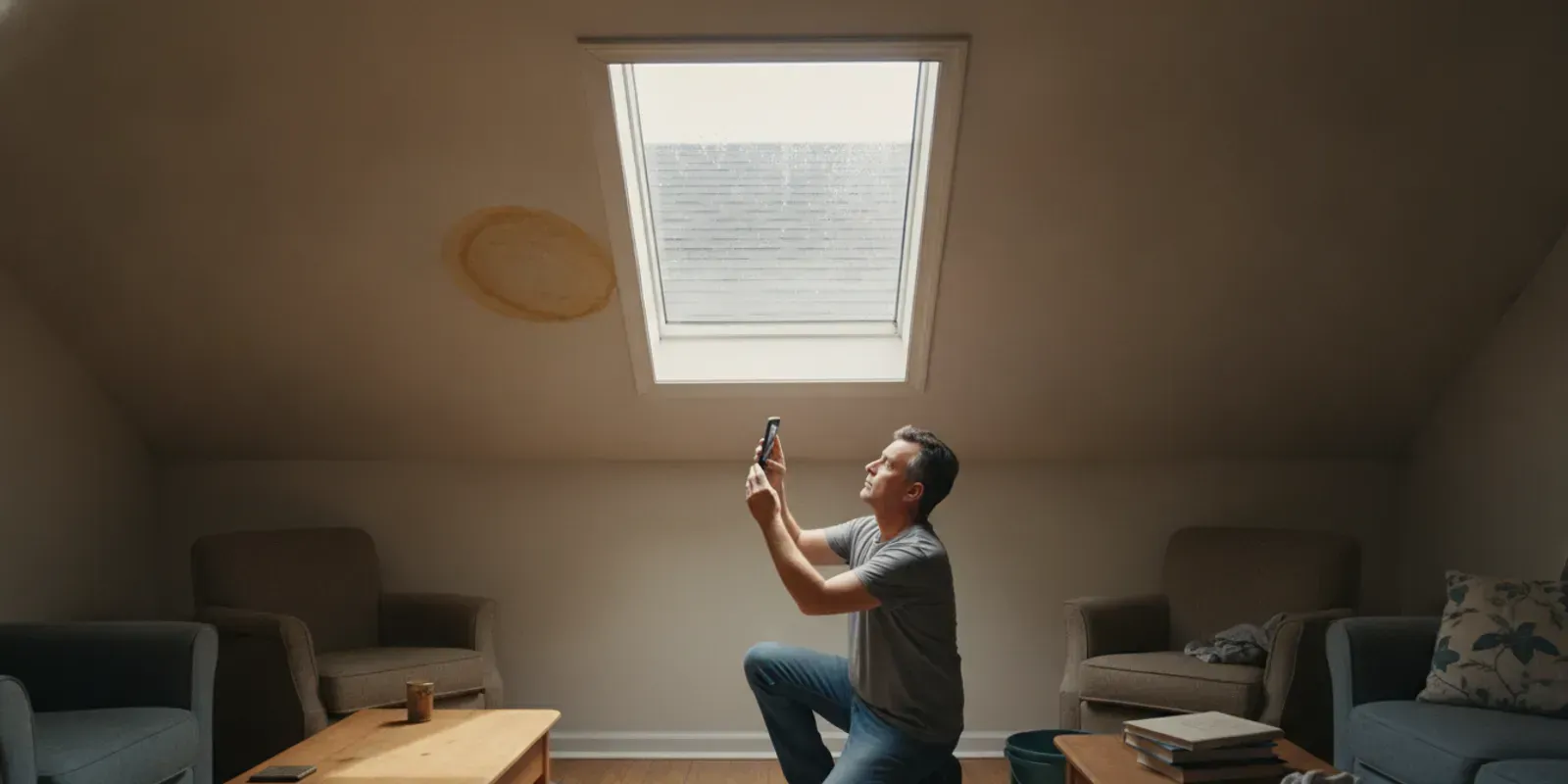
Photograph visible interior symptoms from a safe location and note the date and weather. Do not climb onto the roof, remove shingles, or pull apart trim to look for the source. Water can travel along framing, and opening a roof assembly without a repair plan can expose the home to more moisture. The company’s skylight leak repair guide and guide to a leak around a skylight offer additional context for recognizing and documenting symptoms.
What does a skylight replacement project need to address?
The exact work depends on the existing unit and roof. A clear proposal should distinguish the replacement unit from removal, roof integration, flashing, interior finishing, and any additional work that may be needed if concealed damage is found. Ask the contractor to describe the scope for your home rather than assuming every installation follows the same sequence.
Assess the unit, roof, and water path
Explain the symptoms, prior repairs, and what you can see indoors. The contractor can examine the skylight and accessible surrounding roof details to determine what the evidence supports. Ask what was inspected and what remains uncertain. A stain may be old, a leak may be intermittent, and some damage may not be visible until materials are removed; a responsible recommendation should make those limits clear.
Confirm what unit is being proposed
Ask for the product or unit details, including whether it is fixed or operable, and whether the proposal assumes the existing opening will remain. Do not treat “new skylight” as a complete specification. If the replacement dimensions, frame, or installation requirements differ from the existing unit, the opening may need changes. Ask what those changes would involve and whether framing or interior work is included.
Product fit should come before preferences about appearance. The roof opening, roof construction, and installation requirements constrain the choices. Discuss how the room is used and whether you want the skylight to open, but ask the installer to explain which options are suitable for the actual opening. The skylight installation guide can help you prepare questions about planning and fitting a unit.
Plan removal and concealed-condition decisions
When the old assembly is removed, the contractor may see parts of the roof opening that were previously covered. Ask how deteriorated materials or other unexpected conditions will be documented, priced, and approved before additional work begins. Clarify whether the estimate includes an allowance for any such work or excludes it. Agree on how the opening will be protected if weather interrupts the job.
This is a useful point to settle communication and authorization. For instance, ask who will contact you if the crew finds damage, what photographs or explanation you will receive, and whether work will pause until you approve the added scope. A written process helps avoid a surprise change being treated as an already-approved decision.
Integrate flashing and roofing materials
The replacement should function as part of the roof, not simply as a new piece of glazing. Ask how flashing will connect to the unit and surrounding roof covering, what underlayment or related components are included where applicable, and how the roof surface will be restored. If shingles will be lifted, replaced, or reused, clarify the limits of that work and what happens if nearby materials cannot be reused.
Roof slope and covering matter. A detail appropriate for one type of roof is not automatically appropriate for another. If the skylight is on a low-slope roof or a roof with a material other than asphalt shingles, mention that when requesting an estimate. Homeowners with a low-slope opening may find the flat-roof skylight buyer’s guide useful when preparing questions about unit and roof compatibility.
Set expectations for interior finishing and cleanup
Some replacement work leaves interior trim and drywall undisturbed; other work may require repairs or finish work. Ask whether trim, drywall, paint, and cleanup are included, excluded, or priced separately. If there is already staining or damage, photograph it before work starts and agree on what the project is expected to change. A roofing estimate may not include restoration of every interior surface, so do not infer that it does.
Ask how roofing debris will be collected and what the crew will check at the end of the job. Clarify who to contact if you have a question about roof work versus interior finishing. These details help define what a completed project means to both parties.
How should you compare repair and replacement options?
Compare the work being proposed, not only the total amount. A repair estimate and a replacement estimate may address different causes or include different materials and finish work. Before choosing, ask each contractor to identify the suspected source, explain the proposed response, and list what is outside the scope.
When a focused repair may be worth discussing
A repair may be a reasonable option when inspection identifies a limited defect, the skylight remains in serviceable condition, and the surrounding roof materials can be addressed without replacing the full unit. Ask what is being repaired, how that work connects to the suspected entry point, and what signs would indicate that further work is needed. Avoid treating a low initial price as proof that the cause has been addressed.
When replacement deserves a side-by-side estimate
Ask for a replacement option when the unit is damaged, recurring problems persist, or significant work around the opening is required. The comparison should state what the new unit is, whether the opening changes, how flashing and nearby roofing are addressed, and what interior work is included. If a roof replacement is also planned, ask for the skylight as a clearly separated option so you can understand the combined and individual scopes.
Questions that make estimates easier to compare
- What condition or evidence led to this recommendation?
- Which unit or repair materials are included, and what details identify them?
- Does the scope cover removal, flashing, underlayment where applicable, and surrounding roof materials?
- Are opening changes, disposal, interior trim, drywall, or painting included?
- What exclusions or assumptions could change the work?
- How will concealed damage be documented and approved before added work?
- What product and workmanship warranty information applies, and who provides it?
- How will the opening be protected if weather affects the work, and what cleanup is included?
A proposal that explains assumptions can be more useful than a vague promise to cover every possible condition. If one contractor includes interior finishing and another excludes it, clarify that difference before comparing totals. If a recommendation does not explain how it addresses the suspected water path, ask for a clearer scope before deciding.
How do these comparisons work in common situations?
Example: one damp corner after a storm. If moisture appears once near a skylight after wind-driven rain, the next step is not to assume the unit needs replacing. Record the date, weather, and exact location, then ask the roofer to assess the skylight and the adjacent roof details. If the assessment identifies a limited flashing or roofing issue and the unit is sound, a focused repair may be the relevant option. The estimate should still describe the repair area and how it will connect to the surrounding materials.
Example: the same leak returns after patching. If a repair was made but water reappears in the same area, share the previous scope and any photos. Ask what was addressed before and what additional inspection may reveal. A new estimate should explain why it proposes another repair or why it now recommends replacement. Compare the diagnosis and scope, not simply whether the new proposal uses a different product.
Example: roof replacement is already planned. Ask for a separate skylight option alongside the roof proposal. One scope might retain a serviceable unit and integrate the new roof materials around it; another might include a replacement unit and any necessary opening or interior work. Request the cost and exclusions for each approach, along with the effect on flashing and finish work. That lets you consider the skylight on its own merits instead of treating it as an automatic add-on.
These examples are not diagnoses. They show why the same visible symptom can lead to different scopes once the roof and unit are examined. If a contractor cannot yet confirm the source, ask what is known, what is uncertain, and whether the estimate is conditional on findings during removal. That distinction makes it easier to compare proposals fairly and to decide what approval is needed if the work changes.
What should you gather before asking for an estimate?
You do not need to diagnose the problem, climb onto the roof, or measure the opening. A concise record of the symptoms and the history can help the contractor understand what to assess. Collect what is available and say when you are unsure.
- Describe where moisture appears. Note whether it is on the glazing, frame, nearby ceiling, or trim. Identify the first place you noticed it and whether the area has changed.
- Record timing and weather. Write down dates and whether the moisture appeared during rain, after rain, in windy conditions, or when there had been no recent rain. Do not assume the pattern proves a particular cause.
- Take safe photographs. Photograph interior stains, damaged trim, or visible unit damage from indoors or another safe location. Do not go on the roof for pictures.
- List past repairs. Include approximate dates, what was done, and whether the symptom returned. Keep invoices or product paperwork available if you have them.
- Share roof information you know. Mention the approximate roof or skylight age, roof covering, and whether roof work is already being considered. Exact details are helpful but not required.
- Explain your goal. Say whether you are trying to stop an active leak, address damage, change how the skylight operates, or coordinate the work with a roof project.
- Ask what the estimate covers. Request written clarity on the unit, removal, flashing, roofing, interior work, disposal, exclusions, and approval of additional work.
If active water is coming in, protect people and belongings first. Move items if it is safe, and use a container to catch drips. Keep away from wet electrical fixtures, sagging ceilings, or areas that may be unstable. Do not puncture a bulging ceiling, climb onto a wet roof, or apply another exterior patch without a safe plan. For general roof-leak precautions, review what to do first when a roof leaks and how to document a roof leak.
Should you replace a skylight during a roof replacement?
It can be practical to discuss both projects together, because the roof covering and skylight flashing meet at the same opening. But a new roof does not automatically require a new skylight. Ask whether the current unit is sound, whether the planned roofing work can integrate with it, and what additional work replacement would involve.
Request the alternatives in writing: retain the existing unit and address the roof connection, or replace the unit as part of the roofing project. Ask what each option means for flashing, surrounding materials, opening changes, interior finish, and future access for service. A decision made before the roofing scope is finalized can make the proposal easier to understand. For residential roofing context, see Total Roof Solutions’ residential roofing page.
For general background on home energy efficiency, the U.S. Department of Energy offers homeowner information at Energy.gov. Use broad guidance as a starting point rather than as a product recommendation: the right skylight and installation depend on the home's roof, room, opening, and project requirements.
How can you choose a next step?
Begin with a safe record of what you observe: where moisture appears, when it happens, and what repairs have already been tried. Then ask a roofing professional to assess the skylight as part of the roof assembly. If replacement is recommended, compare the unit, flashing, roof integration, interior finish, exclusions, and warranty details in the written scope.
Total Roof Solutions provides roofing services in McDonough and surrounding Georgia areas. You can review its roofing project examples and request a free roof estimate to discuss the conditions at your home. Be specific about what you have observed and ask which parts of the skylight and roof would be included in the assessment.
Talk with Total Roof Solutions about your roof
Frequently asked questions about skylight replacement service
Does a leaking skylight always need replacement?
No. The cause may be flashing, nearby roofing, condensation, or another roof detail, and the unit may still be serviceable. Ask for an assessment that explains the evidence and compares repair with replacement when both are reasonable options.
Can a skylight be replaced without replacing the roof?
Sometimes. Whether a separate replacement is practical depends on the roof condition, the skylight installation, and the surrounding materials that need attention. Ask what roof work is included and whether a larger roofing project affects the recommendation.
How long does skylight replacement take?
There is no single timeline for every project. The scope, access, roof materials, weather, concealed conditions, and interior finishing can affect the schedule. Request an estimate based on the proposed work and ask how the opening will be protected if weather changes.
What should a skylight replacement estimate include?
It should identify the proposed unit, removal and installation, flashing and roof integration, disposal, interior finishing, exclusions, and how additional work will be approved if hidden damage is found. Ask for applicable warranty information and clarity on who handles each part.
Is it safe to inspect the skylight from the roof?
Do not climb onto a roof to investigate a leak or take photographs. Roof surfaces can be hazardous, particularly when wet, and disturbing roofing can expose the home to more water. Record what you can see from a safe place and arrange a professional assessment.
A replacement decision is easier when it follows a clear diagnosis and a written comparison of the work, not a guess based on one stain or one number. Gather the details you can safely observe, then ask questions until you understand what the proposed scope is intended to solve.