EPDM Roofing Atlanta: A Guide for Commercial Buildings
MEGA MEGA • November 28, 2026
Schedule a free consultation for EPDM roofing Atlanta commercial buildings. Compare costs, lifespan, and roofing systems for your property.

Atlanta commercial roofs face a demanding mix of summer heat, high humidity, intense storms, and frequent temperature changes. For property owners and facility managers. Choosing a membrane is less about following a trend and more about finding dependable protection that fits the building, budget, and maintenance plan.
That decision still deserves a closer look. The right evaluation starts with understanding what EPDM is, how its membrane is made, and why its material properties matter for a commercial roof in Georgia.
What Is EPDM Roofing?
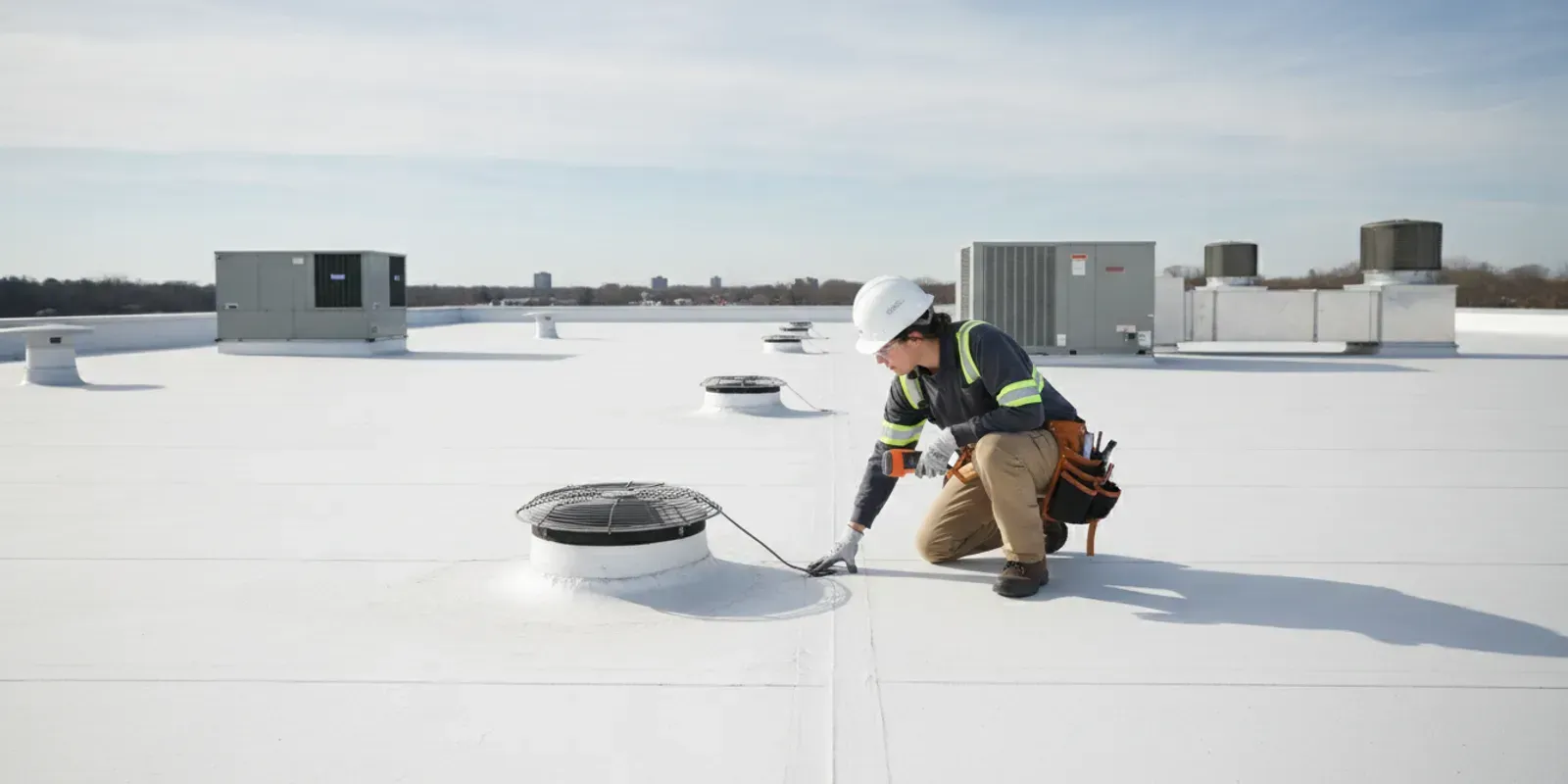
EPDM is a thermoset synthetic rubber membrane made for low-slope commercial roofs. Its full name is ethylene-propylene-diene terpolymer. The material has a track record stretching back more than 60 years, and its combination of flexibility. Weather resistance, and installation versatility makes it a practical option for many Atlanta commercial buildings.
Unlike thermoplastic membranes that are reshaped with heat, EPDM is cured into a durable rubber sheet. That structure helps the membrane accommodate the natural movement of a roof assembly as temperatures change. EPDM can stretch to roughly 300% of its original length and return toward its original shape, which helps it manage expansion and contraction across a broad roof surface.
A proven low-slope roofing membrane
EPDM's longevity in commercial roofing is one reason it remains widely specified. A National Institute of Standards and Technology report notes that EPDM had captured about one-third of the United States low-slope roofing market by the mid-1980s. That market presence reflects decades of use, testing, and refinement rather than a short-lived roofing trend.
For Atlanta property owners, the membrane's resistance to ultraviolet radiation, ozone, and weathering is especially relevant. EPDM also remains flexible in both hot and cold conditions. Those properties can help a properly designed and installed system handle seasonal temperature changes, intense sun, humidity, and storm exposure. Seams are another important part of performance. NIST reports that modern tape-bonded EPDM seams are recognized as having satisfactory long-term service performance when correctly fabricated.
Choosing the right membrane thickness
EPDM is commonly available in 45-mil, 60-mil, and 90-mil thicknesses. A mil is one-thousandth of an inch. The 60-mil membrane is generally considered the industry standard, while the appropriate choice for a specific building depends on factors such as expected foot traffic. Roof layout, substrate conditions, warranty requirements, and the selected attachment method.
Thickness is only one part of a complete roof design. Drainage, flashing details, penetrations, seam work, insulation, and maintenance access all affect the finished system. If you are comparing materials for a commercial property, review our guide to commercial EPDM roofing services alongside other low-slope options before deciding which assembly best fits your building.
How Long Does an EPDM Roof Last in Atlanta Weather?
Answer: A properly designed, professionally installed, and regularly maintained EPDM roof can provide roughly 25 to 40 or more years of service. The ERA's 2025 survey of 569 roofing professionals reports an expected service life in that range, with properly designed and maintained EPDM systems averaging about 38 years.
Atlanta puts commercial roofing systems through demanding conditions. Summer heat can accelerate surface aging, high humidity keeps moisture management important, intense sunlight exposes membranes to ultraviolet radiation, and thunderstorms can bring heavy rain, wind, and debris. EPDM's weather-resistant properties make it a well-suited option for many low-slope buildings in the metro area. The membrane remains flexible as temperatures change, while its resistance to weathering helps it handle repeated seasonal exposure.
Why Atlanta's climate does not automatically shorten EPDM's life
Service life depends on the entire roof assembly, not just the membrane material. Drainage, insulation, flashing details, seam construction, edge securement, and compatibility with the existing roof all influence performance. A roof that repeatedly holds water or has poorly detailed penetrations may develop problems well before the membrane reaches its expected age.
Seams deserve particular attention. NIST notes that EPDM seams fabricated with tape adhesives are widely acknowledged to provide satisfactory long-term service performance in commercial roofing applications. Correct preparation and installation help those seams resist water intrusion through Atlanta's frequent rain events. The best installation method also depends on the building's wind exposure, deck condition, access requirements, and future maintenance plan.
Maintenance protects the expected lifespan
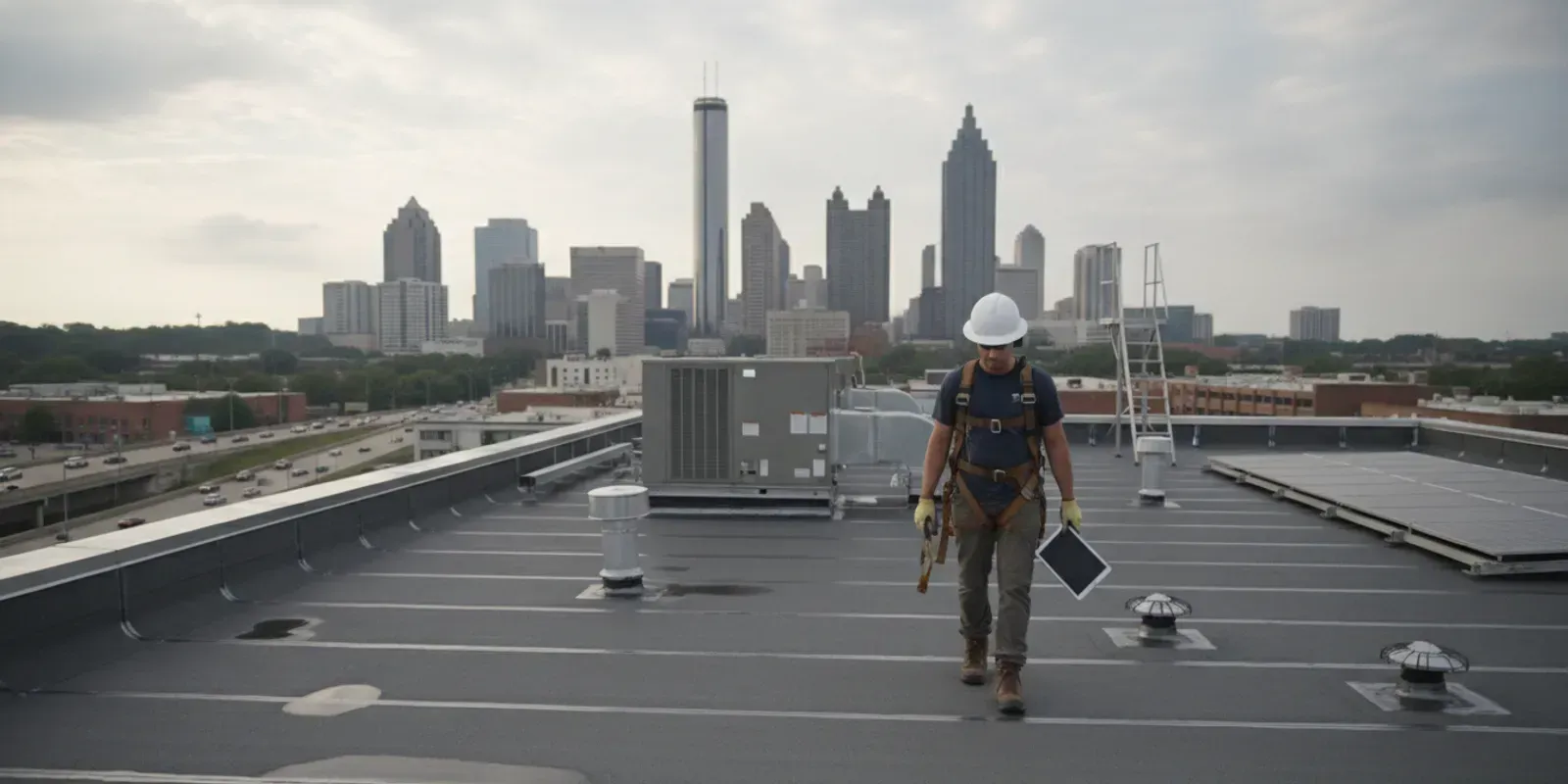
Routine inspections help property owners find small issues before they become interior leaks or widespread membrane damage. A maintenance plan should include checking seams, flashing, drains, scuppers, penetrations, edge metal, and areas around rooftop equipment. After severe storms, an additional inspection can identify punctures, displaced components, or blocked drainage.
Ballasted assemblies can offer another approach for some properties. According to industry information from Whitco, these systems can keep membrane surface temperatures around 90 to 103 degrees Fahrenheit, comparable to lighter-colored membranes. That detail may matter when evaluating heat exposure, but ballast weight, structural capacity, access, and local wind conditions must be reviewed by a qualified roofing professional.
Choosing among flat roof system options for Atlanta businesses starts with the building, not a lifespan number. A roof assessment can determine whether EPDM's flexibility, weather resistance, and maintenance requirements align with the property's structure and operating goals.
How Much Does EPDM Roofing Cost for Atlanta Commercial Buildings?
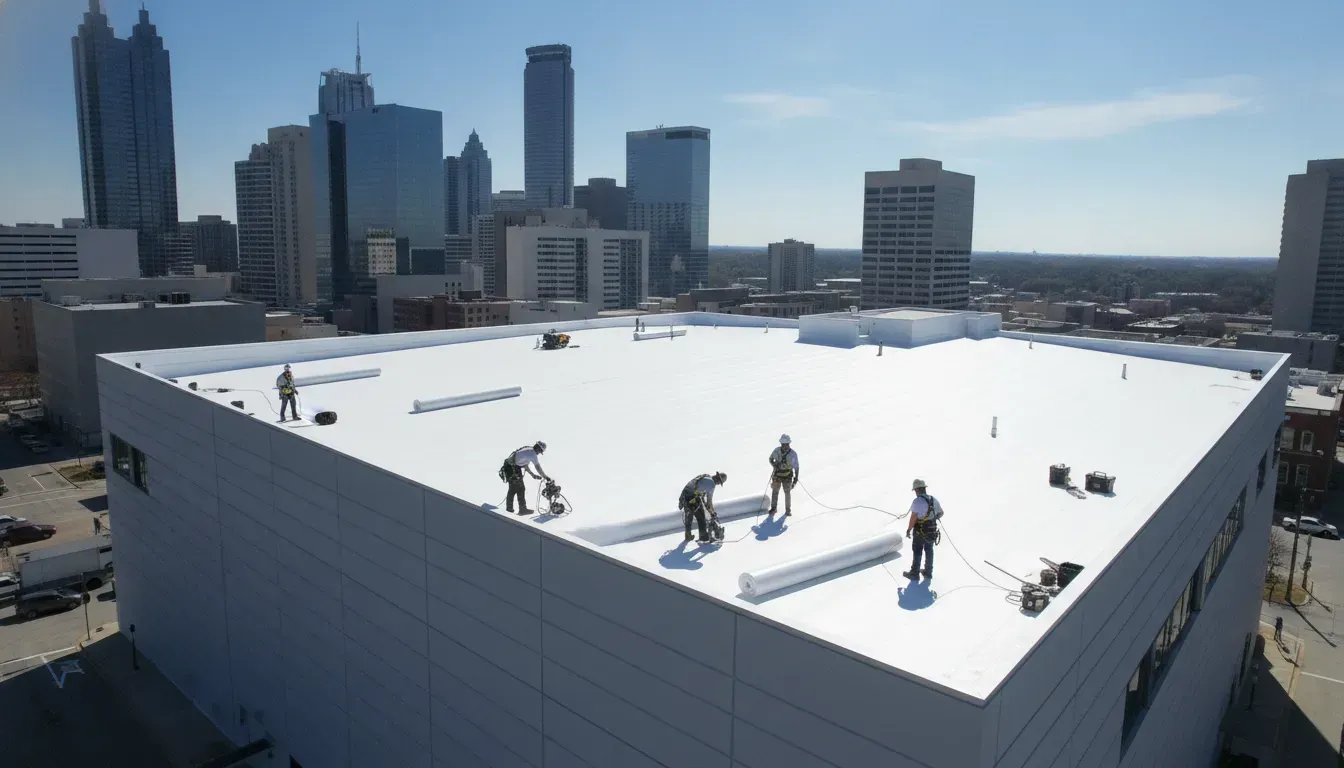
Answer: EPDM roofing for Atlanta commercial buildings typically costs about $4.50 to $8.00 per square foot installed. A 10,000-square-foot roof may therefore fall near $50,000 to $80,000, although the final estimate depends on the roof assembly, existing conditions, access, and installation method.
For budgeting purposes, membrane thickness is one of the first choices to consider. A 45-mil membrane generally has a lower upfront cost, while upgrading to 60-mil can add approximately $1 to $2 per square foot. That added investment may provide more than five additional years of service life and access to broader warranty options, depending on the selected system and manufacturer requirements.
How installation method changes the estimate
Installation method also affects the cost of EPDM roofing in Atlanta. Mechanically attached systems commonly run about $5.50 to $7.00 per square foot. Fasteners and plates secure the membrane to the roof assembly, which can make this approach practical when installation speed and the existing building conditions are important considerations.
Fully adhered systems typically range from $6.50 to $8.00 per square foot. Adhesive bonds the membrane to the substrate. Creating a smooth finished surface and a system that can be well suited to projects where wind uplift performance, appearance, or substrate conditions influence the design. A roofing professional should determine which method meets the building's requirements rather than choosing solely by price.
Project conditions that affect EPDM roofing cost
Two roofs with the same square footage can have very different project totals. Common cost factors include:
- Roof size: Larger projects may have different material and labor efficiencies, while small or difficult-to-access roofs can carry higher mobilization costs.
- Roof complexity: Curbs, drains, penetrations, parapets, rooftop equipment, and multiple roof levels require additional detailing and labor.
- Deck preparation: Wet, damaged, or deteriorated decking may need repair or replacement before the membrane is installed.
- Insulation: New insulation, tapered insulation for drainage, or code-related upgrades can increase the assembly cost while improving long-term performance.
These figures are planning estimates, not a fixed price for every Atlanta property. A site assessment can identify hidden conditions and clarify whether a replacement, recover, or repair is appropriate. Review these commercial roof replacement cost factors before comparing proposals, and ask each contractor to separate membrane, insulation, deck work, drainage, and warranty-related costs.
EPDM Roof Installation Methods for Atlanta Commercial Properties
Commercial EPDM roofs are installed in three primary ways: ballasted, fully adhered, or mechanically attached. The right choice depends on the building's deck, structural capacity, wind exposure, drainage design, re-roofing goals, and how the assembly will meet Georgia building-code requirements.
Ballasted EPDM
A ballasted system lays the EPDM membrane loosely over the insulation or prepared substrate, then uses rounded ballast stones to hold it in place. This approach became popular in the 1970s and 1980s as a cost-effective way to help keep commercial buildings cooler in warm climates. Properly designed assemblies can keep the membrane surface around 90 to 103 degrees Fahrenheit, a cool-roof effect comparable to lighter-colored membranes.
Ballast also adds substantial dead load, so an engineer must confirm that the roof structure can safely support it. Atlanta building owners should also consider access, rooftop equipment, drainage paths, and wind design before choosing this method. It may be less suitable where frequent maintenance requires moving stone or where the existing deck has limited reserve capacity.
Fully Adhered EPDM
In a fully adhered assembly, installers bond the membrane directly to the approved substrate with roofing adhesive. The result is a smooth, uniform appearance with fewer areas where wind can work beneath the membrane. For exposed Atlanta properties, this method generally provides the strongest wind-uplift resistance when the substrate, adhesives, perimeter details, and fastener patterns are designed as a complete system.
Fully adhered EPDM typically costs about $6.50 to $8.00 per square foot, although deck preparation, insulation, penetrations, and project access can change the final estimate. It is often a strong fit for prominent buildings, irregular roof layouts, and owners prioritizing a clean finished surface.
Mechanically Attached EPDM
Mechanically attached systems secure the membrane with fasteners and plates, commonly through the membrane edge or designated securement area. They are often the fastest installation option and can work well over metal decks or during commercial re-roofing, provided the existing assembly and deck are suitable. Typical pricing is about $5.50 to $7.00 per square foot.
This method requires careful attention to fastener pullout, seam detailing, perimeter securement, and uplift calculations. Those details matter in Atlanta, where thunderstorms and strong wind events can challenge exposed roof edges. Whichever method is selected, verify the assembly's approved design and installation requirements under applicable Georgia codes, then schedule flat roof maintenance for Atlanta businesses to protect the investment.
EPDM vs. TPO vs. Modified Bitumen: Choosing the Right System
Answer: EPDM, TPO, and modified bitumen can all protect an Atlanta commercial roof, but each solves a different set of building needs. EPDM emphasizes proven service and flexibility, TPO prioritizes reflectivity and low weight, while modified bitumen is often a strong fit where puncture resistance and regular foot traffic matter.
There is no universal winner. The right choice depends on your roof's size, slope, access requirements, insulation goals, existing deck, drainage, and maintenance plan. This comparison provides a starting point before a professional roof assessment.
Comparison of common flat roofing systems for Atlanta commercial buildings
System | Key characteristics | Best fit
EPDM. EPDM has the longest proven track record of the three, with more than 60 years of commercial use. Its rubber membrane provides excellent flexibility in cold weather and a competitive lifecycle cost. Typical installed pricing is approximately $4.50 to $8.00 per square foot, depending on the assembly and installation method. Owners seeking a durable, flexible system with established performance and balanced long-term value. It can be a practical choice for many low-slope Atlanta buildings exposed to changing weather.
TPO. TPO is a lightweight, lighter-colored membrane that reflects up to 78% of UV light, which can help reduce heat absorption and cooling demand. It weighs less than 1 pound per square foot, and its seams are joined with hot air welding. Its cost range can be similar to EPDM, depending on project details. Buildings where energy efficiency, a reflective roof surface, low structural weight, and heat-welded seams are important priorities.
Modified bitumen. Modified bitumen is asphalt-based and strengthened with polymer modifiers. Systems may be reinforced with polyester or fiberglass, and torch-down application is one common installation approach. The finished assembly offers strong puncture resistance and handles foot traffic well. Properties that need a robust asphalt-based roof assembly, particularly where maintenance access, service activity, or frequent foot traffic increases the risk of surface damage.
How should Atlanta owners narrow the choice?
Start with the building's actual operating conditions rather than selecting a membrane by label alone. A reflective TPO surface may support cooling objectives, while EPDM's flexibility and track record may carry more weight for another facility. Modified bitumen may be preferable when the roof must tolerate repeated access and incidental impact.
A contractor should also review drainage, insulation, flashing, penetrations, deck condition, and wind-uplift requirements. For more context, see our guide to comparing flat roof systems for Atlanta.
Why Atlanta Businesses Trust Total Roof Solutions for EPDM Roofing
Answer: Atlanta businesses choose Total Roof Solutions for EPDM roofing. Our team combines local commercial roofing knowledge with manufacturer-backed credentials and a family-owned commitment to dependable workmanship. We evaluate the building, roof assembly, and operating needs before recommending an approach.
Roofing decisions are easier when the contractor understands both the membrane and the conditions it must withstand. Total Roof Solutions has served Georgia property owners for more than 16 years. We are a third-generation, family-owned company with deep construction roots, and our team understands the heat. Humidity, heavy rain, and storm exposure common across Metro Atlanta and Middle Georgia.
Commercial credentials that support the work
Our commercial roofing qualifications provide an added layer of confidence. Total Roof Solutions is Mule-Hide Certified for commercial roofing and an Owens Corning Platinum Preferred Contractor, an elite manufacturer designation. We are also licensed in Georgia, fully insured, and bonded. An A+ BBB rating and TrustDALE Certified Partner status, including a $10,000 Make It Right Guarantee, give building owners additional accountability when selecting a contractor.
EPDM is one of several commercial systems our team can evaluate. We also work with TPO and modified bitumen, so the recommendation can reflect the building's slope. Drainage, exposure, expected traffic, and long-term goals rather than a one-system sales pitch. Proper seam detailing, flashing, drainage, and maintenance planning matter as much as the membrane itself.
Local coverage and commercial experience
We serve more than 16 counties across Metro Atlanta and Middle Georgia, generally within a 60- to 75-mile radius of McDonough. Our commercial partnerships include Atlanta Motor Speedway, Advanced Auto Parts, and CKS Packaging. Owner Stephen Griswell is a University of Georgia graduate with more than 20 years of industry experience, bringing both local perspective and hands-on roofing knowledge to project planning.
To understand our background, service area, and approach, learn more about Total Roof Solutions. For a facility considering EPDM, that conversation can clarify whether the system fits the property and what installation and maintenance should involve.
Frequently Asked Questions
What is the average cost of EPDM roofing in Atlanta?
Installed EPDM roofing commonly falls between $4.50 and $8.00 per square foot. The final estimate depends on roof size, membrane thickness, installation method, deck preparation, penetrations, drainage, and access conditions. A commercial roof inspection is the best way to develop a site-specific budget rather than relying on a general square-foot range.
How long does an EPDM roof last in Atlanta weather?
A properly designed and maintained EPDM roof can provide roughly 25 to 40 or more years of service. Atlanta's heat, humidity, and storm exposure make correct detailing, secure seams, drainage, and routine inspections especially important. Longevity is influenced as much by installation quality and maintenance as by the membrane itself.
Is EPDM roofing good for flat roofs in Georgia?
Yes. EPDM is a flexible, durable single-ply membrane well suited to low-slope commercial roofs. Its weather-resistant properties can help it handle the heat, humidity, and storm conditions common across Metro Atlanta. The roof assembly still needs proper drainage, attachment, flashing, and seam detailing for dependable performance.
How does EPDM compare with TPO for a commercial roof?
EPDM is a proven synthetic rubber membrane valued for flexibility, durability, and long-term performance. TPO is a thermoplastic membrane with heat-welded seams and a reflective surface. The better choice depends on the building's energy goals, roof design, exposure, detailing requirements. And maintenance plan, so a side-by-side evaluation is more useful than choosing by material name alone.
Schedule Your Commercial Roof Consultation
Choosing an EPDM system is easier when your building's needs, existing roof, and long-term goals are reviewed together. Total Roof Solutions can help you evaluate the right next step for your Atlanta commercial property. Schedule a free commercial roof consultation with our team to discuss your roof and receive guidance tailored to the project.