What Should a Roofing Contract Include?
MEGA MEGA • November 23, 2026
What should a roofing contract include before you sign in Georgia? Check scope, materials, price, dates, permits, warranties, and change orders.

A roofing proposal can look complete and still leave out the lines that decide the final bill. If you want to know what a roofing contract should include, start with the written scope, the materials, the price, the schedule, and who handles a surprise in the deck. A short verbal promise is not the same as a paper you can hold the crew to.
Call (678) 752-8668 to discuss your roofing project
Total Roof Solutions is a licensed, insured, and bonded roofing company based at 928 Hwy 42 North in McDonough. We replace and repair residential and commercial roofs, install seamless gutters, and write a free estimate before you decide. The checklist below is what we expect a homeowner to see on paper before any work starts. For the wider hiring decision, use our roofing contractor guidance and come back here for the document itself.
What Should a Roofing Contract Include Before You Sign?
Ask for one written proposal that names the property, the work, the products, the price, and the dates. If two companies bid the same roof, you should be able to lay the papers side by side and see the same kinds of lines. A total at the bottom, with no breakdown, is not enough.
Read these parts before you initial anything:
- The company name, address, and the property address.
- The scope, including tear-off, layers, and what happens to the debris.
- The products, with brand, line, color, and how many layers of underlayment.
- The allowances for deck repair, flashing, vents, and pipe boots.
- The price, what is included, and when each payment is due.
- The start window, the expected finish, and how weather delays are handled.
- Who pulls permits, and which warranty covers materials versus labor.
- How a change is priced and who must approve it in writing.
The Georgia Attorney General's Consumer Protection Division tells homeowners to insist on a contract, with guarantees and start and completion dates in writing. It also notes that roofers are not licensed by the state licensing board for residential and general contractors, so a local business license and proof of insurance still matter. Put those proof items in the file with the proposal. Do not treat a business card as a substitute.
Who Is Named, and Which Roof Is Covered?
The first page should name the contractor and the owner, then the street address of the building. If the roof is on a rental, a shop, or a second home, the paper should say so. A proposal written for "the house on the corner" is too loose to enforce.
Look for a short description of the roof that is actually being bid. Squares, stories, and the general slope are useful. So is a note if only one slope, a porch, or a flat section is in the job. A whole-house price that quietly skips a low porch is a common source of a second invoice.
Ask who will sign for the company. A salesperson can collect the quote. The person who can bind the company should be named, along with a phone number and an email that stays active after the sale. Our office line is 678-752-8668, and our office hours are Monday through Friday, 8 a.m. to 5 p.m. You should have a similar contact on any proposal you compare with ours.
If the job is commercial, the paper should name the building manager who can approve access, dumpster placement, and after-hours work. Residential jobs need the same clarity about pets, gates, and where the crew can park. Those details feel small until a truck blocks a driveway for two days.
What Work Is in the Scope?
Scope is the list of actions, not the brand of shingle. A clear residential scope says whether the crew will remove the existing roof or install over it. In most full replacements around Henry County, a full tear-off is the safer starting point because it lets someone see the deck. If a bid keeps a second layer, the paper should say that plainly.
The scope should also cover:
- How many existing layers will be removed.
- Whether drip edge, valley metal, and step flashing are replaced or reused.
- Whether pipe boots, attic vents, and ridge vent are new.
- Who disposes of the old material, and whether a dumpster is included.
- Daily cleanup, including a magnet sweep for nails.
- Protection for siding, plants, and air-conditioning units.
A repair scope needs the same care on a smaller scale. "Fix the leak over the kitchen" is not a scope. Better language names the slope, the suspected flashing or valley, and whether drywall inside the house is included. Interior paint and ceiling texture are usually a separate trade. Leaving that unsaid is how a roof bid turns into an argument about a stained ceiling.
Our residential roof replacement work includes tear-off, a deck look, underlayment, and flashing at penetrations. A proposal from any company should say which of those steps are in the price you are signing. If a line is missing, ask for it to be added before you pay a deposit.
Which Materials and Allowances Should Be Listed?
Brand and product line belong on the paper. "Architectural shingles" can mean very different products. Ask for the manufacturer, the product name, the color, and the underlayment type. If you were shown a sample, the contract should match that sample, not a cheaper line that happens to look similar from the street.
Total Roof Solutions is an Owens Corning Platinum Preferred Contractor, and we are also a Mule-Hide Certified Contractor for commercial systems. Those credentials matter when a proposal names an Owens Corning shingle or a Mule-Hide commercial system, because the manufacturer warranty often depends on who installs the product. The contract should still name the exact product. A logo on a truck does not identify the shingle on your roof.
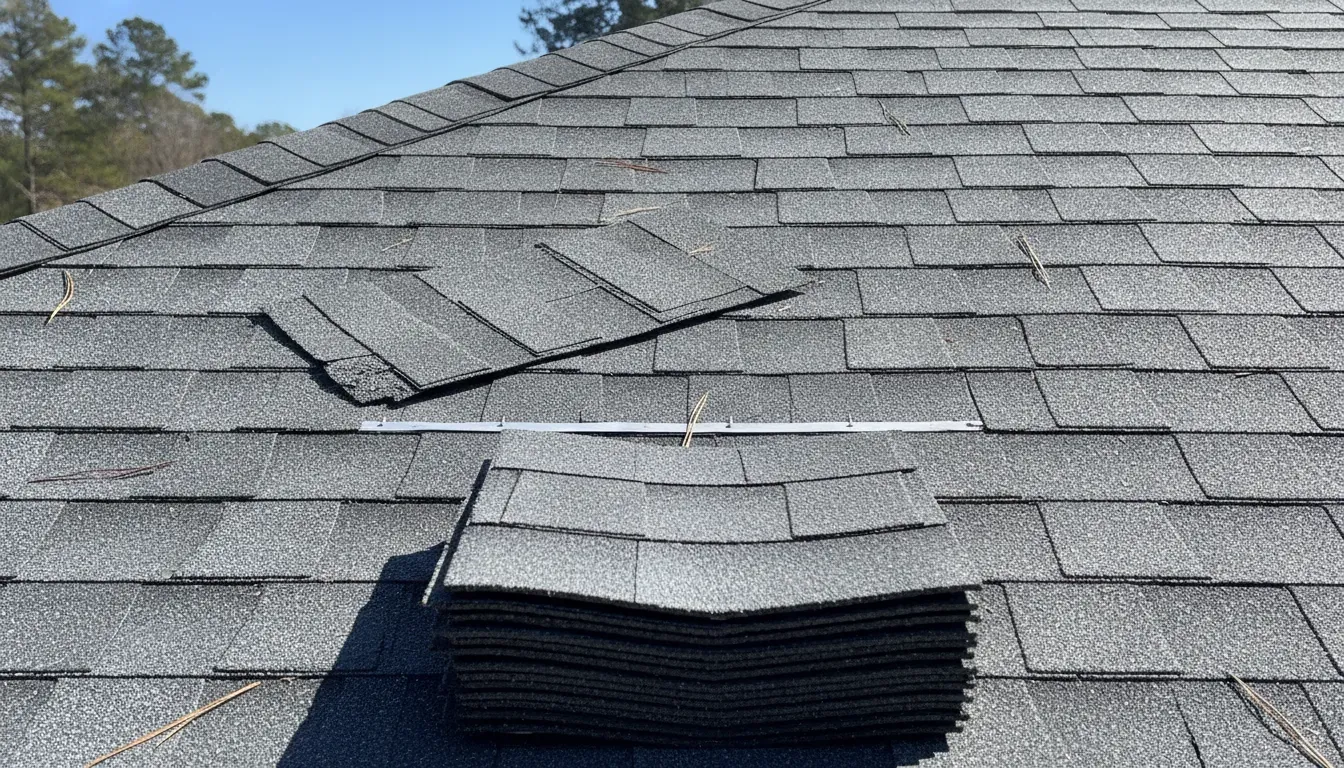
Decking is the line that most often changes the price. Wood that looked fine from the yard can be soft once the shingles come off. A useful proposal states a per-sheet price for deck replacement, or a set number of sheets included before extra charges start. The same idea applies to fascia, rotten drip-edge wood, and chimney flashing that needs rebuilding rather than reuse.
Get these material lines in writing:
- Shingle or membrane brand, line, and color.
- Underlayment type, including any ice-and-water product in valleys and at eaves.
- Starter strip, ridge cap, and hip treatment.
- New flashing metals versus reused metals.
- Ventilation parts that will be added or replaced.
- A unit price for extra decking.
If you are comparing a metal roof with a shingle roof, do not force those bids onto one product list. Keep the comparison on scope, fasteners, underlayment, and trim. Mixing the two systems into one vague "roof upgrade" line makes the cheaper bid look better than it is.
How Should Price and Payment Be Written?
The price section should show the base price, what is included, and what is not. Sales tax, dumpster fees, and permit fees should each be either inside the total or listed next to it. A round number with no notes is hard to compare with a bid that itemizes those costs.
Payment timing belongs in the same section. Many roof jobs use a deposit and a final payment when the work is complete. Be careful with a schedule that asks for most of the cash before materials arrive. The Georgia consumer guidance flags paying for the entire job up front as a warning sign. A reasonable deposit can reserve a crew and order materials. It should not leave you with no leverage if the job stalls.
Write down how extra work is approved. A per-sheet deck price only helps if the crew must stop and get your signature once the included sheets are used. Text-message approval can be fine if the contract says a text counts and you keep the thread. A wave from the driveway should not add a thousand dollars.
If you plan to finance, keep the loan terms on the lender's documents and the roof scope on the contractor's proposal. Our roof financing options are a separate conversation from the scope of the roof. A monthly payment is not a description of shingles, flashing, or deck repair. Read both papers. Signing one does not fill gaps in the other.
Current promotions, when they apply, should be printed on the quote too. A discount that is only mentioned in a conversation is easy to lose once the invoice is prepared. Ask the estimator to show the price before the discount and the price after it.
What Dates, Permits, and Site Rules Belong on the Paper?
A start window is more honest than a single calendar day, because weather moves roofing schedules. The contract should still name an expected start, an expected duration, and what happens if rain or high wind pushes the job. "As soon as possible" is not a date.
Ask who pulls the local permit when the city or county requires one. Henry County and nearby cities do not all treat every repair the same way. The proposal should say whether the contractor obtains the permit, whether the fee is in the price, and whether the final payment waits on a passed inspection. Leaving the permit in your name, without saying so, can put fines and inspection calls on you.
Site rules are part of the schedule, not a courtesy. Note where the dumpster can sit, whether the crew may use an outdoor outlet, and how the driveway will be cleared at the end of each day. If you need the work done while you are out of town, name a local contact who can approve a change. Crews should not have to guess.
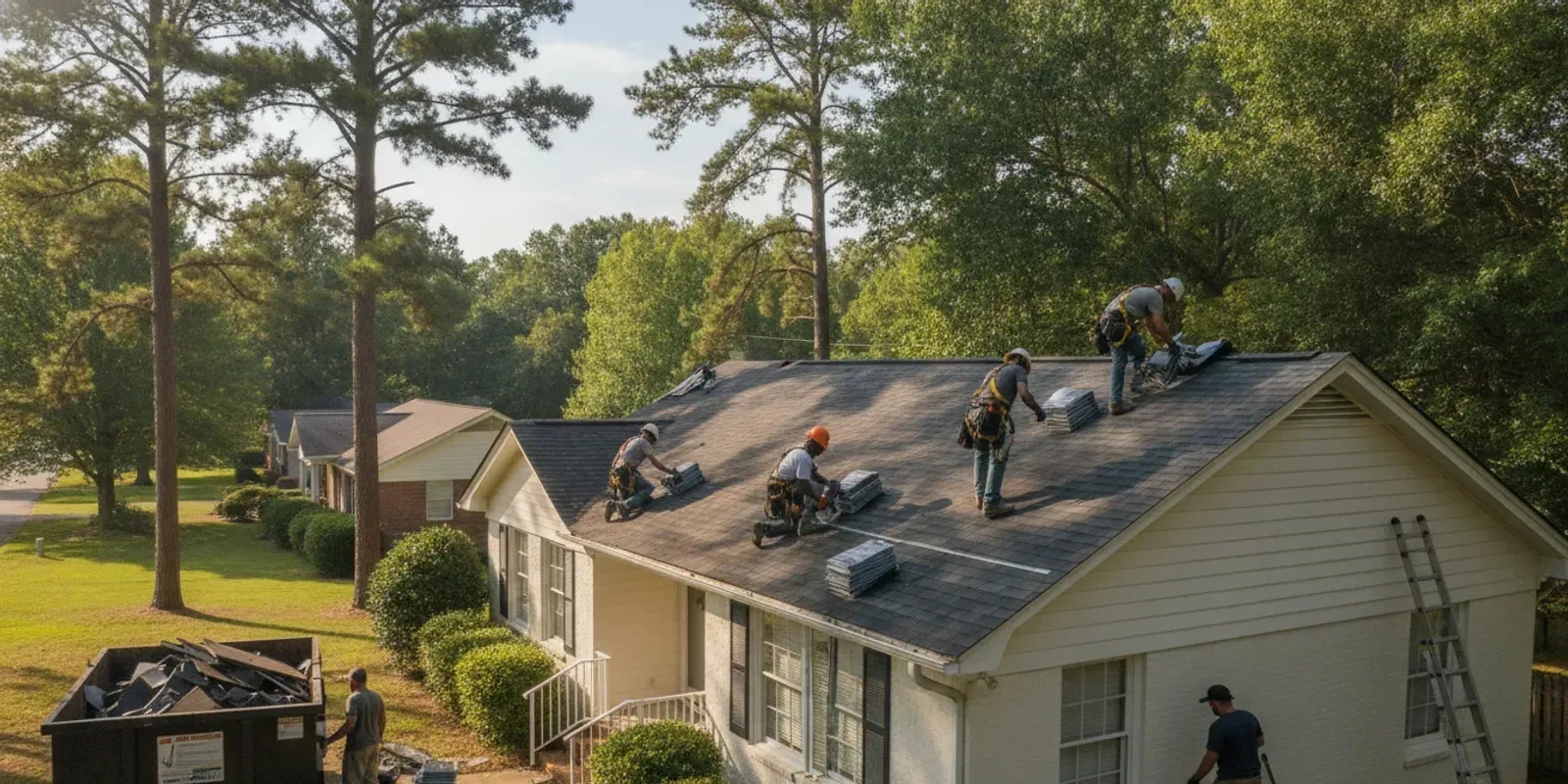
For a full replacement, it also helps to read a separate timeline of the workday so the contract dates make sense. Our guide to what to expect during roof replacement covers the usual order of tear-off, dry-in, and install. The contract should match that order with dates and responsibilities, not repeat the whole story.
Which Warranties Should Be Split Out?
Two warranties get blended in casual talk. The manufacturer warranty covers the product under that company's rules. The workmanship warranty covers how the crew installed it. A proposal should name both, including how long the labor warranty lasts and what you must do to keep it.
Ask these warranty questions of the paper, not only of the salesperson:
- Is the material warranty transferable, and is there a transfer fee?
- Does the labor warranty stay with the company that signed the contract?
- What maintenance, if any, is required?
- Are flashing and ventilation covered, or only the field of the roof?
- How do you submit a leak call, and how fast will someone respond?
Manufacturer programs can add a stronger system warranty when an eligible contractor installs a full system. That is one reason the installer name belongs next to the product name. Get the registration steps in writing if the warranty depends on them. A warranty that was never registered may be a shorter one than the brochure described.
Keep the insurance claim separate from the contractor warranty. A policy may pay for storm damage. It does not replace a workmanship warranty on the repair that follows. If you are filing a claim, use a coverage guide such as roofing insurance coverage in Georgia, and do not expect the roof contract to explain your deductible.
How Should a Change Order Work?
Good roofs still surprise people. Soft decking, a rotten chimney chase, or a second layer of shingles can show up after tear-off. The contract should already say how that discovery is handled. A fair process is simple. The crew documents the issue, prices it from the unit rates already on the proposal, and waits for a written yes before doing the extra work, unless you have pre-approved a small allowance.
Put a ceiling on work that can proceed without a new signature. For example, the paper might allow replacement of up to an agreed number of deck sheets at the stated rate, and require a call after that. Without a ceiling, "we had to keep going" becomes the whole story.
Photos help. Ask the contractor to photograph hidden damage before covering it. You want the picture, the count of sheets or linear feet, and the added dollar amount on one short change form. That form should be signed by you and attached to the original contract. A revised total scribbled on the first page, with no count, is hard to check later.
Change orders are also how you decline work. You can choose to repair only the damaged area, or to pause and get a second look. The form should allow a no. A crew should not treat silence as approval. If you will be at work during the day, say what time you can answer the phone. A clear pause is cheaper than a dispute.
What Should You Compare Before You Sign?
Once the lines above are on each bid, comparison is mostly reading. Do not award the job to the lowest total until you know the totals describe the same work.
Use the same lines on each bid. A lower total is only better when both papers describe the same roof.
Line | Complete contract | Thin bid
Scope. It lists tear-off, layers, disposal, and every slope. It says only "replace roof."
Products. It names the brand, line, color, and metals. It says "architectural shingles."
Deck. It gives a per-sheet price and an approval rule. It has no deck price yet.
Price. It shows the deposit, the balance, and the fees. It shows one round number.
Schedule. It names the start, the days, and the permit owner. It says "as soon as possible."
Warranty. It states the labor term and the product warranty. It offers a verbal promise.
A bid that is silent on decking can look hundreds of dollars cheaper and cost more once the roof is open. A bid that reuses old flashing can look competitive until the next wind-driven rain. Read the quiet lines.
If one proposal is thin, ask for a revision rather than filling the gaps from memory. The Georgia guidance is to get written estimates for the same project specifications. You cannot do that if each company described a different project. Send the missing-line list back and wait for an updated page.
For scam patterns and high-pressure visits after storms, read how to spot a roof repair scam before you sign anything from a crew that showed up uninvited. That guide covers warning signs. This one stays on the paperwork of a planned job. Use both, and do not let either replace a careful read of the price and scope.
What Should You Keep After the Job?
When the work is done, the file should hold more than the paid invoice. Ask for a copy of the permit and inspection result if one was required, the product labels or a spec sheet, the warranty registration, and photos of the finished ridges, valleys, and penetrations. Store them with the signed contract and any change orders.
Write the completion date on your copy. Labor warranties often run from that day, not from the day you first called. If a punch-list item remains, note it on the final page and keep a dated photo. Final payment can wait until the agreed cleanup and the agreed punch list are actually done.
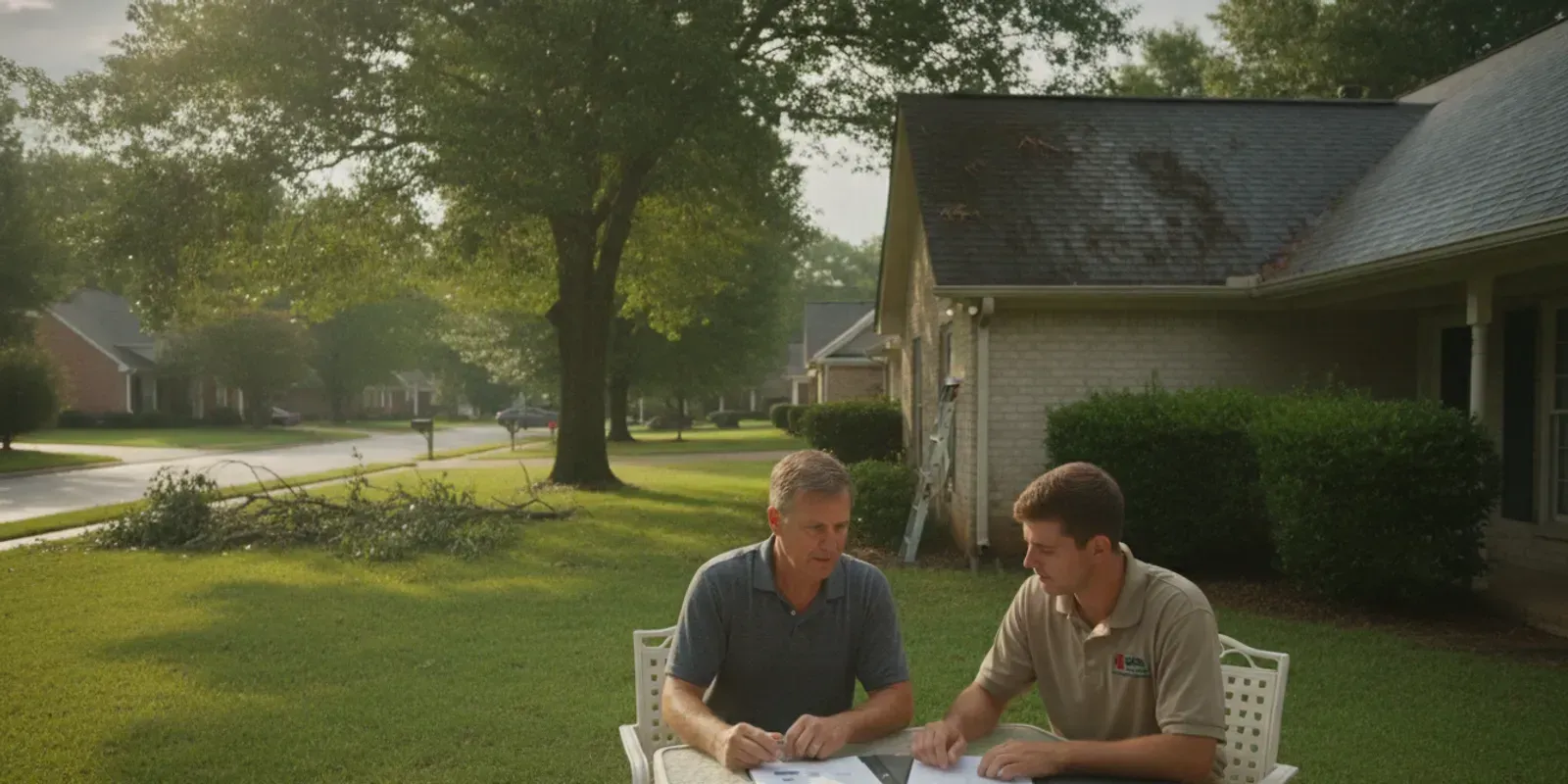
A roof is a long-lived part of the house. The paper is what lets the next owner, or you in six years, know what was installed. We would rather walk through that paper with you at the kitchen table than leave it to a handshake. Bring the questions in this list to the visit. A clear contract is a sign of a careful company, not a fuss.
Talk with our McDonough team before you sign, or call 678-752-8668 to set a free estimate.
Frequently Asked Questions
What should a roofing contract include at a minimum?
At a minimum, include the property address, a written scope, the product brand and color, the price and payment times, a start and finish window, who pulls permits, and the labor and manufacturer warranties. Add a unit price for extra decking so a soft deck does not become a blank check.
Is a roofing estimate the same as a roofing contract?
No. An estimate is a price for a described job. A contract is the signed agreement that sets scope, price, schedule, and warranties. Do not let a one-page estimate stand in for the contract. Ask the company to move the agreed lines onto a document both of you sign.
Should the contract list deck repair prices?
Yes. Hidden wood damage is common once old shingles come off. A per-sheet price, or a stated number of sheets included, lets you approve extra work with a clear number. Without that line, the change order has nothing agreed to stand on.
Who should pull the building permit?
In most cases the contractor should pull the permit when the local city or county requires one, and the contract should say the fee is included or list it. Confirm the rule for your address. Do not assume a small repair and a full replacement follow the same permit rule.
Can I sign a financing form and skip the roof contract?
No. Financing papers set the loan. The roof contract sets the work. You need both. Read the scope even if the monthly payment fits your budget. A loan does not name the shingle, the flashing, or the deck allowance.

Choosing Roofing Materials for Georgia Heat and Storms: Best Roofing Materials for Residential Homes