Metal Roof Installation: A Georgia Homeowner Guide
MEGA MEGA • October 14, 2026
Learn what metal roof installation involves, how to compare systems, and what Georgia homeowners should ask before work begins. Request a roofing quote.

Metal roof installation is more than fastening panels to a roof deck. The roof design, panel system, underlayment, flashing, and fastening method must work together to move water safely off the home. For Georgia homeowners considering a replacement, understanding those decisions makes it easier to compare proposals and ask useful questions before work begins.
Request a roof quote and discuss your project
What Should You Know Before Installing a Metal Roof?
In short: Choose a roof system that fits the homeâs slope and layout, then make sure the proposal explains how the roof deck, underlayment, panels, seams, edges, and penetrations will be handled. A well-planned installation is a complete water-management system, not simply a choice of metal color.
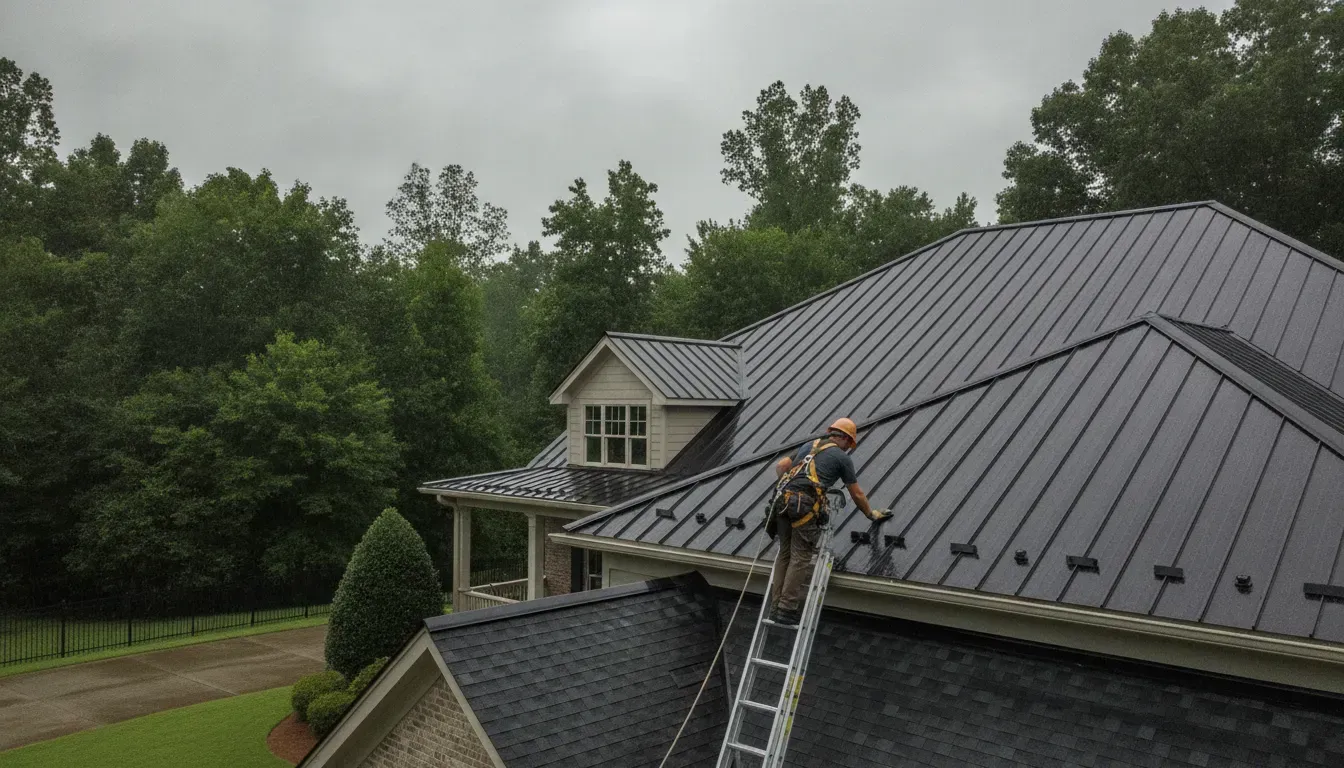
Metal roofing covers several different products and installation methods. A standing-seam roof, for example, has raised seams that join neighboring panels. Exposed-fastener panels use fasteners that pass through the panel surface. The right option depends on the building, the roof shape, the manufacturerâs requirements, and the installerâs experience with that system.
Before choosing, identify what you want the new roof to solve. You may be replacing an aging roof, addressing recurring leaks, updating the homeâs appearance, or comparing materials during a larger renovation. If you are still deciding between a repair and a replacement, start with this guide to how to weigh roof repair against replacement.
Do not assume that every metal roof is interchangeable. Panel profiles, seam details, fastener locations, underlayment, and trim vary. Ask the contractor to name the proposed system and explain why it suits your roof rather than relying on a general promise that it is a âmetal roof.â
Which Metal Roofing System Fits Your Home?
The best fit depends on the roofâs design and the level of detail required. Compare the panel type, attachment method, seam treatment, and upkeep expectations alongside appearance. Ask for product and installation details for the specific system in the proposal.
Two broad panel styles are common in residential discussions. Neither is automatically right for every home. The roofâs pitch, valleys, edges, dormers, and penetrations can affect how practical a system is and how much detailing it requires.
FeatureExposed-fastener panelsStanding-seam panelsHow panels connectPanels overlap, with fasteners installed through the panel face as specified for the system.Raised seams join panels; many systems use concealed clips or other concealed attachment details.What to ask aboutFastener type and placement, washers, panel laps, and how the installer will inspect and maintain exposed fasteners.Clip or attachment method, seam closure, panel movement provisions, and trim details.Where details matterPanel side laps, end laps, eaves, ridges, and all roof openings need compatible details.Seam ends, valleys, transitions, eaves, ridges, and penetrations must be coordinated with the panel system.Proposal comparisonConfirm the exact panel profile and fastening schedule; do not compare by the word âmetalâ alone.Confirm the system and accessory details; a standing seam label by itself does not describe every component.
This comparison is a starting point, not a product specification. Ask the installer to show you the manufacturerâs information for the exact panels and accessories being proposed. If the proposal gives only a material category with no system name, request enough detail to compare it fairly.
Roof shape can narrow the choices. A roof with long, uninterrupted planes presents different detailing questions from one with many hips, valleys, dormers, or short sections. A complex roof has more transitions to plan, and each transition needs compatible trim and flashing. Ask the contractor to point out those features on your home and describe how the proposed panels will meet them.
Consider the visible finish in context. A color sample viewed outdoors may look different from one viewed inside under artificial light. Look at samples at more than one time of day, and consider how the selected color sits beside the homeâs siding, brick, trim, and surroundings. Ask how the finish should be cleaned or cared for and whether the product information specifies any limits on that care.
Panel lengths and layout are also worth discussing. The roofâs dimensions, access, and system design affect how panels are arranged and where seams or transitions occur. Ask whether the planned layout accounts for the roofâs geometry and what details will be visible from the street. These questions help you compare practical system choices without treating appearance as the only decision.
It can also help to compare the planned metal roof with the existing roof. For example, a homeowner who currently has asphalt shingles can review the differences between asphalt and architectural shingles as part of a broader material discussion. That comparison does not replace a metal-roof proposal, but it can clarify what you value in appearance, system design, and maintenance.
How Do You Prepare a Home for Metal Roof Installation?
Preparation starts with a roof assessment and a written scope. The contractor should understand the roofâs layers and condition, identify complicated areas, and explain what will be removed, repaired, protected, and installed before the panels go on.
A roof assessment should look beyond the broad, flat areas. Valleys, ridges, eaves, rakes, dormers, skylights, chimneys, plumbing vents, and roof-to-wall transitions all interrupt the roof surface. Each needs a compatible detail so water is directed away from the opening or joint.
Ask how the crew will determine whether the roof deck is suitable once the existing covering is removed. If damaged or unsuitable decking is discovered, the proposal should describe how the contractor will document the issue, explain the necessary work, and discuss any effect on scope before proceeding. The goal is to know how an unexpected condition will be handled, not to assume the deck is perfect or defective in advance.
Before the start date, agree on practical site arrangements. Confirm where materials and a dumpster or debris container may be placed, how landscaping and nearby surfaces will be protected, and how the crew will manage nails and debris during cleanup. Move vehicles and outdoor items that could be in the work area, and keep children and pets away from active work zones.
Ask how the contractor will communicate about weather and changes to the schedule. Roofing work takes place outdoors, and rain or unsafe conditions can affect when a crew can work or leave a roof exposed. Find out who will contact you if the schedule shifts and how the roof will be protected if work is paused. This is a planning question, not a prediction that weather will delay your specific project.
It is also useful to plan for the noise and activity of a roof replacement. Ask what hours the crew expects to work, whether you should move vehicles before the crew arrives, and whether access to a driveway or walkway may be limited. If anyone in the household works from home, has mobility needs, or needs a quiet space during the day, discuss those needs with the project contact ahead of time.
Keep the agreed scope and contact information available during the project. If the crew finds a condition that changes the work, ask for an explanation and written approval process before the added work moves forward. Clear communication helps prevent misunderstandings about what was included in the original proposal and what may require a separate decision.
For a home with an existing leak or storm damage, temporary protection and the immediate repair need may take priority over a planned replacement. A contractor can help assess the condition and explain whether the issue calls for repair or a broader project. Total Roof Solutions describes its residential roof repair services separately from replacement work, so homeowners can ask about the appropriate next step.
What Happens During a Metal Roof Installation?
A typical installation moves from removal and deck preparation to water-control layers, panel placement, flashing, and a final review. The exact order and products depend on the selected system, roof geometry, and manufacturer instructions, so the contractorâs scope should make the planned work clear.
- Protect the property and remove the old covering as agreed. The crew prepares the work area, protects nearby surfaces, and removes the existing roof material if that is part of the contract. The roof is then exposed for the next checks.
- Review and prepare the roof deck. The exposed deck is examined for conditions that could affect the new roof. Necessary repairs should be discussed and documented according to the agreed scope.
- Install the specified underlayment and related layers. Underlayment is part of the roof assembly, not a substitute for sound flashing or correctly installed panels. Ask which products are included and how they will be applied at edges, valleys, and transitions.
- Fit edge details and flashing. Drip edges, valley treatment, ridge details, and flashing around chimneys, vents, and walls must coordinate with the roof system. These areas often involve several overlapping components, so the installation plan should explain how water will be directed outward.
- Set and fasten the panels. Panels are aligned and attached according to the requirements of the selected system. The contractor should account for the specified fastening pattern and any design provisions needed for the panels to perform as intended.
- Finish seams, trim, and penetrations. Ridges, hips, rakes, eaves, and roof openings receive compatible trim and closure details. Sealant may be used where the system calls for it, but it should not be treated as a replacement for correctly designed flashing.
- Inspect and clean the site. The contractor checks visible details, removes construction debris, and explains any care or follow-up recommended for the completed roof.
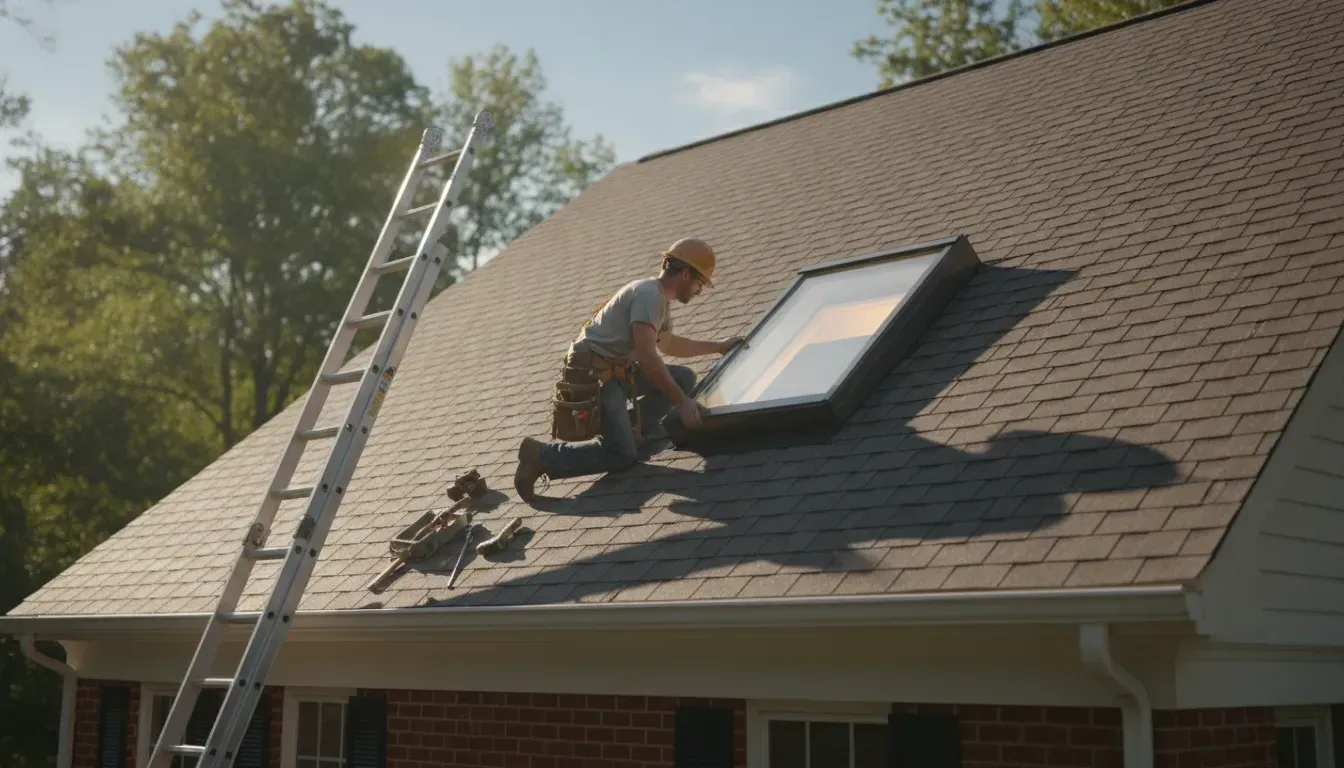
For some homeowners, the replacement project is also a chance to assess other roof-related needs. If the roof includes a skylight, for instance, discuss how its curb and flashing connect with the new roof before panels are installed. This resource on leaks around skylights explains why the opening and roof connection deserve attention.
Installation details at the valleys are especially important because water from two roof planes can converge there. Georgiaâs Department of Community Affairs publishes a document with roof-covering provisions that addresses metal-lined open valleys and underlayment layering; see the Georgia roof-covering code recommendations. Building codes and adopted editions can vary or change, so homeowners should confirm the applicable requirements with their local building department and the contractor should follow the requirements that apply to the project.
What Installation Details Should Georgia Homeowners Check?
Pay close attention to water management, system-specific fastening, and roof openings. Georgia homes experience heavy rain, humidity, and seasonal storms, so a clear plan for valleys, eaves, penetrations, and transitions is just as important as choosing the panel style.
Ask how the contractor will handle roof geometry. A simple roof plane is different from one with multiple valleys, dormers, porches, skylights, chimneys, or walls that meet the roof. Those intersections need deliberate flashing and trim details. Ask the installer to walk through the areas on your home that require special attention.
Also ask what the panel manufacturer requires for attachment and installation. The answer should refer to the selected system rather than a generic fastening approach. Panel alignment, fasteners or clips, seam closures, and trim should be compatible with one another.
Ventilation should be considered as part of the overall roof assembly, not improvised after the panels are in place. Ask whether the current attic ventilation will remain, whether the project changes any intake or exhaust openings, and how those openings will be protected from water entry. A roofer should explain what is appropriate for your home rather than promise that one ventilation change suits every house.
Ask how the contractor will coordinate the roof covering with existing features that remain in place. Solar equipment, satellite mounts, plumbing vents, exhaust outlets, skylights, and chimneys can each require a specific plan. If an item needs to be removed or temporarily moved, establish who is responsible for that work and how it will be reinstalled. Do not assume a roofing proposal includes work on equipment or components that it does not name.
Drainage is another point to review. Look at where water currently leaves the roof and whether the project changes the roof edge or its relationship to gutters. Ask whether the proposed edge detail is compatible with the existing gutter, and whether any gutter work is included or excluded. If your home has drainage concerns, describe them before the project starts so the contractor can explain whether the roofing scope addresses them.
Georgia homeowners may also want to discuss what happens after severe weather. Ask what visual signs can be safely checked from the ground and whom to contact if a leak appears. Do not assume that a new roof can never need attention; a straightforward plan for reporting a concern is useful with any major home project.
Look at the homeâs surroundings, too. Trees, branches, gutters, and drainage paths can influence maintenance needs. The roof should direct water toward the intended drainage system, and the plan should account for gutters and downspouts if they are part of the work. Total Roof Solutions also provides guidance on seamless gutter installation, which may be useful when discussing how roof runoff reaches the ground.
How Can You Compare Metal Roof Installation Proposals?
Compare the written scope line by line, not just the total price. A useful proposal identifies the roof system, describes preparation and flashing, explains what is included in removal and cleanup, and states how changes or hidden conditions will be handled.
- System identification: Does the proposal name the panel profile or system and its components?
- Removal and disposal: Is removal of the existing roof included, or does the scope specify another approach?
- Deck preparation: How will the exposed deck be assessed, and how will additional repairs be authorized and documented?
- Underlayment and water-control details: Are the included layers and treatment of valleys, edges, and transitions described?
- Flashing and penetrations: Does the scope account for chimneys, vents, skylights, walls, and other roof openings?
- Fastening and trim: Does the installer explain how the selected system will be attached and finished?
- Cleanup and closeout: What cleanup is included, and what will the contractor review with you when work is complete?
- Changes to scope: How will unforeseen conditions and any associated work be discussed before it proceeds?
Ask who will be responsible for coordinating the work and whom to contact if you have a question during installation. Request written answers when an important point is unclear. A clear scope makes it easier to compare two bids that may use different words for their systems or handle preparation differently.
Ask for the product and workmanship warranty information that applies to the proposed job, and have the contractor explain who provides each warranty and what documents you will receive. Read the written terms rather than relying on a broad verbal statement. Warranty terms, exclusions, and required maintenance can differ by product and installation, so compare the documents for the actual systems under consideration.
It is reasonable to ask who will perform the work and how the contractor supervises installation. You can also ask for references or examples of projects with a similar roof shape and panel system. A useful conversation includes both the finished appearance and the less visible process: deck preparation, underlayment, flashing, panel attachment, cleanup, and closeout.
Finally, confirm how payment milestones and project changes are documented in the agreement. Make sure you understand when payments are due and what process applies if the work scope changes. These details do not determine the technical quality of a roof by themselves, but they help you know what to expect and whom to contact if questions arise.
Be cautious of proposals that rely on broad assurances but leave out the specific roof areas and materials included. A low or high total alone does not tell you whether the proposals cover the same work. If you are planning a full replacement, the companyâs page on residential roofing services can help you frame questions about the overall project.
For a local perspective, you can also review examples of roofing work completed by Total Roof Solutions. Ask a contractor to explain which examples are comparable to your roofâs shape and selected system; a photo of a finished roof cannot show every concealed installation detail.
What Should You Expect After the New Roof Is Installed?
At closeout, get a clear explanation of the completed work and any care requirements. Ask what the crew inspected, whether anything changed from the original scope, and which documents or product information you should keep for your records.
Request a walk-through or a summary of the key roof details, including valleys, edges, ridges, penetrations, and any transitions that required special work. Ask the contractor to explain any recommended maintenance and what to do if you notice a concern after a storm. Keep the proposal, change approvals, product information, and closeout documents together.
From the ground, a homeowner may be able to notice obvious concerns such as displaced trim or debris, but do not climb onto the roof to inspect it. Metal surfaces can be slippery, and roof edges and openings create fall hazards. If you see a leak or a visible issue, take photographs from a safe location and contact a roofing professional.
Maintenance still matters. Keep gutters and drainage paths clear, and have a qualified professional assess damage or a leak rather than attempting a repair on the roof. If you want to understand how the life of another common roofing material is discussed, Total Roof Solutions also has an overview of what homeowners can expect from asphalt shingles; material life and maintenance are specific to the roof and its conditions.
Talk with our team about your roof project
Frequently Asked Questions About Metal Roof Installation
These quick answers can help you prepare for a contractor conversation. Your homeâs roof design and the exact panel system determine the final installation requirements.
Can metal panels be installed over an existing roof?
It depends on the roofâs condition, the proposed system, applicable code requirements, and the manufacturerâs installation instructions. Ask the contractor to explain whether removal is included and how the roof deck and existing layers will be evaluated. Do not assume an overlay is suitable simply because it may be possible in some situations.
Do all metal roofs use the same fasteners?
No. Attachment details vary by panel system. Exposed-fastener panels and standing-seam systems can use different methods, and the proposal should identify the selected system and explain the applicable fastening or clip requirements.
What happens if the crew finds damaged roof decking?
The contractor should explain how the condition will be documented, what repair is proposed, and how any change to the work will be approved. Ask about this process before the job begins so there is a clear way to discuss concealed conditions.
Should I choose a metal roof based on appearance alone?
No. Appearance matters, but also compare the roofâs shape, panel system, flashing approach, maintenance expectations, and the details included in the proposal. Ask to see information about the specific product and installation method rather than relying only on a color sample.
Metal roof installation is a coordinated project that starts with a careful assessment and ends with the details that guide water safely off the home. A clear proposal and an informed conversation with a qualified roofing contractor can help you decide what is appropriate for your Georgia property.