How to Stop Roof Leaks From Inside: Safe Steps
MEGA MEGA • September 7, 2026
Safe inside-first steps to contain a roof leak, protect your home, and arrange professional repair.

If you are wondering how to stop roof leaks from inside, focus first on safety and water control, not a permanent roof fix. Move people away from hazards, contain the drip, protect belongings, and document the damage while you arrange a professional inspection. Indoor steps can limit damage until the roof is repaired.
Request a free roof inspection from Total Roof Solutions.
Georgia storms can bring a sudden leak through shingles, flashing, a vent, or another roof opening. The safest response is a calm, inside-first plan that protects your household and gives a roofer useful information.
What Should You Do First When Water Comes Through the Ceiling?
When water enters through a ceiling, keep people clear of the affected area, control the water with containers, and treat electrical hazards seriously. Do not climb onto a wet roof during rain. If the ceiling is bulging, cracking, or visibly sagging, leave the room and call for professional help.
Start with this order of operations:
- Keep people and pets away. A wet floor, falling drywall, and hidden electrical damage can all cause injuries.
- Look for immediate electrical danger. If water is near outlets, switches, fixtures, appliances, or a service panel, do not touch wet electrical equipment. Leave the area and contact a qualified electrician or emergency service if needed.
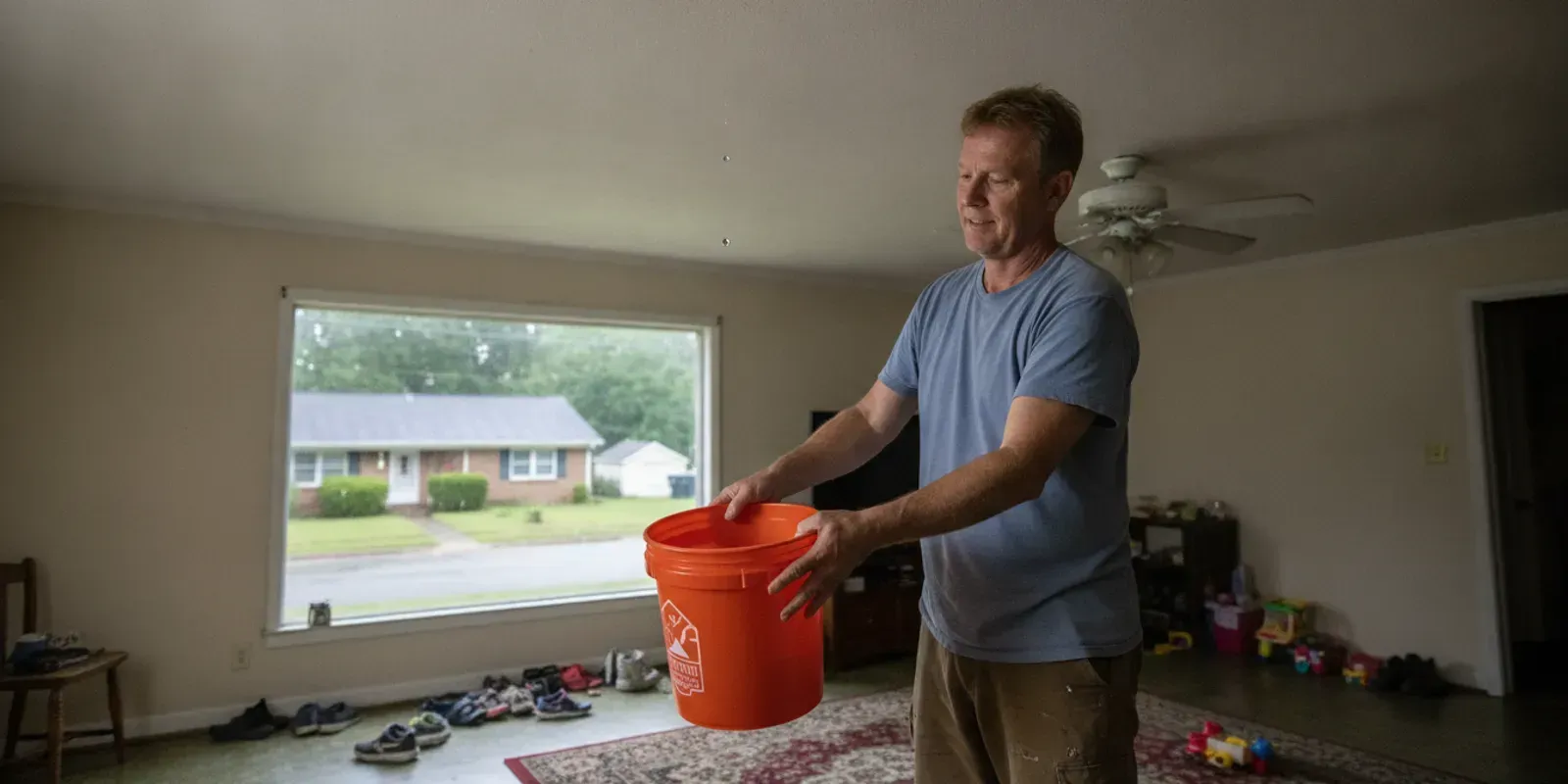
- Place a stable container under the drip. Use a bucket, storage bin, or other waterproof container that will not tip easily.
- Call a roofer when the area is safe. The visible drip may be far from the roof entry point, so stopping the indoor symptom does not fix the source.
If the water is spreading quickly, a light fixture is involved, or part of the ceiling is coming down, treat the situation as an emergency. It is better to leave the room and wait for qualified help than to investigate a dangerous ceiling or attic.
How Can You Contain a Roof Leak From Inside?
To contain a roof leak from inside, place a sturdy container beneath the drip, add towels or a plastic sheet around it to catch splashes, and empty the container before it becomes heavy. If water is pooling above the ceiling, do not puncture the drywall unless a qualified professional has confirmed the area is safe.
Water can travel along roof decking, rafters, insulation, and ceiling framing before it appears indoors. That is why one bucket may not be enough. Check nearby rooms and the other side of the ceiling for additional drips, but do not climb onto furniture or use an unstable ladder.
For a small, steady leak, place a towel inside the container to reduce splashing. For a faster leak, use a larger container and keep a second one nearby. Mark the water level with a piece of tape if you need to monitor whether the flow is increasing.
How Do You Protect Furniture, Wiring, and Belongings?
Protect belongings by moving furniture, rugs, boxes, and electronics away from the wet area, then cover anything too large to move with a clean plastic sheet. Keep water away from electrical equipment, and never handle a plugged-in device with wet hands. Drying the area promptly also helps reduce secondary moisture problems.
Use these practical indoor steps:
- Move sofas, tables, artwork, clothing, and storage containers out of the drip zone.
- Unplug electronics only if you can do so from a completely dry location. If a plug, cord, outlet, or appliance is wet, leave it alone.
- Lift smaller belongings onto a dry surface rather than leaving them on a wet floor.
- Use plastic sheeting over large furniture, but keep the sheet from creating a trip hazard.
- Take clear photos and short videos before moving items when doing so is safe.
- Write down when the leak started, whether it followed wind or rain, and which rooms are affected.
Do not use a household fan near standing water or exposed wiring. Once a qualified person confirms the electrical area is safe, ventilation or a dehumidifier can help dry surfaces. The U.S. Environmental Protection Agency explains that moisture control and drying wet areas within 24 to 48 hours help prevent mold growth. This does not replace professional assessment of soaked insulation, drywall, or framing.
Can You Find the Leak From the Attic?
You may be able to gather clues from the attic, but finding the entry point is not the same as repairing it. Only inspect an attic when the access area, floor framing, lighting, and air quality are safe. Never step on ceiling drywall, wet insulation, or unfamiliar surfaces, and stop if you see structural damage or active electrical hazards.
If the attic is safe to enter, use a flashlight and stay on known framing or a properly installed walkway. Look for:
- Wet or discolored roof decking
- Damp insulation or water trails along rafters
- Moisture near vents, chimneys, skylights, valleys, and roof-wall transitions
- Daylight showing through a roof opening
- Water marks that extend away from the ceiling drip
Roof leaks can be intermittent. A dry spot during a break in the rain does not prove the roof is watertight. Photograph the clues from a safe position and share them with the roofer. If you are not confident about attic access, skip this step. A professional can inspect the roof system without asking you to take a fall risk.
For more detailed source-finding guidance after the immediate danger has passed, see our guide on how to find a roof leak. That guide serves a different purpose: tracing the likely entry point rather than managing an active indoor leak.
What Should You Never Do During an Interior Roof Leak?
Do not turn a manageable water intrusion into an injury or a larger property problem. Avoid climbing onto a wet roof, touching wet electrical equipment, using unstable furniture as a ladder, or covering a ceiling bulge with heavy objects. Interior mitigation should be controlled, temporary, and limited to actions you can perform safely.
SituationSafer responseAvoid Water near a light, outlet, or applianceClear the area and get qualified electrical helpTouching the fixture, breaker, plug, or wet cord Bulging or sagging ceilingKeep everyone out of the room and call a professionalPoking, pressing, or standing below the bulge Active rain or windWork from inside and document what you can seeWalking on the roof or placing an unsecured tarp Wet attic insulation or drywallPhotograph it from a safe position and arrange assessmentPulling down materials or walking on hidden surfaces Small ceiling stain after the drip stopsMonitor it and have the roof inspectedPainting over the stain before the moisture source is fixed Do not seal the ceiling stain with paint, spray foam, caulk, or household tape and assume the problem is solved. Those materials may hide evidence while water continues to move through the roof assembly. A temporary indoor measure should buy time, not conceal an unresolved leak.
When Should You Call a Professional Roofer?
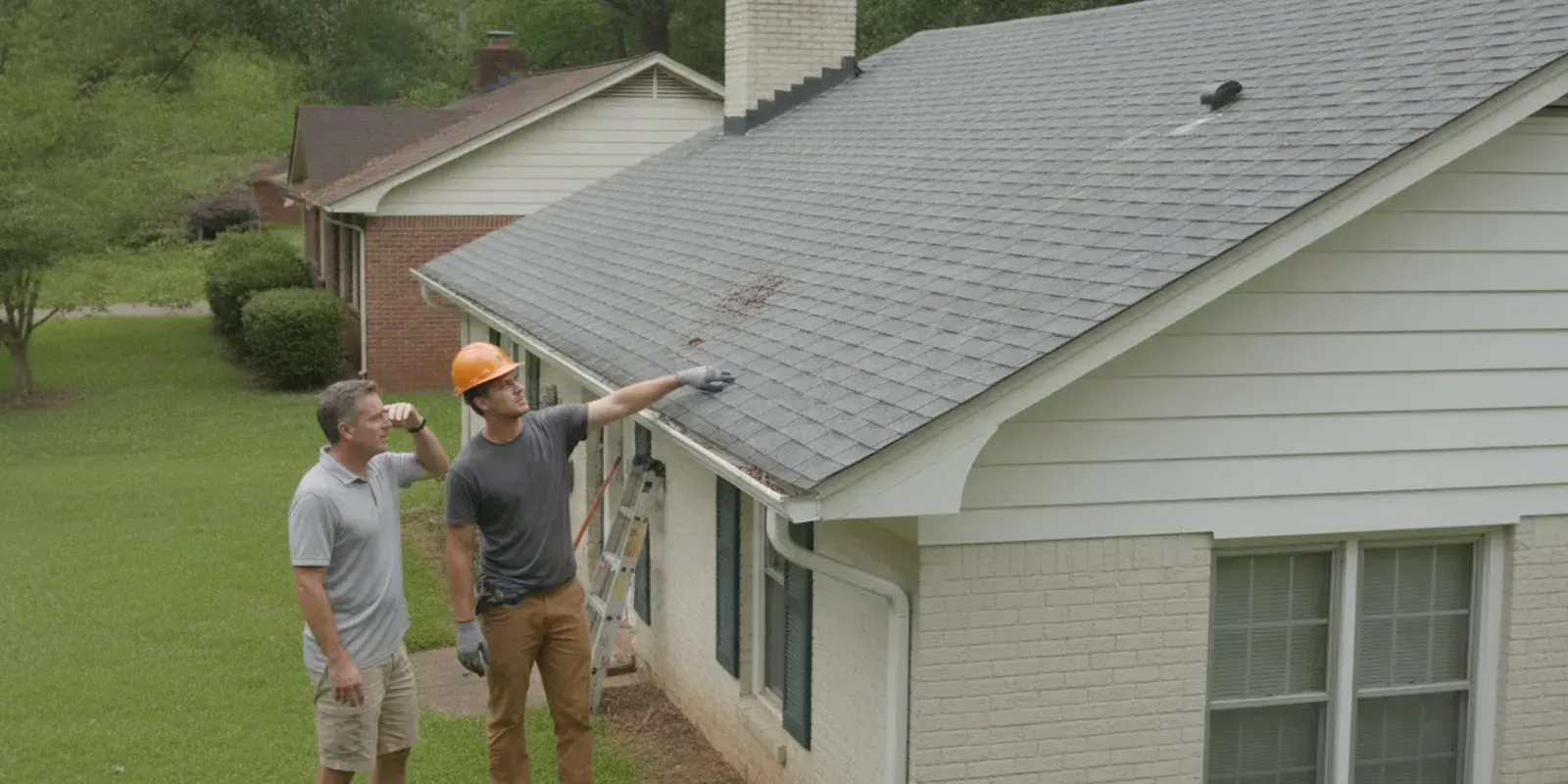
Call a professional roofer as soon as the area is safe, especially when water is actively entering, the ceiling is damaged, the leak returns after rain, or the roof may have storm damage. A roofer can inspect the roof surface, flashing, penetrations, decking, and attic clues to identify the repair needed.
Professional help is particularly important when:
- The leak is near wiring, a light fixture, or an electrical panel.
- The ceiling is bulging, sagging, cracked, or shedding material.
- Wind, hail, a fallen branch, or heavy Georgia rain preceded the leak.
- More than one room shows water marks or dampness.
- The leak appears to stop but returns during the next storm.
- You cannot safely access the attic or roof.
- Water has soaked insulation, drywall, flooring, or stored belongings.
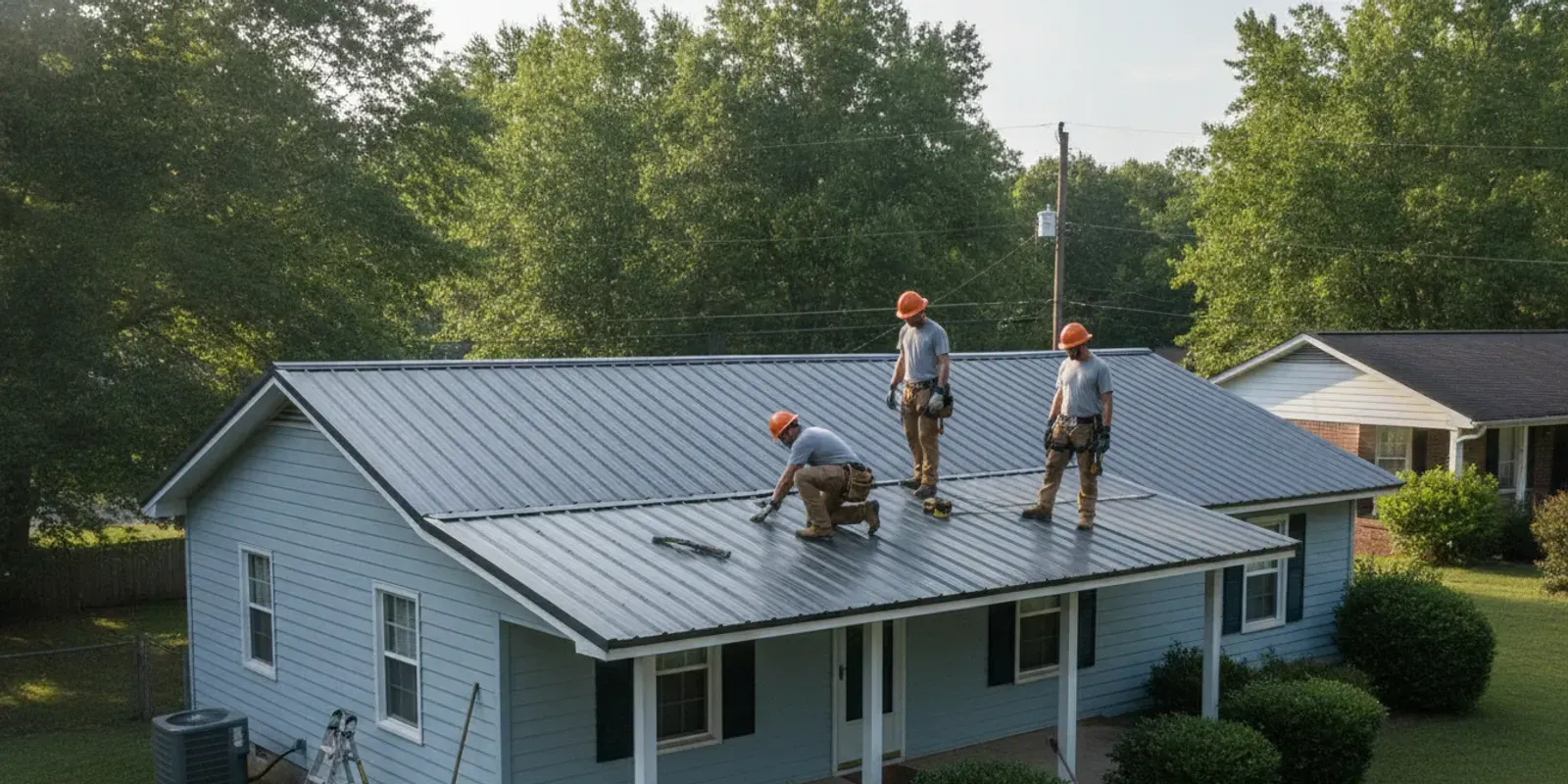
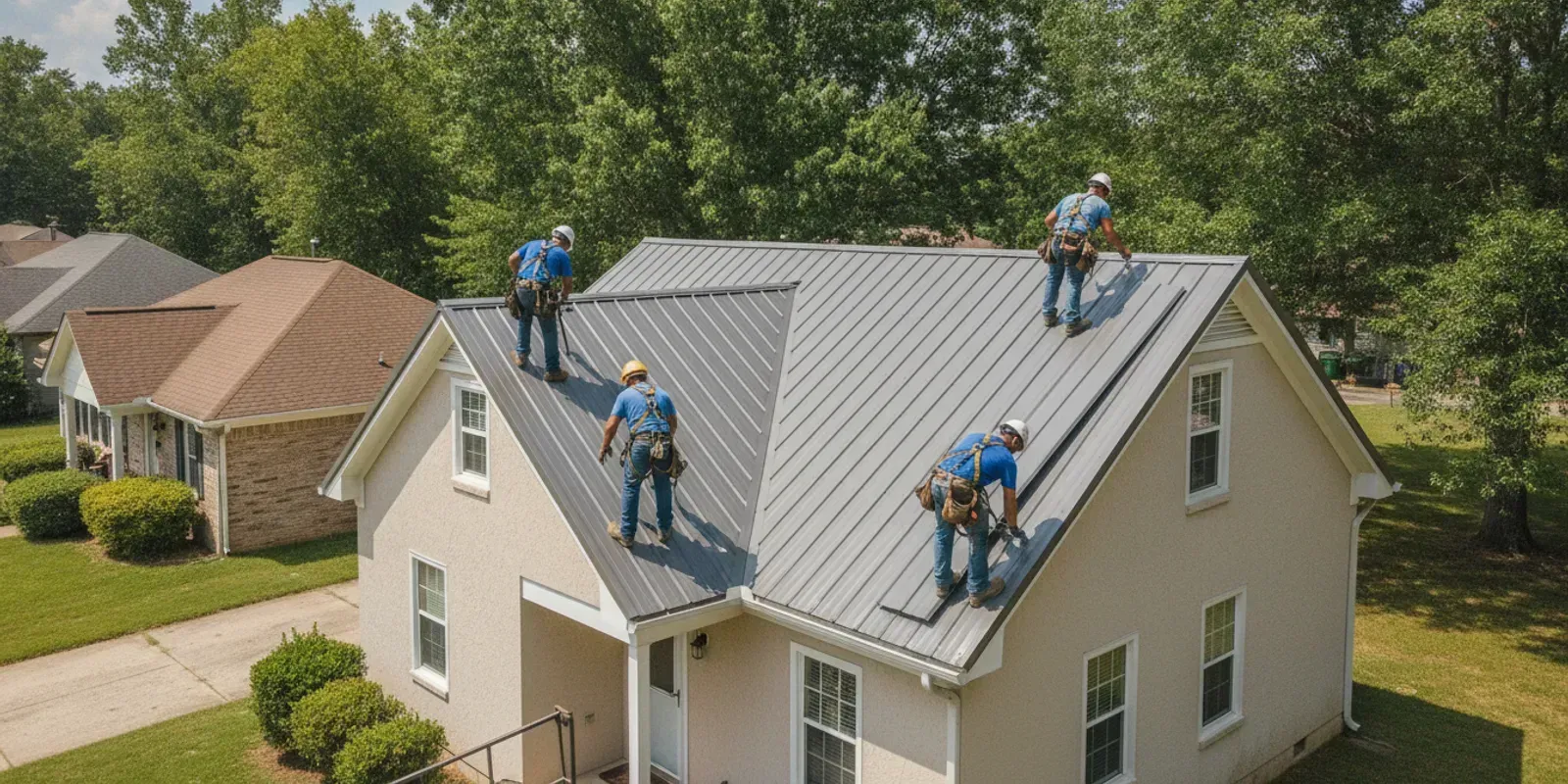
Total Roof Solutions provides residential roof inspections and targeted roof repair for homeowners in the Atlanta area and surrounding Georgia communities. The team can evaluate storm-related damage, flashing, shingles, and other likely entry points, then explain the next step without asking you to diagnose the entire roof yourself.
When you are ready to arrange an assessment, visit Total Roof Solutions' roof repair service page to learn more about the repair process and service area.
What Does a Permanent Roof Leak Repair Involve?
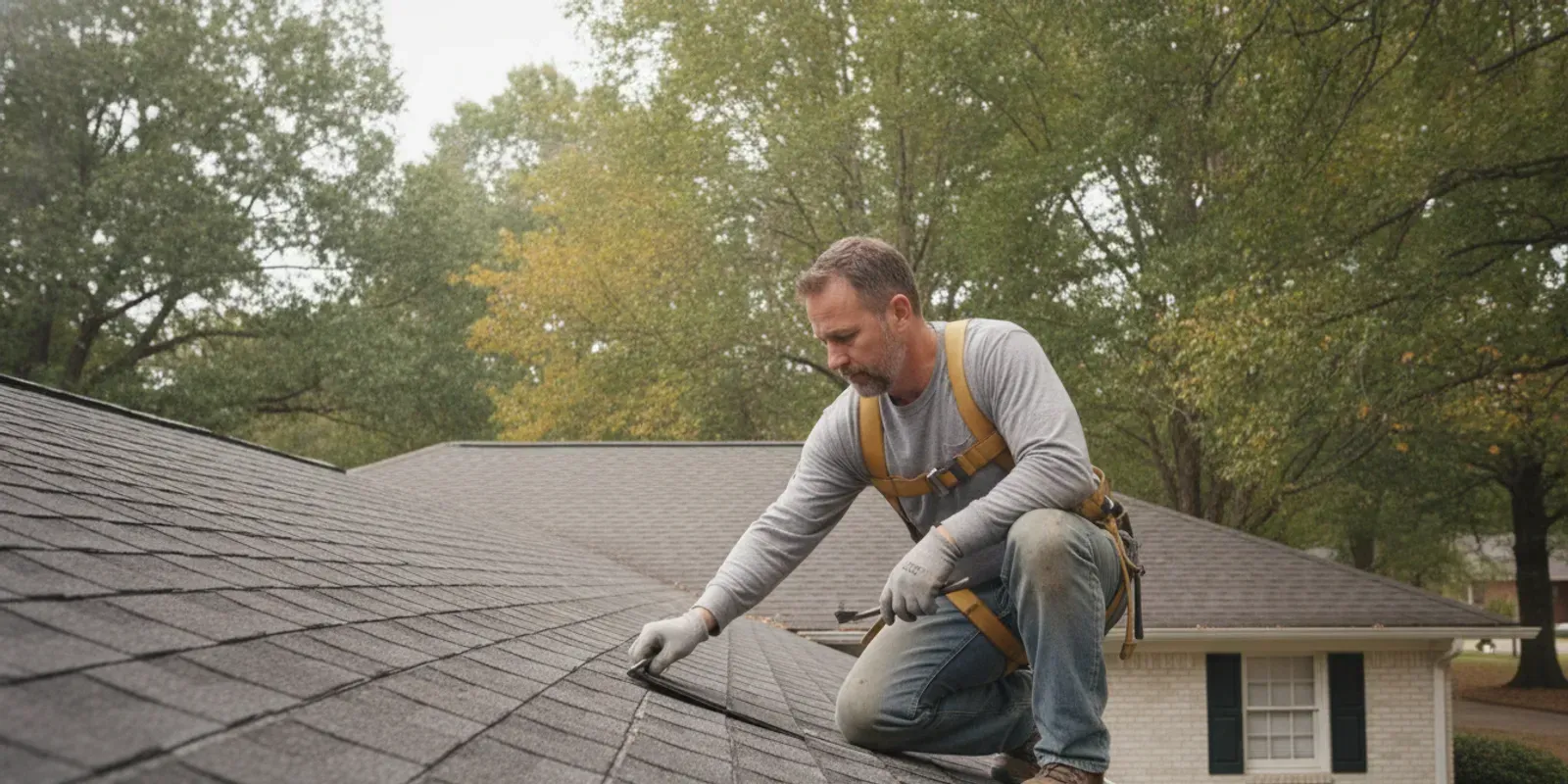
A permanent repair begins with locating the source, determining how far moisture has traveled, and correcting the damaged roof component. Depending on the inspection, the work may involve replacing damaged shingles, repairing flashing, sealing a roof penetration, addressing a valley, or replacing compromised decking. The exact repair should follow the roof's condition, not just the ceiling stain.
A professional roof leak assessment commonly includes:
- Interior review: The roofer notes stains, active drips, attic moisture, and affected rooms.
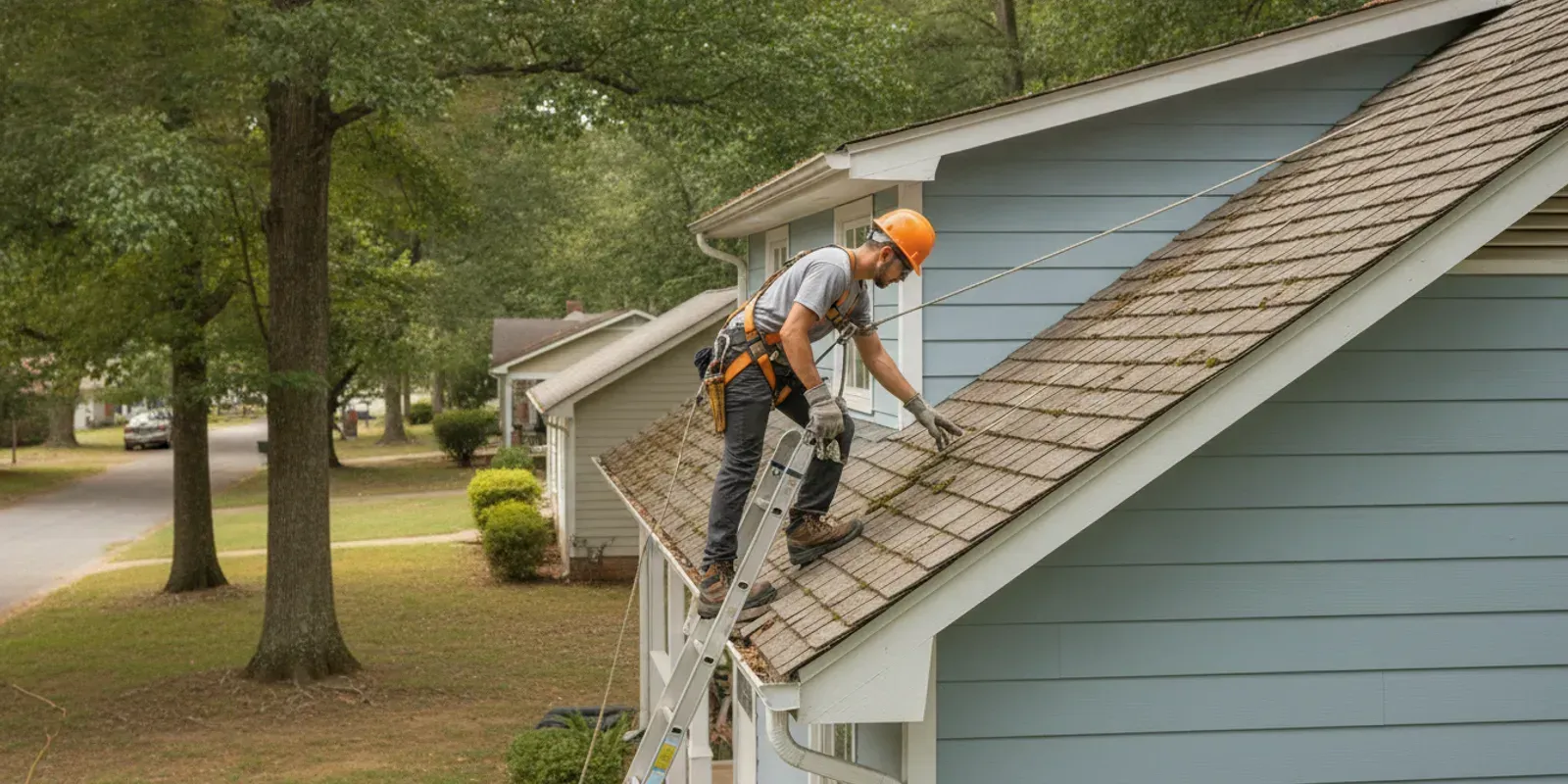
- Exterior inspection: The roof surface, flashing, vents, skylights, valleys, and edges are checked when conditions permit.
- Moisture-path analysis: The likely route from roof entry to indoor symptom is considered because those points may not line up.
- Repair recommendation: The roofer explains the immediate repair and any related condition that should be monitored.
- Follow-up verification: The repaired area is checked after suitable weather to confirm the leak has stopped.
Indoor cleanup is part of protecting the home, but it is not a substitute for correcting the roof. Avoid choosing a repair based only on the spot that dripped. The goal is to stop water at its entry point and address any materials that were damaged along the way.
How Can Georgia Homeowners Prepare for More Rain?
Georgia homeowners can reduce disruption during the next storm by knowing where the main water shutoff and electrical panel are, keeping containers and plastic sheeting available, and saving a roofer's contact information. Routine roof inspections, clear gutters, and prompt attention to missing shingles or damaged flashing can also catch problems before heavy rain exposes them.
Before the next period of severe weather, consider this short checklist:
- Store a bucket, towels, gloves, flashlight, and plastic sheeting where they are easy to reach.
- Keep furniture and electronics away from recurring ceiling stains.
- Trim branches that could threaten the roof, using a qualified tree professional when needed.
- Watch for loose, lifted, or missing shingles after high wind, but do not climb onto the roof to check.
- Take exterior photos only from the ground or another stable, safe location.
- Save repair records, inspection notes, and photos in one place.
For Georgia homes in McDonough, Stockbridge, Locust Grove, Hampton, Griffin, Fayetteville, and nearby communities, weather can change quickly. A calm response protects your household and gives Total Roof Solutions or another qualified roofer the information needed to plan the right repair.
Frequently Asked Questions About Roof Leaks From Inside
These answers cover the most common first questions homeowners ask when water appears inside. The short version is simple: contain the water, avoid electrical and roof hazards, document what happened, and arrange a professional inspection because stopping the drip indoors does not repair the roof.
Can you seal a roof leak from the inside?
Interior materials may slow visible dripping, but they rarely create a permanent roof repair. A roof professional needs to identify and correct the exterior entry point. Until then, use containers, protect belongings, and keep away from unsafe ceilings, roofs, and electrical equipment.
Can I seal my roof from the inside?
Do not rely on caulk, spray foam, paint, or household tape applied from inside the home. These products can conceal moisture while the roof continues to leak. Use inside-only steps for containment and call a qualified roofer for a lasting solution.
What should I do if water is leaking into my walls from my roof?
Move belongings away from the wall, keep clear of outlets and switches, and arrange professional help. If water reaches electrical equipment or the wall is bulging, leave the area and contact qualified emergency assistance. Photograph the damage only when doing so is safe.
What is the best thing to stop a roof from leaking?
The best permanent solution is a repair matched to the actual entry point, such as damaged shingles, flashing, a vent, or roof decking. During active rain, the best indoor response is to contain water and protect people and property until a roofer can inspect the roof safely.
How long can you leave a roof leak before repairing it?
Do not delay once the area is safe. Even a slow leak can wet insulation, drywall, framing, or flooring. Arrange an inspection promptly, and monitor for new stains, odors, soft materials, or returning drips while you wait.
Get Help With a Roof Leak
Knowing how to stop roof leaks from inside can help you reduce immediate water damage, but it cannot replace a professional roof repair. If your Georgia home has an active or recurring leak, contact Total Roof Solutions to request a free inspection and discuss a practical next step.