Seamless Gutters Cost in Georgia: A Homeowner Guide
MEGA MEGA • August 28, 2026
Learn how seamless gutters cost in Georgia, including footage, materials, rooflines, downspouts, removal, guards, and site conditions.

When Georgia homeowners research a new gutter system, they often want one simple number. The better question is what the estimate includes. Roofline length, material, corners, downspouts, old-gutter removal, gutter guards, mounting surfaces, and access can all change the scope of work.
Request a site-specific gutter estimate from Total Roof Solutions
Seamless gutters cost depends on the home's measured linear footage, gutter material, roofline complexity, downspout layout, removal needs, gutter guards, and installation conditions. A contractor must review the actual roof edges and drainage path to explain the scope accurately. A general online figure cannot account for every Georgia home's design, rainfall exposure, fascia condition, or access limitations.
That inspection-first approach matters in communities such as McDonough, Stockbridge, Locust Grove, Hampton, Griffin, and the greater Atlanta area. Two homes with similar floor plans can need different gutter layouts because their roof levels, valleys, trees, grading, and discharge points are not the same.
This guide explains the main factors behind an estimate without presenting an invented fixed quote. It also gives you a practical checklist for comparing proposals and deciding which questions to ask before work begins.
What Does Seamless Gutters Cost Depend On in Georgia?
Seamless gutters cost is driven by the complete drainage system, not just the visible gutter channel. A clear estimate should account for footage, material, roofline shape, downspouts, installation access, existing-gutter removal, mounting conditions, and optional protection from leaves and other debris.
Linear footage is a starting point because it shows how much gutter must be formed and installed. It is not the same as the home's interior square footage. The installer needs to measure each roof edge where runoff enters a gutter, including separate levels, short sections, corners, and transitions.
Material also changes the project scope. Total Roof Solutions offers custom-fabricated seamless aluminum and copper gutters. Aluminum is lightweight and rust resistant, while copper is selected for its distinctive architectural appearance and changing patina. The best fit depends on the home's exterior, the owner's design goals, and the intended level of investment.
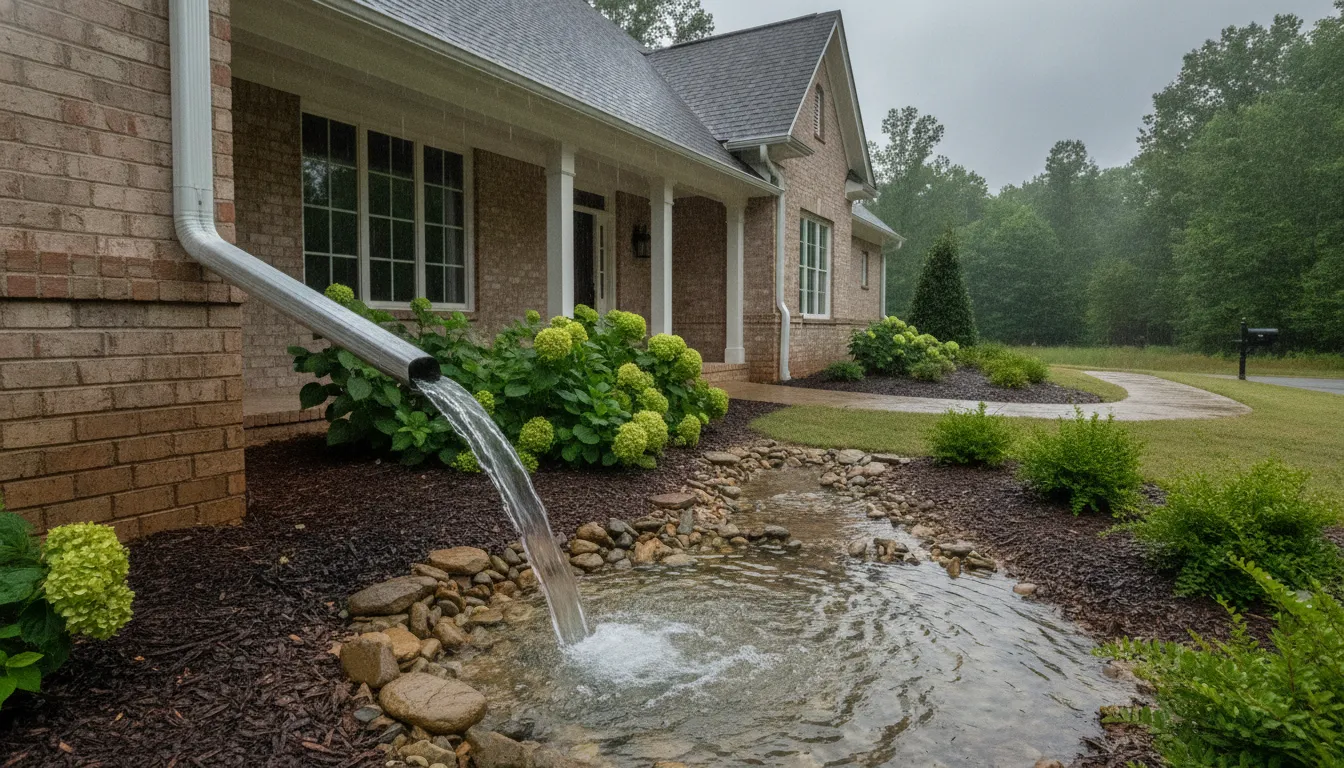
Downspouts are equally important. Their number and location determine how collected water leaves each gutter run. The layout should move water away from the foundation and avoid sending concentrated flow toward walkways, siding, landscaping, or low areas where water already gathers.
Georgia weather adds another planning consideration. Heavy rainfall can quickly expose weak pitch, undersized drainage, loose brackets, or poorly placed outlets. A professional estimate should describe the proposed system, not simply list a material and a total.
Why a measured estimate is more useful than a generic price
A generic online range may help a homeowner understand that projects vary, but it cannot inspect the property. It cannot see whether fascia is sound, whether a porch limits access, or whether an existing downspout discharges beside the foundation. Use online research to build questions, then use an on-site review to define the work.
For an overview of the company's gutter services, visit Total Roof Solutions' gutter installation and repair page. The service page can help you understand the available system options before discussing the conditions at your home.
How Does Linear Footage Affect Seamless Gutters Cost?
Linear footage is the total length of gutter needed along the roof edges, and it is one of the first measurements used in a seamless gutters cost estimate. The number becomes more meaningful when it is paired with the number of runs, corners, roof levels, transitions, and downspouts required to manage runoff.
A simple single-level roof may have a few long, straight runs. A home with multiple elevations may have several shorter sections that require separate measurements and careful connections. A contractor should not estimate the system from the home's living area alone, because interior square footage does not show where rainwater leaves the roof.
Seamless gutters are formed to match the dimensions of each roof run. This reduces the long sectional joints found in assembled gutter systems, but it makes accurate measuring important. Each run still needs appropriate end caps, outlets, corners, hangers, and a pitch that guides water toward the downspouts.
Footage can also interact with roofline design. A longer run may need more than one drainage point. An inside corner may collect water from more than one roof plane. A valley may concentrate runoff in a way that calls for thoughtful outlet placement. These are design questions, not details to leave until after the material is ordered.
What should the footage section of an estimate show?
- The approximate length of each gutter run.
- The roof levels or elevations included in the work.
- The number and type of corners and transitions.
- The proposed downspout locations and discharge direction.
- Any sections excluded because of access, roof design, or existing damage.
When an estimate explains these items, homeowners can compare the scope rather than guessing why two proposals differ. It also creates a useful record for future maintenance or changes to the home's exterior.
 Which Gutter Material Fits Your Home and Budget?
Aluminum and copper can both be appropriate seamless gutter materials, but they serve different design and project priorities. Aluminum is often chosen for a lightweight, rust-resistant system that coordinates with many Georgia homes. Copper is selected when the homeowner wants a prominent architectural finish and accepts a premium material choice.
How seamless gutter materials compareConsiderationSeamless aluminumSeamless copperAppearanceVersatile finish that can blend with roofing, siding, fascia, and trim.Distinctive metal appearance that develops a natural patina over time.Weight and useLightweight and practical for many residential installations.Chosen for architectural character and a premium exterior look.MaintenanceStill needs debris checks, outlet checks, and attention to mounting points.Also needs a sound drainage layout and routine inspection.Planning priorityBalance of appearance, drainage performance, and manageable project scope.Long-term appearance and material character as part of the design.
The material decision should be made alongside the profile, size, pitch, and downspout plan. A premium material cannot compensate for a poor drainage layout, weak mounting surface, or outlet that sends water toward the foundation.
How should homeowners compare material recommendations?
Ask why the recommended material fits the home rather than assuming the least expensive-looking option is the right choice. Consider the roof, fascia, siding, window trim, other exterior metals, and the appearance you want as the system ages. Also ask what care remains necessary after installation.
A material recommendation should be specific. It should identify the gutter material and explain any related components that affect the installation. If the estimate uses broad language such as 'new gutters' without naming the system, ask for clarification before approving the work.
Can Roofline Complexity and Installation Conditions Change the Estimate?
Yes. Roofline complexity and site conditions can change the estimate even when two homes need similar amounts of gutter. Multiple levels, corners, valleys, steep sections, landscaping, fences, porches, and deteriorated fascia can add measuring, preparation, access, and installation work.
More corners create more transitions and connection points. Multiple roof levels can require separate runs and careful movement between elevations. Valleys may send concentrated runoff into a particular section, making outlet placement especially important during heavy Georgia rain.
Pitch must be established across each run so water moves toward the outlets instead of sitting in the channel. If a run is long or the roof planes meet in an unusual way, the installer may need to plan more than one drainage point. The estimate should explain the approach in plain language.
The mounting surface is another important condition. Brackets need a secure place to attach, and the fascia or soffit should be reviewed before new gutters are installed. Rot, deterioration, unusual construction, or limited fastening space may require preparation or a different installation method. Any recommended repair should be listed as a separate scope item when possible.
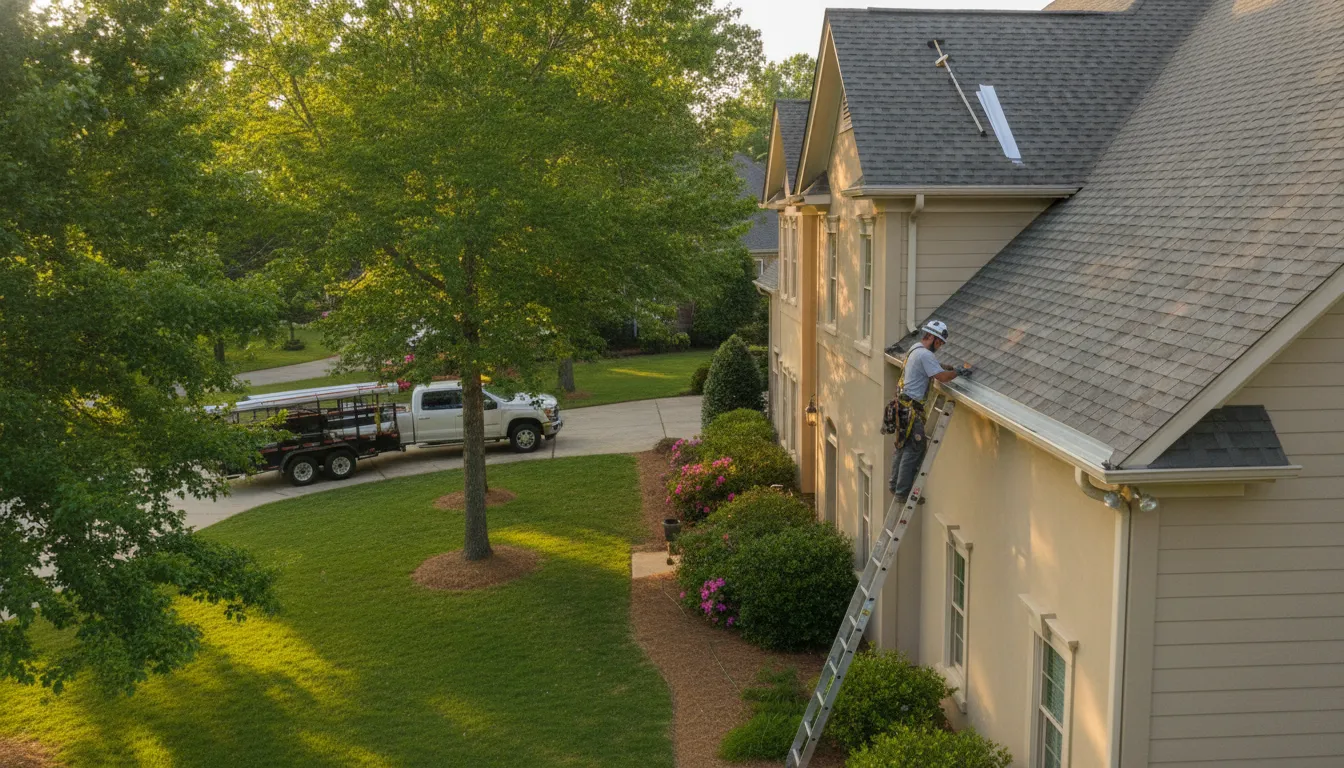
Access can affect the work plan as well. Tight side yards, fences, porches, mature landscaping, and steep areas may limit where ladders and equipment can be positioned. A crew may need to protect siding and plants, move materials carefully, or spend additional time setting up a safe work area.
What installation conditions should be discussed first?
- Condition of fascia, soffits, and existing mounting points.
- Height, pitch, and number of roof levels.
- Landscaping, fences, porches, and other access obstacles.
- Existing drainage problems or water pooling near the home.
- Sections that need removal, disposal, repair, or special protection.
Discussing these conditions early reduces surprises and helps separate essential preparation from optional upgrades. It also lets the contractor design around the home instead of forcing a generic gutter package onto a complex roofline.
Do Downspouts and Gutter Guards Add to the Project?
Downspouts and gutter guards can add to the project scope because they affect drainage performance and future maintenance. Downspouts determine where collected water exits the system, while guards are intended to limit the amount of leaves and larger debris entering the gutter channel.
Downspout placement should follow the roof area feeding each run. A downspout at the nearest convenient corner is not always the best drainage solution. The design should consider roof sections, rainfall, existing grading, walkways, landscaping, and the distance between the outlet and the foundation.
Extensions may be useful when a downspout releases water too close to the home. The goal is to move runoff away from the foundation and exterior surfaces without creating erosion or pooling in another part of the yard. Ask whether extensions, elbows, outlets, and discharge work are included in the estimate.
Gutter guards can reduce the amount of large debris entering the channel, especially on properties near mature trees. They do not remove the need for every inspection. Pine needles, roof grit, and small debris can still collect on or beneath some guard designs. The system still needs an appropriate slope, clear outlets, secure mounting, and a drainage plan.
Total Roof Solutions offers gutter guard systems and describes a lifetime clog-free guarantee as part of its offering. Homeowners should review the specific terms and coverage for the selected system rather than assume every guard product provides the same result. Ask how the guard works with the gutter profile and what maintenance remains necessary.
 Does Removing Existing Gutters Affect the Scope?
Removing existing gutters can affect the scope because the condition of the old system and its fasteners is not fully visible until the work begins. A straightforward removal may differ from a project involving corroded fasteners, damaged sections, difficult disposal, or fascia that needs attention after the old gutters come down.
Ask whether the estimate includes removal, haul-away, cleanup, and inspection of the exposed mounting surface. If the new system will attach in the same general area, the installer needs to know whether the fascia can hold the brackets securely. Repairs or preparation should be described rather than hidden in a broad allowance.
Removal is also a chance to identify why the previous system did not perform well. Look for sagging, standing water, overflow marks, loose brackets, failed joints, clogged outlets, and discharge points that end too close to the home. Replacing the visible channel without correcting the drainage layout can leave the underlying problem in place.
The right questions are practical: What will be removed? What will be reused, if anything? How will the old materials be disposed of? Will fascia and soffits be inspected? Will any repair be approved before it changes the work? Clear answers make the estimate easier to understand.
How Can Georgia Homeowners Compare Gutter Estimates?
Compare estimates by matching the scope, materials, drainage plan, preparation, and warranty details, not by comparing one bottom-line number. A lower-looking proposal may exclude removal, extensions, fascia preparation, guards, or cleanup. A higher-looking proposal may include details another contractor left out.
- Confirm the measured footage. Look for the approximate length of each run, the roof levels included, and the corners or transitions that require additional planning.
- Identify the material and profile. Confirm whether the system is seamless aluminum or copper, along with the profile, finish, and components included.
- Review downspouts and discharge points. Make sure the number, placement, elbows, extensions, and direction of runoff are explained.
- Ask about pitch and mounting. The proposal should explain how water will move through each run and how brackets will attach to the home.
- Separate removal and repairs. Verify whether old-gutter removal, disposal, fascia or soffit work, cleanup, and site protection are included.
- Evaluate guards as an option. Ask which guard system is recommended, what it covers, and what maintenance is still expected.
- Read warranty and follow-up terms. Confirm what workmanship coverage includes and who to contact if a drainage or mounting concern appears later.
A site-specific estimate should make it easier to decide, not pressure you into a rushed approval. Total Roof Solutions has served Georgia homeowners and businesses from its McDonough base since 2009. You can learn more about the company's background on the Total Roof Solutions company page.
For related roofing and exterior information, browse the Total Roof Solutions blog. The most useful next step for your property, however, is a direct review of the roofline and drainage path.
Get a clear, site-specific gutter estimate before choosing your system
Frequently Asked Questions
How much do seamless gutters cost per foot?
A per-foot figure is only one part of the project scope. Material, roofline complexity, corners, downspouts, access, fascia condition, removal, guards, and discharge planning can all affect the work. A measured estimate is more useful than applying a generic figure to every Georgia home.
Are seamless gutters worth the investment?
They can be a practical choice when you want a custom-fitted appearance and fewer long sectional joints. Their value still depends on correct pitch, secure mounting, properly placed downspouts, and routine inspection. Seamless construction does not replace good drainage design.
What factors influence the price of seamless gutters?
The main factors are linear footage, material, roofline shape, downspout design, installation access, removal, mounting conditions, and optional gutter guards. Georgia rainfall and the home's grading can also influence how the system should discharge water.
Does roof complexity affect seamless gutter pricing?
Yes. Multiple roof levels, corners, valleys, steep areas, unusual transitions, and limited access can require additional measuring, setup, fabrication, or installation care. The contractor should explain how those conditions affect the scope.
Does an estimate include old-gutter removal?
Not always. Ask whether removal, disposal, cleanup, and inspection of the exposed fascia and soffit are included. If the mounting surface needs repair, that work should be identified before the new gutters are installed.
Ready for a Site-Specific Gutter Estimate?
The most reliable way to understand your seamless gutters cost is to review the actual home. Measurements, materials, roofline, downspouts, removal needs, guards, fascia, and access can all change the recommended scope.
Total Roof Solutions can help you understand what your Georgia gutter project includes without relying on a one-size-fits-all number. Visit the contact page to request a site-specific estimate for your property.
Request your site-specific gutter estimate from Total Roof SolutionsThe body content of your post goes here. To edit this text, click on it and delete this default text and start typing your own or paste your own from a different source.