Choosing the Right Roofing Materials for Lasting Quality
SEO Analysis • November 7, 2024
When it comes to building or renovating a home, one of the most important decisions you will make is selecting the right roofing materials. Your roof is not just an aesthetic feature; it plays a very important role in protecting your home from weather elements like rain, snow, wind, and sun. A good roof keeps your home safe and enhances its overall value. In this blog, we will explore various roofing materials, their benefits, and also tips on how to choose the right one for your home.
Understanding Your Roofing Needs
Before you dive into the types of roofing materials available, it’s essential to understand your specific needs. Consider the following factors:
1. Climate:
The weather conditions in your area greatly affect your roof choice. For instance, if you live in a place with heavy snowfall, you might want materials that can withstand the weight of snow. In contrast, areas with high temperatures may require materials that reflect heat. To ensure you select the best roofing options for your climate, consult with local roofers in Clayton who can provide expert advice tailored to your specific needs.
2. Home Style:
The architectural style of your home should also influence your roofing material choice. Traditional homes often look best with asphalt shingles or clay tiles, while modern homes may suit metal roofing or flat roofing systems.
3. Budget:
Roofing materials vary in cost, so it’s crucial to set a budget before you start shopping. Keep in mind that cheaper materials may need to be replaced sooner, while higher-quality options might be a better long-term investment.
4. Lifespan:
Different materials have varying lifespans. Consider how long you want your roof to last. Some materials, like slate, can last over a century, while others may only last a few decades.
5. Maintenance:
Some roofing materials require more maintenance than others. If you prefer a low-maintenance option, look for materials that are durable and resistant to damage, which can help reduce the frequency of roof maintenance in Rockdale.
Common Roofing Materials
Now that you understand your needs let’s look at some common roofing materials, their pros and cons, and how they can set into your roofing project.
1. Asphalt Shingles
Description: Asphalt shingles are one of the well known roofing materials in North America. They are made up of a fiberglass base topped with asphalt and also mineral granules.
Pros:
- Cost-Effective: Asphalt shingles are relatively inexpensive compared to other roofing options.
- Variety of Styles: They come in different colors and styles, that makes it easy to match your home’s aesthetic.
- Easy to Install: Installation is straightforward, which saves you on labor costs.
Cons:
- Lifespan: They typically last around 20-30 years, which is shorter than some other materials.
- Weather Vulnerability: Asphalt shingles can be damaged by high winds as well as may fade over time due to sun exposure.
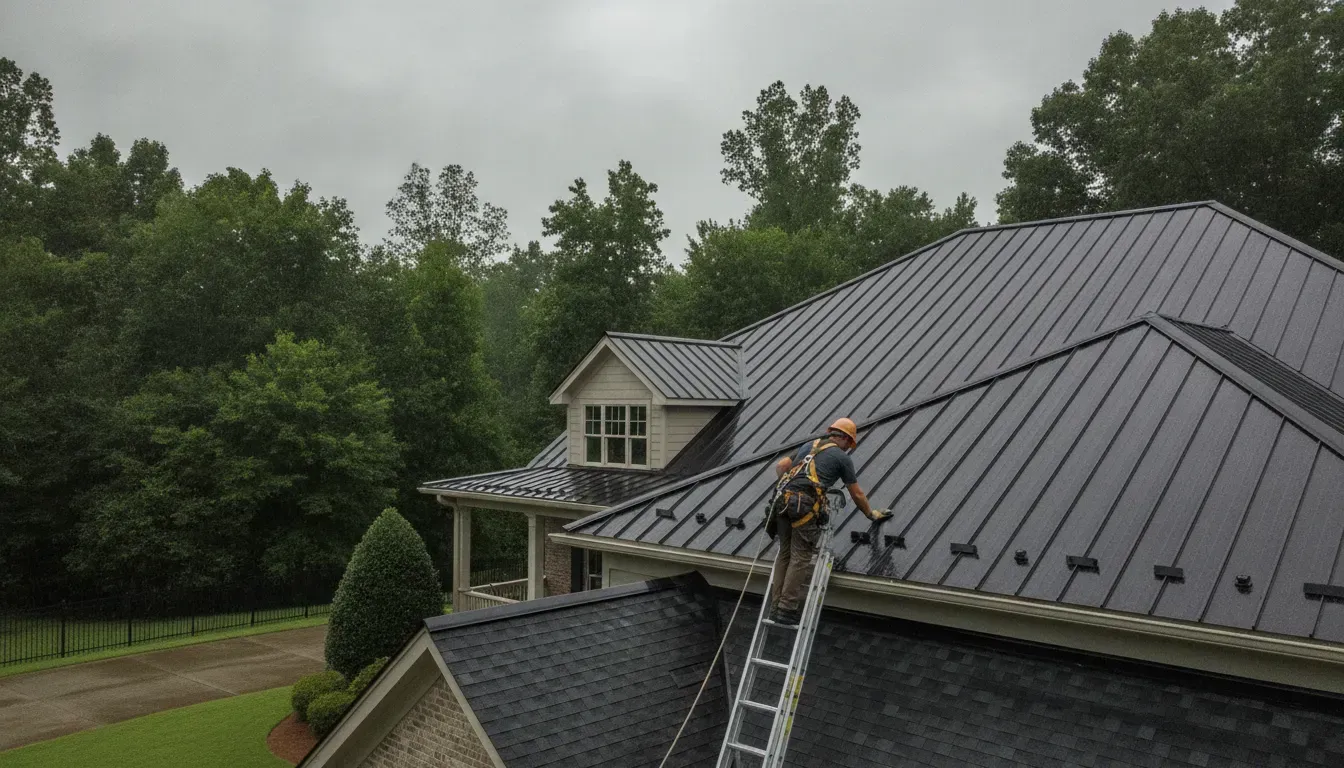
2. Metal Roofing
Description: Metal roofing is made from materials like steel, aluminum, or copper. It has become increasingly popular due to its durability and modern appearance.
Pros:
- Longevity: Metal roofs may be last 40-70 years, depending on the material.
- Energy Efficiency: They reflect heat, which can help lower cooling costs in hot climates.
- Low Maintenance: Metal roofs require minimal upkeep.
Cons:
- Cost: Metal roofing may be more expensive upfront than asphalt shingles.
- Noise: Some people find metal roofs noisy during rain or hailstorms.
3. Clay and Concrete Tiles
Description: Clay and concrete tiles are durable materials commonly found in Mediterranean as well as Spanish-style homes.
Pros:
- Longevity: These tiles can last over 50 years with proper maintenance.
- Aesthetic Appeal: They add a distinctive look to a home.
- Fire Resistant: Clay and concrete are naturally fire-resistant materials.
Cons:
- Weight: They are heavier than other materials, which may require additional structural support.
- Cost: Clay and concrete tiles can be expensive to install.
4. Slate
Description: Slate is a natural stone that provides a high-end look and exceptional durability.
Pros:
- Lifespan: Slate roofs can last more than 100 years if properly maintained.
- Natural Beauty: The unique appearance of the slate adds character to any home.
- Fire Resistant: Like clay, slate is fire-resistant.
Cons:
- Cost: Slate roofing is one of the most expensive options available.
- Weight: It requires a strong support structure due to its weight.
5. Wood Shingles and Shakes
Description:
Wood shingles and shakes are made from cedar, pine, or redwood. They offer a natural look that enhances a home’s exterior.
Pros:
- Aesthetic: They provide a beautiful, rustic appearance.
- Insulation: Wood naturally insulates better than many materials.
Cons:
- Maintenance: They require maintenance on the regular basis to prevent mold, rot, and insect damage.
- Lifespan: Wood roofs typically last around 20-40 years.
6. Synthetic Roofing
Description: Synthetic roofing materials mimic the appearance of natural materials like slate and wood but are made from man-made products.
Pros:
- Lightweight: Synthetic options are lighter than their natural counterparts.
- Durability: Many synthetic materials are designed to resist the elements and require less maintenance.
- Cost-Effective: They are more affordable than natural materials while still providing a similar look.
Cons:
- Varied Quality: The quality of synthetic materials can vary widely, so it’s essential to research brands.
- Less Proven Track Record: Some synthetic options may not have as long a history of use as traditional materials.
Factors to Consider When Choosing Roofing Materials
When deciding on roofing materials, keep the following factors in mind to ensure you make the best choice for your home:
1. Local Building Codes
Before selecting your roofing material, check your local building codes. Some areas have specific regulations regarding the type of roofing that can be installed, particularly concerning fire resistance and weight restrictions.
2. Installation Costs
Different materials come with varying installation costs. While some materials may be less expensive, they might require specialized installation techniques, increasing labor costs.
3. Warranty and Lifespan
Look for materials that come with a solid warranty, as this indicates the manufacturer’s confidence in their product. Additionally, consider the lifespan of the material. Investing in a longer-lasting roof can save you money in the long run.
4. Environmental Impact
If sustainability is important to you, consider impact of the environment of your chosen materials. Look for options that are recyclable, energy-efficient, or sourced sustainably.
5. Aesthetic Appeal
Your roof significantly impacts your home’s curb appeal. Choose a material that complements your home’s architectural style and enhances its appearance. You can view samples or visit homes with similar roofing materials to see how they look in real life.
Making the Right Choice
With so many roofing materials available, it’s essential to take your time and make an informed decision. Consulting with
roofing contractors in Jasper can provide valuable insights and expertise. Here are some steps to help you choose the right roofing material:
1. Do Your Research
Take the time to research different roofing materials, their benefits, and drawbacks. Look for reviews and recommendations from other homeowners or professionals in the industry.
2. Consult with Professionals
Engaging with roofing contractors or consultants provides valuable insights into which materials are suited for your home and climate. They also helps you navigate local building codes and regulations.
3. Get Multiple Quotes
Obtain quotes from different contractors so that you can compare pricing as well as services. Make sure each quote includes a detailed breakdown of material and labor costs.
4. Consider the Long-Term
Think beyond the initial costs. Evaluate the long-term benefits of different roofing materials, including maintenance, energy efficiency, and lifespan. Sometimes, spending more upfront can lead to significant savings over time.
5. Look for Deals and Promotions
Check out for discounts or promotions from roofing suppliers or contractors. Off-season purchases can often lead to lower prices.
6. Finalize Your Decision
Once you have gathered all the information, weigh your options based on your priorities—be it budget, aesthetics, or longevity. Choose the roofing material that aligns best with your needs and preferences.
Conclusion
Selecting the right roofing material is a very important decision that affects the safety, appearance, and value of your home. By understanding the various materials available, considering your specific needs, and consulting with professionals, you can also make an informed choice that will provide lasting quality and peace of mind.
At Total Roofs, we specialize in helping homeowners select as well as install the best roofing materials for their needs. Our experienced team is ready to guide you through the process, ensuring you make the right choice for your home. Whether you’re looking for durability, style, or cost-effectiveness, we have the expertise to help you achieve your roofing goals.
If you're ready to initiate your roofing project or have any questions about your options, don’t hesitate to reach out to us atTotal Roofs. Your home deserves the best protection, and we’re here to provide it!