Roof Repair Scam: How Georgia Property Owners Can Protect Themselves
MEGA MEGA • October 23, 2026
Learn how to spot a roof repair scam, verify a contractor, document storm damage, and compare estimates before agreeing to work on your Georgia property.

A roof repair scam can begin with a knock at the door, a call after a storm, or a promise to fix a problem before you have time to ask questions. For Georgia homeowners and property decision-makers, the safest response is to slow down, verify the person and company, and get the proposed work in writing before you agree or pay.
Request a free roofing estimate
What does a roof repair scam look like?
A scam is an attempt to get money, personal information, or an insurance benefit through misleading claims or pressure. In roofing, that may mean inventing damage, offering repairs that are unnecessary, taking a deposit and disappearing, or doing work that does not match what was promised. Some warning signs also appear in legitimate sales conversations, so one unusual detail alone does not prove fraud. Look at the whole interaction and verify before proceeding.
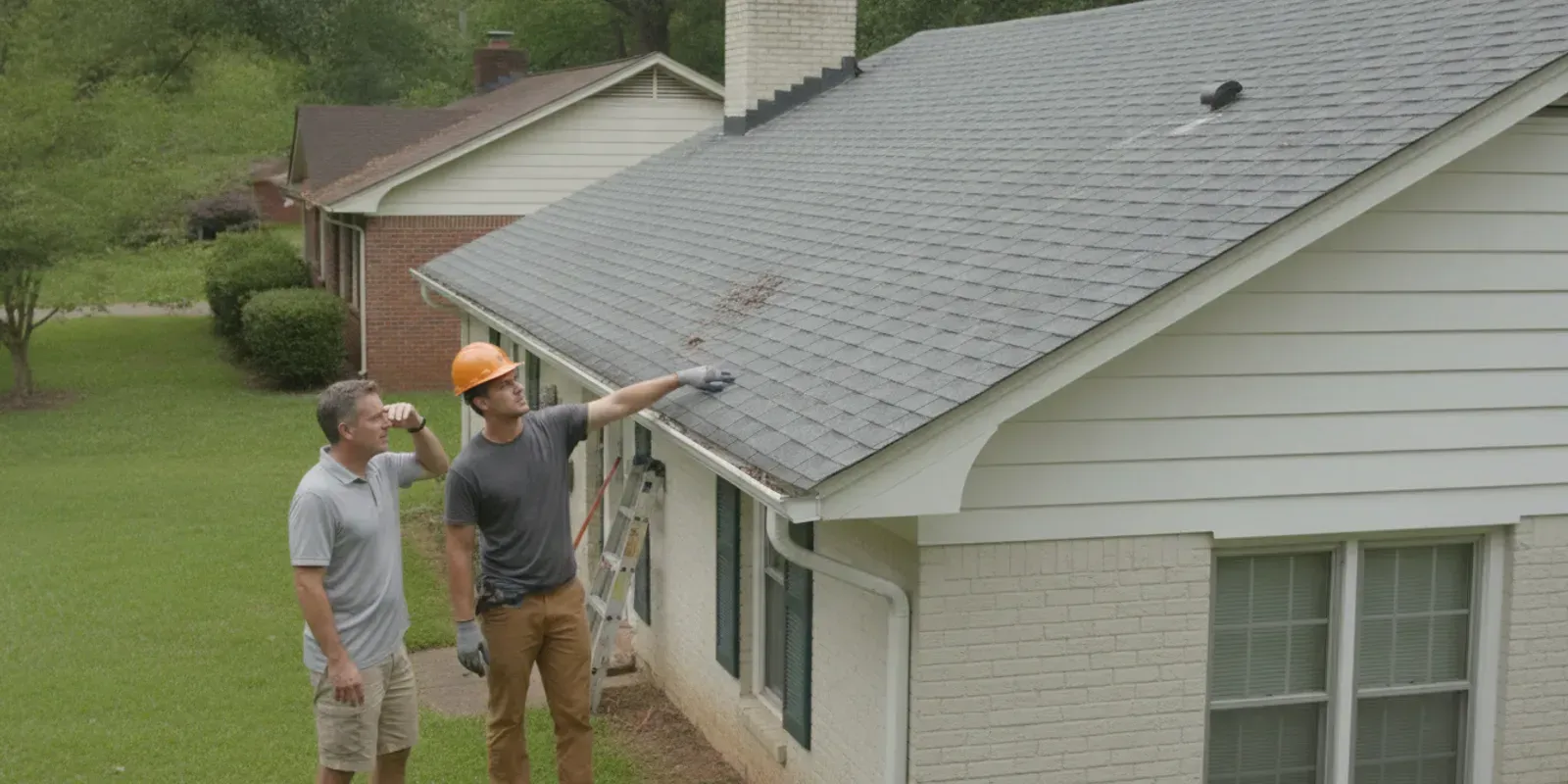
The Better Business Bureau has warned consumers about people posing as roofers who offer a “free” inspection or immediate repair. Its roof inspection scam alert describes reports of suspicious offers. An inspection offer is not automatically a scam, but an unsolicited visit is a good reason to ask for company details and take time to check them.
Scams can target residential owners, commercial property managers, landlords, real estate professionals, and general contractors. The practical protections are similar: establish who is contacting you, document the property condition, compare a written scope, and avoid rushed financial decisions.
Which warning signs should make you pause?
Pay attention when a salesperson pushes you to decide before you can verify the company or understand the work. A reliable professional should be able to explain what they observed, what they recommend, and what happens next without requiring an immediate signature.
- Unrequested urgent claims. Someone says they were already working nearby, spotted severe damage from the street, or can see a problem you must fix today. Ask for a clear explanation and arrange your own assessment.
- Pressure to sign immediately. Be cautious if a person says an offer, price, or insurance opportunity will disappear unless you sign right now. Take the documents away and read them.
- A vague or verbal-only scope. “We will fix the roof” does not explain the location, materials, tasks, exclusions, or total price. Ask for those details in writing.
- Large or unusual payment demands. Do not hand over cash or pay the full amount upfront without understanding the contract, payment schedule, and protections. Confirm the payee and retain a receipt for any payment.
- Requests to misstate damage. Do not agree to inflate, invent, or misdescribe damage for an insurer, or sign a document that you do not understand.
- Unverifiable identity or business information. A person who will not provide a company name, address, written estimate, or references is difficult to hold accountable.
- Promises that sound absolute. Be wary of guaranteed insurance approval, a guaranteed outcome before a proper assessment, or claims that a repair will solve every possible roof problem.
- Pressure to share sensitive information. Do not provide financial account details, identity documents, or insurance credentials to an unverified person.
A professional may use a door-to-door introduction or offer an estimate, especially after a storm. The issue is not simply how you met. It is whether the person respects your choice to verify, provides clear information, and allows you to make an informed decision.
When someone makes a claim about damage, separate what they know from what they are asking you to do. Ask which roof area they mean, what they observed, and whether they can show you dated photographs taken during their visit. A picture can help clarify the conversation, but it does not by itself establish the cause, extent, or repair needed. Write down the person’s name, company, phone number, and the time of the visit. Then end the conversation if you need time; you do not have to decide at the door.
Use a simple pause-and-check sequence: do not sign, share sensitive information, or pay while the person is present; independently look up the business contact details; call the company using those details rather than a number supplied only by the visitor; and ask whether the person represents it. If the company confirms the visit, you can still choose whether to schedule an assessment. Verification helps establish identity, but it does not mean you must accept the proposed work or price.
How can you check a roofing company before hiring?
Start with the company name and contact information on the estimate. Search independently rather than relying only on a phone number, link, or review page supplied by the salesperson. Compare the details across the company website, business records available to you, and any references you choose to contact.
- Confirm the identity. Ask for the business name, office contact details, and the name of the person responsible for your project. Check that the company uses consistent details on its written proposal and website.
- Ask about insurance and credentials. Ask what coverage applies to the work and request current documentation where appropriate. Verify certifications or memberships directly with the issuing organization if they matter to your decision. Do not assume a logo on a truck proves a credential.
- Check references and completed work. Ask for examples of similar projects and contact references independently. Look for details about communication, the scope completed, and how any concerns were handled—not just a star rating.
- Read the contract before signing. Make sure it identifies the property, work, materials, price or pricing method, payment terms, schedule expectations, and how changes will be approved. Ask what is excluded and how hidden conditions are handled.
- Compare more than one proposal when practical. Compare like with like: the same roof areas, materials, repair method, disposal, and included details. The lowest total is not necessarily the best value if it omits necessary work.
- Keep a record. Save the estimate, contract, messages, payment receipts, photographs, and notes about conversations. Use written communication for important changes or approvals.
For a starting point, review Total Roof Solutions' residential roof repair information and its project examples. You can also read guidance on finding a repair service you trust. These resources can help you form questions; they should not replace checking any contractor you may hire.
Do not treat a single online signal as proof either way. A professional-looking website, a certificate image, or a collection of positive reviews cannot establish that the particular proposal is suitable for your property. Likewise, a limited online footprint is a reason to ask for additional documentation, not automatic proof of wrongdoing. Check several details together: consistent business identity, clear communication, references relevant to the job, current documentation when applicable, and a written agreement that answers your questions.
References are most helpful when you ask focused questions. Was the project similar in size or roof type? Did the company explain changes before doing extra work? Were the final documents and payments clear? A reference cannot predict your own experience, but specific answers may reveal how a contractor handles communication and accountability. Keep your comparison fair by asking each candidate for the same information and giving each the same description of the issue.
What should a clear roof repair proposal include?
A written proposal should give you enough detail to understand what you are buying and to compare it with another option. The right level of detail depends on the size of the job, but a one-line description makes it harder to know whether the work addresses the reported problem.
Proposal item — What to look for — Question to ask
Observed condition — Specific roof area and visible concern, with photos or notes where useful — What did you observe, and what could not be confirmed?
Scope of work — Repair tasks, materials, and the area included — What exactly will be removed, repaired, or replaced?
Price and payment — Total or understandable pricing, payment timing, and accepted methods — When is each payment due, and what does it cover?
Exclusions and unknowns — Items not included and how concealed damage or extra work will be handled — Will you get my written approval before additional work?
Schedule and closeout — Expected start or timing, cleanup expectations, and records provided after work — What documentation will I receive when the job is done?
Use the proposal to make an informed comparison, not as a checklist that guarantees a company is trustworthy. A dishonest contractor can produce paperwork, and a legitimate contractor may need to revise an estimate after discovering a concealed condition. What matters is that the work and any changes are explained, documented, and approved before they proceed.
When a proposal is unclear, ask for a revised version rather than relying on a verbal assurance. If an estimate is for a leak, you may also find it useful to review this guide to roof leak repair and the overview of repairing or replacing a roof. Each situation is different, and an article cannot diagnose a roof from a distance.
Pay particular attention to the boundary of the work. A proposal might cover one flashing detail, a section of shingles, or a temporary protective measure, while leaving adjacent areas or later repairs out of scope. Ask the contractor to identify the precise area and explain what the proposed task is intended to address. If the source of a leak is uncertain, ask how the assessment reached its conclusion and what would happen if the first repair does not resolve the observed issue.
Also distinguish a fixed scope from an allowance or an estimate that may change. Ask what conditions could change the total, how the company will notify you, and whether work will stop until you approve a written change. For example, if concealed damage is discovered after a section is opened, the agreement should explain how the added work and price will be presented. A clear process helps you make a new decision instead of being surprised by an invoice after the work is complete.
Before signing, read the entire agreement, including attachments and any cancellation or dispute language. Make sure any promises made during the sales conversation are reflected in the documents. Do not sign blank spaces or rely on a promise that a key detail will be filled in later. If a clause is confusing, ask for plain-language clarification and take time to seek qualified advice if needed.
What should you do if someone approaches after a storm?
Storm damage can need timely attention, but urgency is not a reason to skip basic checks. Keep yourself safe, document what you can see from the ground, and contact a company through contact information you found independently. Do not climb onto a wet, damaged, or steep roof to verify a salesperson's claim.
- Make the property safe. If there is active water intrusion or an immediate hazard, protect people and belongings first. Avoid touching damaged electrical equipment or entering an unsafe area.
- Record visible conditions safely. Take date-stamped photos from the ground or other safe locations. Note when the storm occurred and where you see water or debris. Do not remove evidence or make temporary changes that put you at risk.
- Arrange an assessment on your terms. Ask for the company's name and contact details, then verify them independently. You can choose whom to invite to assess the roof.
- Ask for observations in writing. Request descriptions and photos of the areas of concern, and ask which recommendations are urgent versus preventive.
- Review before authorizing work. Read the scope, price, and payment terms. If a temporary measure is proposed, ask what it does and what permanent work may still be needed.
Do not let a stranger persuade you to sign over insurance benefits, provide your policy login, or authorize broad work you have not reviewed. A legitimate discussion about storm work should not require you to misrepresent what happened. For more on the roof-damage response process, see Total Roof Solutions' information about hail damage and insurance claims.
Make your record useful by separating observations from conclusions. Note the date and time of the storm, when you first noticed a stain or drip, the room or area affected, and any actions you took to protect belongings. Photograph the interior condition and any visible exterior signs only from safe places. Save receipts for emergency materials or services. These records can help you explain the timeline to a contractor or insurer; they do not establish by themselves what caused the damage or what coverage applies.
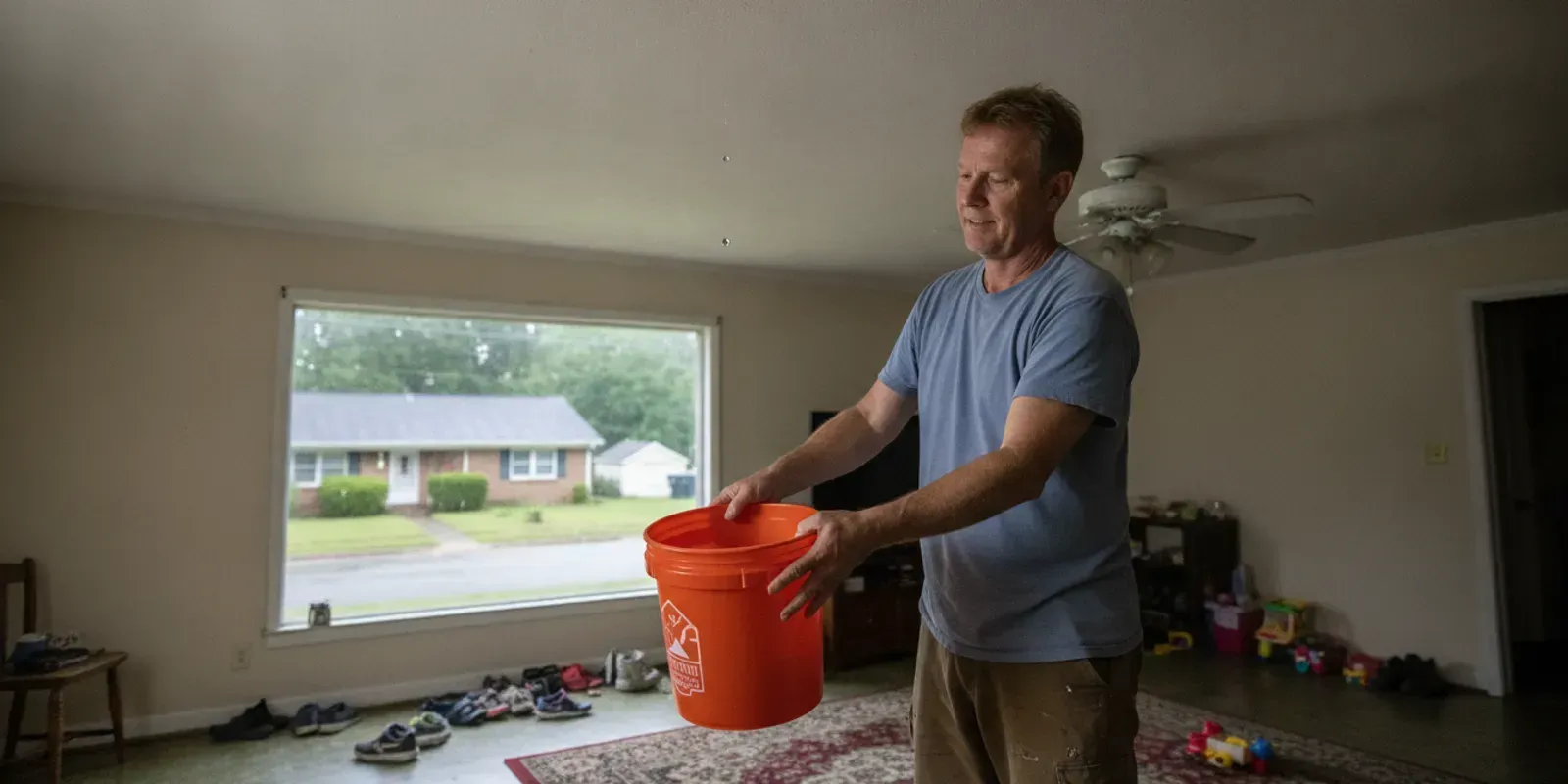
If water is entering, focus on limiting further harm without creating a new safety risk. Move items away from the affected area if possible, use a container to catch dripping water, and keep people away from bulging ceilings or wet electrical fixtures. Do not go onto a roof during or just after severe weather, and do not attempt a repair that requires climbing or working near power lines. Ask any contractor proposing urgent work to distinguish temporary protection from a permanent repair and to document both the immediate task and expected follow-up.
How should you handle a possible insurance claim?
Contact your insurer through the phone number or portal you already know, and ask about your policy's reporting and documentation process. Coverage depends on the policy, the cause and timing of damage, and the insurer's review; no roofing contractor can promise that a claim will be approved or tell you to make a claim that does not reflect the facts.
Keep the roles clear. A contractor can describe observed roof conditions and provide a repair proposal. Your insurer explains policy requirements, coverage decisions, and claim procedures. You decide whether to authorize work and should read any agreement before signing it. If you are uncertain about a document, request time to review it and seek qualified advice before committing.
- Report facts accurately and keep copies of messages and claim documents.
- Ask the insurer what documentation it needs and whether it wants to inspect before repairs.
- Ask the contractor to separate observed damage, recommended work, and optional items in writing.
- Do not accept a promise that the contractor can guarantee the insurer's decision or eliminate your out-of-pocket responsibility.
- Before emergency work, ask what is necessary to protect the property now, what it costs, and what later work remains.
For additional planning, you can review the company's roofing financing information, but compare the terms and decide whether any option suits your circumstances. Financing is a separate decision from whether damage exists or whether insurance will cover it.
Keep claim paperwork and the repair agreement as separate records. Ask your insurer how it wants estimates, photos, and invoices submitted, and confirm any deadlines or inspection steps directly with the insurer. If a contractor offers to communicate with the insurer, clarify what that means and what decisions remain yours. Read any authorization carefully before signing; do not give another party your account password or let a third party submit information you have not reviewed.
A truthful description is important even when the cause is not yet known. You can say what you observed and when you noticed it without guessing that a particular storm caused it. A contractor can describe roof conditions visible during an assessment, while the insurer evaluates the claim under the policy. If those accounts differ, ask for the basis of each conclusion and keep the exchange in writing rather than changing facts to match a preferred outcome.
What if you already paid or signed?
Do not panic, and do not rely on a salesperson's explanation alone. Gather every document and message, note the dates and amounts, and contact the company using independently verified contact details. Ask for a written status update, an itemized account of payments, and a copy of the agreement if you do not already have one.
If you believe you were misled, contact your bank or payment provider promptly to ask what options may be available. Contact your insurer directly if a claim or policy information is involved. You can also report suspected fraud to the appropriate consumer protection or law enforcement agency in your area. Keep a record of each report and any reference number. The right avenue depends on what happened and where you live; this article is general guidance, not legal or insurance advice.
If work has started, document the current condition safely and communicate in writing about any concerns. Avoid making accusations you cannot support, but do not authorize additional work until you understand the scope and cost. When the roof has an active leak, arrange an independent assessment so the property can be protected while you resolve the disagreement.
Make a short timeline while details are fresh: when the company first contacted you, what was represented, what you signed, when payment was made, and what work has taken place. Save the original messages and documents rather than only keeping edited screenshots. If you cancel or dispute something, use the communication method stated in the agreement when appropriate and keep proof that you sent it. Ask a qualified local professional or relevant agency about rights and deadlines that may apply to your situation; rules can vary, and general online advice cannot determine the outcome.
How can property managers and commercial owners reduce risk?
Commercial properties may involve multiple decision-makers, tenants, and maintenance records. A consistent approval process helps prevent rushed decisions and makes it easier to evaluate a proposal. Assign a person to verify contractor identity, collect photos and reports, and confirm who can authorize work and payments.
- Use a written work order that identifies the building, roof area, reported issue, and authorized scope.
- Keep a central file for inspection notes, proposals, contracts, certificates, invoices, and change approvals.
- Require written approval for added work and confirm who has authority to give it.
- For flat or low-slope roofs, ask the contractor to identify the system and explain how the proposed repair fits it.
- Coordinate access and safety requirements with tenants or site staff before work begins.
Owners planning commercial roof work can read this overview of commercial flat roofing and the guide to the business roof repair process. A general guide is not a substitute for a site-specific assessment, especially where a building has unusual equipment, drainage, or access conditions.
For a multi-tenant property, add a reporting path so occupants know where to send a leak report and whom to contact in an emergency. Ask staff to include the date, affected suite or room, visible water, and any immediate safety concern. A designated decision-maker can then consolidate reports and avoid authorizing duplicate visits or inconsistent work. Give the contractor only the access and scope approved for that visit, and tell tenants when work is scheduled if it may affect entrances or operations.
Before approving a larger commercial repair, compare the proposed area with maintenance records, prior repairs, and any available roof plans. Ask how the work may affect drains, rooftop equipment, walkways, or adjacent roof sections. If a proposal includes a temporary measure, identify who will monitor it and how the permanent work will be considered. The point is not to delay a necessary response; it is to document decisions so that urgent protection does not silently become an open-ended project.
How can you compare two contractors fairly?
Put proposals side by side and compare the same components. Check whether each contractor is addressing the same area and cause, using comparable materials, and including similar cleanup and follow-up. If one proposal is much lower, ask what is excluded or whether a different repair method is being proposed. If one is higher, ask what additional work or material accounts for the difference.
Also compare the communication process. Can the contractor explain the diagnosis in plain language? Do they respond to reasonable questions? Will changes be approved in writing? Do they identify uncertainties rather than presenting guesses as facts? Clear answers are more useful than pressure, a polished pitch, or an unsupported promise.
There is no single checklist that can guarantee a good result. But identity verification, a detailed scope, reasonable time to review, and records of decisions make it harder for a misleading offer to rush you into a costly mistake.
A practical comparison starts with a shared description of the problem. Give each company the same information about where you noticed water, when it began, and what has already been done. Then compare whether their proposals identify the same area and explain any differences in their assessment. One contractor may recommend a limited repair while another suggests broader work; ask what evidence supports each scope rather than assuming either the smaller or larger job is automatically correct.
For example, one written bid might cover a visible flashing issue and list adjacent decking as excluded, while another may include opening a larger area to check for hidden damage. Those are not identical offers, so comparing only the totals can mislead you. Ask each contractor to state what is included, what remains uncertain, and what would trigger an added charge. You can then decide whether the options address the same concern or whether you need a clearer assessment before choosing.
Price, timing, and communication all matter, but evaluate them in context. An unusually low amount may reflect a smaller scope, different materials, or omitted cleanup; an unusually high amount should be explained in terms of additional work or conditions. Ask for the same information from each candidate, keep answers with the proposals, and take enough time to understand the agreement. If urgency is real, ask for a separately documented temporary step and a clear description of the permanent work still under consideration.
Talk with Total Roof Solutions about your roof
Frequently asked questions about roof repair scams
Is a free roof inspection automatically a scam?
No. A free assessment can be a legitimate offer, but it does not prove that damage exists or that the person is trustworthy. Verify the company independently, request written observations, and do not feel obligated to hire whoever provides an assessment.
Should I let a roofer inspect my roof after a storm?
You can choose to arrange an assessment with a company you have checked. Ask who will visit, what the assessment includes, and whether there is any charge. Do not climb onto the roof yourself, and do not sign an agreement just to allow someone to look.
Can a roofing contractor guarantee insurance will pay?
A contractor cannot guarantee an insurer's coverage decision. Contact your insurer directly to understand the policy and claim process, and make sure all descriptions of damage are accurate.
How many estimates should I get?
There is no fixed number for every project. When time and conditions allow, comparing more than one detailed proposal can help you understand the scope and price. Compare the work included, not just the totals.
What should I do if I suspect a roof repair scam?
Pause further payments or approvals until you understand your agreement and the work status. Save documents and communications, verify the company through independent contact details, and contact your payment provider, insurer, or appropriate local consumer protection agency as relevant.
How can you take the next step?
If you are unsure whether a roof needs repair, focus first on safe documentation and a clear written assessment. Verify the contractor, review the scope and payment terms, and take time to compare options. For a property in Total Roof Solutions' service area, you can request a free estimate and ask questions about the recommended work before deciding.
A careful decision starts with clear information, a verified company, and written terms you understand.