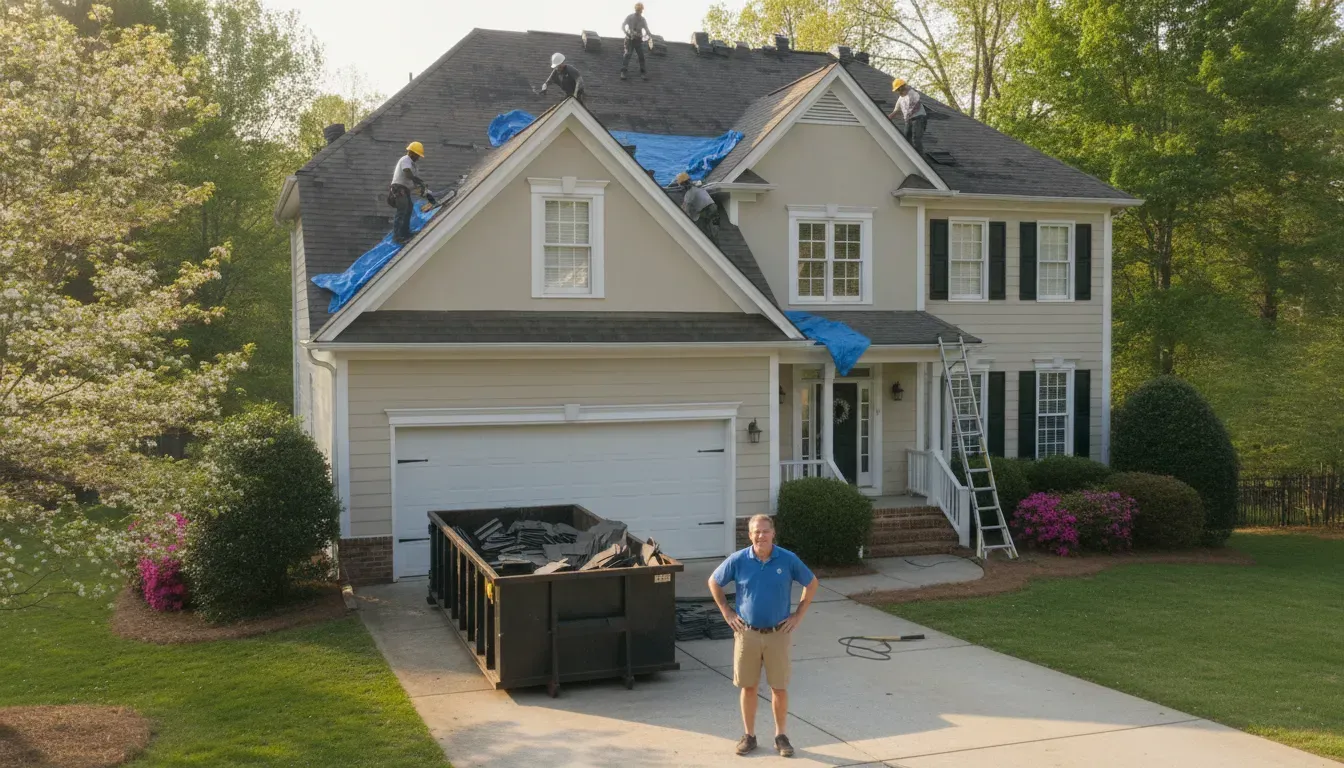
Roof Storm Damage Repair: A Georgia Homeowner's Checklist
MEGA MEGA • August 24, 2026
Handle roof storm damage repair in Georgia: assess hail and wind damage, document it for insurance, prevent water damage, and choose a trusted local contractor.

A Georgia storm can leave roof damage that is easy to miss from the ground, even when water has not reached your ceiling. Acting in the right order helps protect your home, preserve useful evidence, and avoid rushed repair decisions.
A practical roof storm damage repair checklist starts with safety, followed by photos and video before cleanup. A professional inspection, temporary protection against water intrusion, and careful contractor verification are also important. Ready.gov recommends documenting damage before making temporary repairs: see its disaster recovery guidance.
Do not climb onto a wet or damaged roof, and stay away from downed power lines. From the ground, look for missing or lifted shingles, damaged flashing, interior stains, or active leaks. If water is entering the home, prompt mitigation can limit secondary damage while the full condition is assessed.
Schedule a free, no-obligation roof inspection
Once the area is safe, a methodical inspection can reveal what the storm changed without putting you at unnecessary risk.
How Do You Inspect a Roof for Storm Damage Safely?
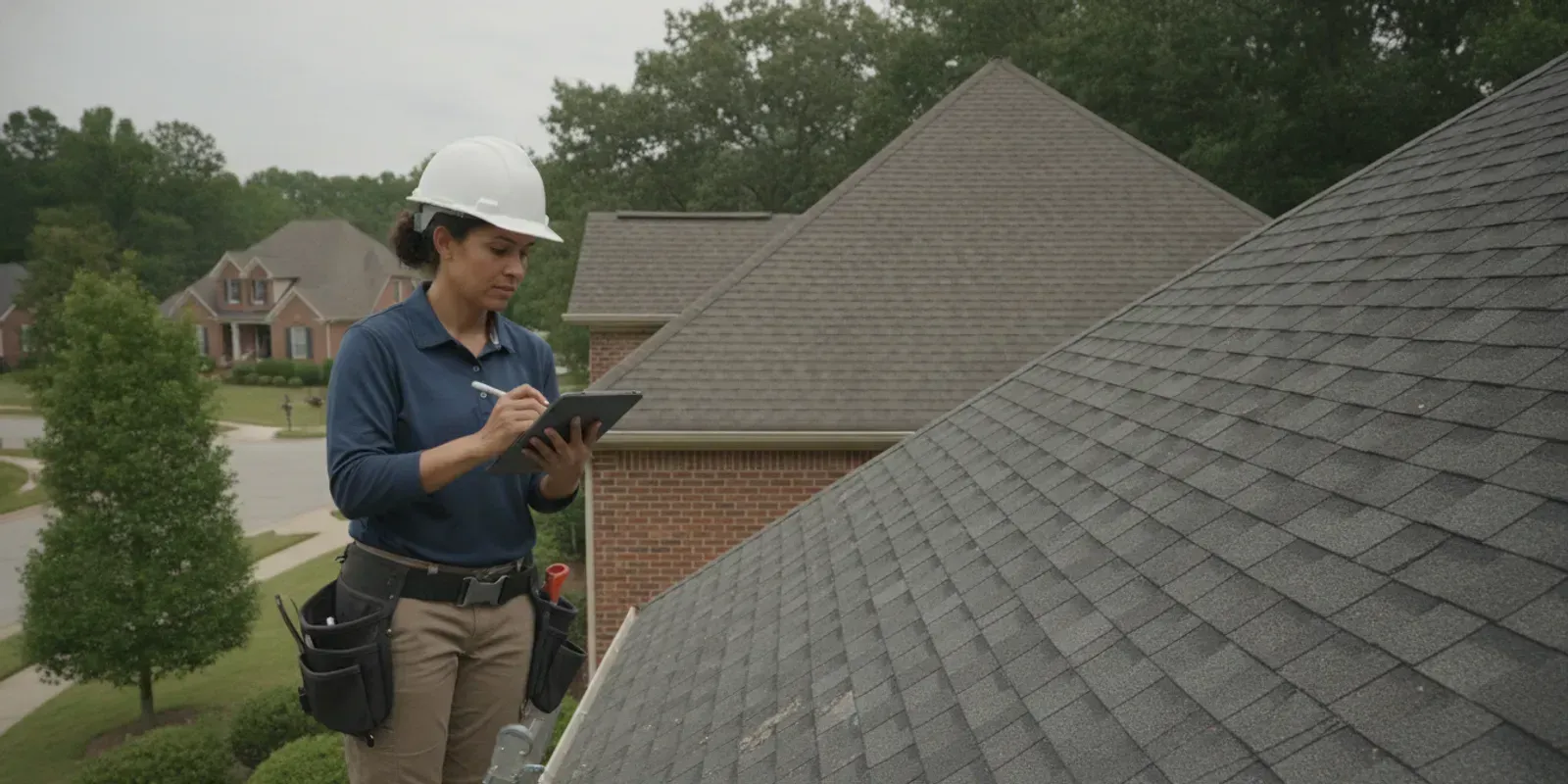
Start from the ground, wait for safe conditions, and never climb onto a wet or visibly unstable roof. Look for obvious wind and hail clues, then arrange a professional inspection because important damage may be hidden from view. A careful assessment helps you decide what roof storm damage repair may be needed without putting yourself at unnecessary risk.
Check the area before checking the roof
After a Georgia storm, wait until the weather has cleared and the property is safe to approach. Do not walk through floodwater, and stay well away from downed power lines. Watch for unstable tree limbs, loose siding, broken glass, and other hazards around the home. If you see structural movement, exposed wiring, or a major opening in the roof, keep your distance and call a qualified professional.
From the ground, walk around the house and look at each roof slope from several angles. Use binoculars or your phone's zoom rather than a ladder. You can also check the yard and gutters for fallen shingle pieces, but avoid treating a clean-looking yard as proof that the roof is undamaged.
Look for wind and hail indicators
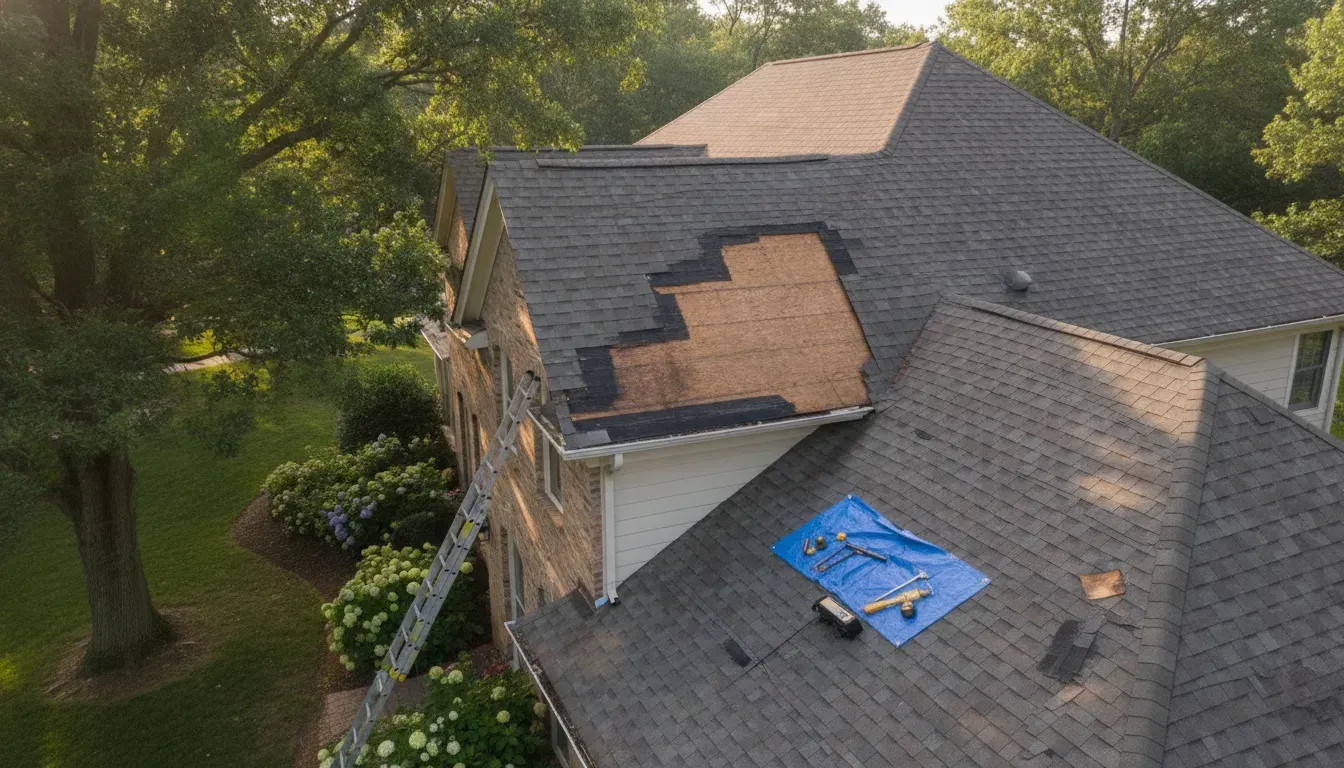
High winds can leave shingles missing, curled, broken, or lifted. Pay attention to irregular patches, exposed underlayment, and shingles that no longer lie flat. Check roof edges, ridges, valleys, and areas around vents and flashing as part of your visual scan. These observations are useful to record, but they do not replace a close inspection by someone trained to assess roofing materials.
Hail damage may appear as impact marks or soft-looking bruises on asphalt shingles. You might also notice areas where protective granules have been knocked loose, leaving dark or irregular spots. Small impacts can be subtle, especially when viewed from the driveway, so do not press on shingles or climb up to investigate them yourself.
Know when a professional inspection is necessary
Much storm damage is not reliably visible from the ground. Small hail impacts and wind-driven shingle uplift can affect the roof surface or underlying components without creating an obvious change in the roofline. A professional can inspect those areas more safely and document findings for the next step.
Take a few photos or videos from safe locations before moving debris or making temporary changes. Record the date of the storm and any interior symptoms, such as new ceiling stains, peeling paint, or damp areas. If water is entering the home, move valuables away from the leak and seek emergency help rather than attempting a roof repair yourself.
What Storm Damage Should You Document for Your Insurance Claim?
Document every visible sign of damage before cleanup or temporary repairs, then organize photos, videos, inspection reports, dates, and receipts for your insurer. A clear record helps show what happened, when it happened, and what steps you took to protect the home.
Photograph the roof from a safe position
- Do not climb onto a wet, unstable, or visibly damaged roof. From the ground or another secure location, photograph every roof slope you can see. Capture missing, cracked, curled, lifted, or broken shingles, along with exposed underlayment and displaced flashing. Take both wide images that show where the damage is located and close-ups that show the condition of individual materials. If hail is suspected, photograph dents, bruising, dark impact marks, and areas where granules have been knocked loose. Some damage is difficult to see from the ground, so a professional inspection may reveal conditions your initial photos cannot.
Record loose materials and surrounding property damage
- Photograph shingles, metal flashing, gutter pieces, branches, or other roofing materials found in the yard, driveway, or around the house. Include the location where each item was found before moving it, when possible. Also document damaged gutters, siding, windows, fences, screens, vehicles, and outdoor structures if they may be related to the same storm. A few wide-angle photos can establish the broader scene, while detail shots preserve evidence that may be discarded during cleanup.
Document interior water stains and active leaks
- Check ceilings, walls, attics, and upper-floor rooms for water stains, peeling paint, damp insulation, dripping water, or mold-like growth. Photograph each affected area from several angles, including one image that identifies the room and one close-up of the damage. If safe, record a short video of an active leak or water collecting in a container. Do not disturb electrical hazards, and contact a professional promptly if water is spreading or the structure appears compromised.
Create a timeline and preserve your records
- Write down the storm date and approximate time, when you first noticed damage, when leaks began, and every inspection or repair visit. Keep copies of photos, videos, inspection reports, estimates, adjuster communications, and claim reference numbers in one folder. When you contact your insurer, have your photos, videos, and professional inspection reports ready to support the claim. Save itemized receipts for tarps, emergency mitigation, water removal, materials, and other reasonable temporary expenses. Photograph the damage before making cleanup or temporary repairs, as recommended by Ready.gov.
Choose your contractor and keep communication clear
- You have the right to choose your own contractor for roof storm damage repair. You are not required to use a company recommended by an insurance adjuster. Before authorizing work, keep your documentation available for the contractor and insurer, and ask for a written scope of work. If you need help understanding the process, you can file an insurance claim for storm damage with a more complete record.
How Can You Prevent Further Water Damage After a Storm?
Act quickly, but do not put yourself in danger. Once the weather has cleared and it is safe to move around the property. Focus on stopping active water intrusion, protecting the interior, and preserving evidence for your insurer. A careful first response can limit secondary damage while you arrange professional roof storm damage repair.
What Interior Signs Should You Watch For?
Begin inside the home, where a roof problem may become visible before it is easy to identify from the ground. Check ceilings, attic areas, and upper walls for fresh or spreading water stains. Yellow, brown, or dark discoloration can point to moisture moving through the roof system or insulation.
Also look for peeling, bubbling, or separating paint. These changes may indicate that moisture is trapped behind the surface, even when water is not actively dripping. A musty smell, damp insulation, or new mold growth deserves prompt attention. Water stains, peeling paint, and mold on ceilings or walls can be early warning signs that the roof's integrity has been compromised. According to Total Roof Solutions' storm-damage guidance: roof inspection resources.
If you find an active leak, place a container beneath the drip and move furniture, electronics, and other valuables away from the area. Do not climb onto a wet roof or enter an unstable attic. If water is near electrical fixtures, shut off power to the affected area only if you can do so safely, then contact a qualified professional.
How Do Tarping and Temporary Repairs Help?
A tarp is a temporary protective measure, not a substitute for a permanent repair. Promptly covering a damaged area can reduce the chance of additional water entering during the next rainfall. Temporary tarping may also help prevent secondary water intrusion that contributes to mold growth and structural decay.
Because storm-damaged roofs can include loose shingles, exposed decking, and unstable surfaces, professional installation is usually the safer choice. Total Roof Solutions provides emergency services such as immediate leak mitigation, tarping, and temporary repairs to help prevent further water intrusion. Response is prioritized by severity, with active leaks receiving immediate attention. Read our guide to emergency roof repair for practical steps while you wait for help.
Before cleanup or temporary work changes the scene, take clear photos and videos of the roof, interior stains, damaged belongings, and surrounding areas from a safe location. Keep those files with any inspection report, receipts, and notes about when the damage occurred. When you contact your insurer, have your photos, videos, and professional documentation ready. This evidence helps establish what happened and what emergency measures were necessary.
Does Homeowners Insurance Cover Storm Damage to Your Roof?
Usually, a standard Georgia homeowners policy may cover sudden roof damage caused by wind, hail, or another covered storm event, but coverage depends on your policy, exclusions, limits, and deductible. Before assuming a claim will be approved, review your policy and ask your insurance agent how its storm-damage provisions apply to your roof.
That distinction matters because roof storm damage repair is not automatically covered simply because a storm passed through your area. An older roof, wear and tear, maintenance issues, excluded causes, or a deductible that exceeds the repair cost can affect the outcome. Your insurer is the right source for coverage decisions, while a qualified roofing professional can help document the physical condition of the roof.
Start with an inspection before filing
Total Roof Solutions recommends getting a free professional inspection before filing a claim. The purpose is not to discourage a valid claim, but to determine whether storm-related damage may warrant one and help you avoid an unnecessary claim when the roof has only normal aging or pre-existing wear. A trained inspection can also identify damage that is difficult or unsafe to see from the ground.
Ask the inspector to explain what was observed, where it was found, and whether the condition appears consistent with a recent storm. You should not need to guess at the cause or promise an outcome to your insurer. A clear, factual assessment gives you a better starting point for an informed conversation with your agent.
Prepare your documentation
If the inspection indicates possible covered damage, be ready with documentation. Keep photographs and videos taken before cleanup or temporary repairs, along with the inspection findings. Repair estimates, prior roof records, and notes about when you noticed leaks or other problems. When you contact your insurer, having this evidence organized can make it easier to describe what happened accurately and support the claim. Learn how to file an insurance claim for storm damage in Georgia.
Know your role during the claim
Follow your policy's instructions, report the loss promptly when appropriate, and take reasonable steps to prevent additional damage. Keep receipts and records for temporary measures, and avoid permanent repairs until your insurer explains its process unless immediate work is needed to protect the home. You may choose the contractor who performs the work; you are not required to use a company recommended by an adjuster. Our team can provide inspection documentation and explain the recommended scope, while your agent and adjuster determine coverage under your policy.
Storm Damage Repair vs. Roof Replacement: What's the Best Choice?
Repair is usually appropriate when storm damage is limited and the roof remains structurally sound. Replacement is more likely when damage is widespread, the roof is aging, or its underlying structure can no longer provide reliable protection. A professional inspection is the safest way to distinguish between the two, because important damage may not be clear from the ground.
The right decision should account for more than the number of missing shingles. Use this comparison as a starting point, then have a qualified roofing professional document the condition of the roof and explain the available options.
Roof repair versus roof replacement after storm damageCriteriaRoof repairRoof replacementExtent of damageBest suited to a contained problem, such as a small area of damaged or missing shingles, when the rest of the roof is performing well.May be the better option when storm damage affects many roof areas or repeated repairs would leave the system inconsistent and vulnerable.Shingle ageOften makes sense when the existing shingles are relatively sound and compatible replacement materials can be used.Can provide better long-term value when the roof is near the end of its useful service life and a storm exposes multiple weaknesses.Structural integrityAppropriate only when the decking, flashing, and supporting components remain stable and the damage can be properly isolated.Considered when water intrusion, wind, or impact has compromised broader parts of the roofing system or the roof cannot be restored reliably.Cost and insuranceMay involve less work, but the scope should still be documented carefully. Ask your insurer and contractor how coverage applies to the observed damage.May involve a larger project and should be supported by a detailed inspection and written scope. Coverage depends on the policy and claim circumstances.Expected lifespanCan extend the useful life of a sound roof when the repair is correctly matched and installed.Offers a new roofing system when repair would provide only a short-term fix or leave substantial older material in place.
Let the inspection guide the scope
Total Roof Solutions helps Georgia homeowners evaluate the condition of the entire roof before choosing a scope of work. Our team is licensed, insured, and locally operated, which supports accountability after the storm. We also hold Owens Corning Platinum Preferred contractor status, a credential homeowners can consider when comparing qualified providers.
You also have the right to choose your own contractor for roof storm damage repair. You are not required to use a company recommended by an insurance adjuster. Before authorizing work, ask for clear documentation of the findings, the proposed repairs or replacement, and any questions that may affect the claim. If you need help to decide between roof repair or replacement, a professional inspection can turn an uncertain choice into a defensible plan.
What Should Your Roof Storm Damage Repair Checklist Include?
A complete roof storm damage repair checklist should cover safety, documentation, temporary protection, contractor credentials, reputation, scope, and payment options. Once the weather clears, take a careful, evidence-based approach instead of accepting the first offer that arrives at your door.
Start by choosing a contractor who is licensed, insured, and physically present in your Georgia community. A local office gives you a practical point of contact after the project is complete, while verifiable credentials help you distinguish an established roofing professional from a temporary storm chaser. The Federal Trade Commission recommends caution with uninvited door-to-door contractors who pressure homeowners into quick decisions or promise leftover materials at a discount. You can read its storm recovery scam guidance before signing anything.
Verify credentials before discussing the repair
Ask the company for proof of insurance and copies of applicable business licenses. A legitimate contractor should provide these documents upon request. Do not rely solely on a truck sign, a temporary local phone number, or a promise that paperwork will be handled later. You also have the right to select your own contractor, even if an insurance adjuster recommends another company.
Look for a track record you can independently confirm. Check recent online reviews, pay attention to how the business responds to concerns, and ask for references from local customers with comparable work. Reviews and references cannot guarantee a specific outcome, but they can reveal whether the contractor communicates clearly, honors commitments, and leaves properties in good condition.
Confirm experience, materials, and project scope
Ask whether the contractor regularly handles both residential and commercial roofing. That matters if you own a home, manage a multifamily property, or need storm-related work coordinated across different building types. Total Roof Solutions serves both residential and commercial customers across Georgia.
Material and installation standards deserve attention, too. Total Roof Solutions holds Owens Corning Platinum Preferred contractor status, a designation homeowners can consider when comparing roofing companies and product expertise. Ask what materials are proposed, what work is temporary versus permanent, and how damaged decking, flashing, gutters, ventilation, or interior leaks will be addressed. Request a written scope that identifies the agreed repairs, materials, timeline, and total cost before work begins.
Discuss the financial plan early
Storm damage repairs can create difficult timing if insurance funds have not yet been released. Ask the contractor to explain the payment schedule and which costs are your responsibility under your policy. Financing may be available for emergency repairs, allowing eligible homeowners to begin necessary work without waiting for an insurance settlement. Review the available financing options and terms carefully, since approval, rates, and conditions vary.
Finally, keep your inspection photos, videos, reports, contract, and communications together. A systematic record makes it easier to compare proposals and communicate with your insurer. If a contractor will not provide credentials, references, a clear scope, or time to review the agreement, treat that as a reason to pause and keep looking.
Get a free roof inspection to assess your storm damage and protect your home
Frequently Asked Questions
Does homeowners insurance cover roof damage from storms?
Coverage depends on your policy, the storm event, the roof's condition, and the cause of the damage. Wind and hail damage may be covered, while wear, poor maintenance, or excluded events may not be. Review your policy, document the roof and interior carefully, and ask your insurer which deductible, exclusions, and claim deadlines apply. A professional inspection can help determine whether the damage warrants a claim before you file one.
What should you do if you have roof damage from a storm?
Put safety first. Stay away from downed power lines, unstable areas, and roof surfaces you cannot safely access. From the ground, photograph or record visible damage before cleanup. Place containers under active leaks, move belongings away from water, and arrange qualified emergency mitigation, such as tarping, to limit further intrusion. Keep receipts and records of temporary work, then schedule a thorough inspection.
How long after a storm can you claim roof damage?
Notify your insurer as soon as reasonably possible, even if the damage is not immediately obvious. Your policy may set a specific reporting deadline, and waiting can make it harder to connect leaks or interior damage to the storm. Ask the carrier for its deadline in writing, preserve your photos and repair records. And avoid permanent repairs until the insurer has had a fair opportunity to inspect, unless emergency work is needed to protect the home.
What should you not say to an insurance adjuster about roof damage?
Do not guess, exaggerate, minimize, or speculate about when damage occurred or what caused it. Describe what you observed, distinguish storm damage from pre-existing conditions when you can, and provide organized photos, videos, receipts, and inspection findings. Read statements and estimates before signing them. You can choose your own qualified contractor rather than accepting pressure to use a particular company.
Schedule a Free Roof Inspection
A professional inspection can help you understand whether hail or wind damage needs repair. What evidence may support your insurance claim, and which next steps make sense for your home. Our team can review visible roof conditions, identify storm-related concerns, and explain what to document for your insurer without making promises about coverage or claim outcomes. Total Roof Solutions is a local, licensed, bonded, and insured roofing company serving Georgia homeowners. We are also an Owens Corning Platinum Preferred Contractor and an A+ BBB-rated, family-owned, third-generation business. To schedule a free, no-obligation inspection and talk through your storm damage, contact Total Roof Solutions.