How to Extend Your Asphalt Shingle Roof Lifespan
MEGA MEGA • August 3, 2026
This is a subtitle for your new post

Most asphalt shingle roofs do not reach the end of their useful life all at once. Small problems, attic heat, trapped moisture, and repeated storm exposure can gradually shorten the time your roof protects your home. The good news is that consistent care can help you get more value from a well-built roofing system.
The typical asphalt shingle roof lifespan is about 20 to 30 years, depending on the shingle type, installation quality, ventilation, weather exposure, and maintenance. Regular inspections, prompt repairs, balanced attic airflow, and durable materials can all help your roof perform closer to its expected service life.
For Georgia homeowners, seasonal storms and hot summers make these details especially important. Understanding how long different shingles generally last is the first step toward planning maintenance, budgeting for future work, and knowing when a repair deserves prompt attention.
What Is the Typical Asphalt Shingle Roof Lifespan?
Most asphalt shingle roofs last between 15 and 30 years. The actual asphalt shingle roof lifespan depends on the shingle design, installation quality, climate, ventilation, and maintenance. The U.S. Forest Service notes that asphalt shingles are commonly made with either organic or fiberglass bases, and higher-quality fiberglass and architectural products can provide greater durability than basic options. Learn more about asphalt shingle materials.
3-tab shingles: approximately 15 to 20 years
Traditional 3-tab shingles are a practical, economical choice, but they generally have the shortest service life of the common asphalt shingle types. Under typical conditions, homeowners can expect about 15 to 20 years. Severe heat, storm exposure, poor attic ventilation, and deferred maintenance can shorten that range.
Total Roof Solutions offers 3-Tab Supreme shingles with an expected lifespan of approximately 20 to 25 years when properly installed and maintained. That difference illustrates why the product specification, roof assembly, and workmanship all matter when comparing replacement options.
Architectural shingles: approximately 20 to 30 years
Architectural shingles use a dimensional construction that gives them more weight and visual depth than standard 3-tab shingles. They typically last about 20 to 30 years, although local conditions and installation details still influence performance. The USDA describes higher-quality and architectural-style shingles as options that may offer longer lifespans than standard three-tab products. Review the material guidance before choosing a system.
Our TruDefinition Duration Architectural shingles are designed for an expected service life of approximately 25 to 30 years. As an Owens Corning Platinum Preferred contractor. Total Roof Solutions can help homeowners evaluate manufacturer-backed options alongside the condition of the existing roof, rather than choosing based on price alone.
These ranges are useful planning guidelines, not guarantees. To understand the long-term cost of asphalt shingles, consider both the initial installation and how long the roof is likely to perform. A professional inspection can identify whether your current shingles are aging normally or showing problems that require earlier attention.
How Proper Ventilation Extends Your Asphalt Shingle Roof Lifespan
Your roof is exposed to Georgia's heat from above, but the attic can intensify that stress from below. Proper ventilation helps control heat and moisture so asphalt shingles can perform closer to their expected service life. Without balanced airflow, an attic may become hot and damp, creating conditions that gradually weaken the roof system.
How the intake and exhaust system works
A well-ventilated attic needs both intake and exhaust. Soffit vents along the eaves allow cooler outdoor air to enter beneath the roof deck. As warm air rises, ridge vents or other roof exhaust vents release it from the attic. This continuous movement helps replace trapped hot air instead of allowing it to build up under the shingles.
The system works best when intake and exhaust are balanced and unobstructed. Insulation should not block the soffit openings, and exhaust vents should be installed and used as part of a coordinated ventilation plan. Adding an exhaust vent without enough intake air can limit the circulation the roof needs.
Why heat and moisture damage shingles
Excess heat can bake shingles from underneath. Over time, repeated high temperatures may accelerate the aging of the asphalt and shorten the roof's useful life. Poor ventilation can cut an asphalt shingle roof lifespan by 10 or more years, depending on the roof's design, materials, exposure, and other maintenance conditions.
Moisture is another concern. Warm, humid air that remains trapped in the attic can contribute to condensation, which may affect the roof deck, insulation, and fasteners. A ventilation assessment can reveal blocked soffit vents, inadequate exhaust, or airflow patterns that are not protecting the entire attic.
Why Georgia homeowners should pay attention
Hot summers make attic ventilation especially important for homeowners in Atlanta, McDonough, and Middle Georgia. A roof that appears sound from the ground may still be experiencing excessive heat buildup underneath. During a free inspection, Total Roof Solutions includes a ventilation assessment along with the roof evaluation. Our team can identify potential airflow concerns and explain practical next steps without pushing unnecessary work.
Essential Maintenance Habits That Keep Your Roof Lasting Longer
Georgia roofs face a demanding mix of humidity, pine needles, heavy rain, and storm-season debris. A consistent maintenance routine helps you catch small problems while they are still manageable, protecting your roof system and supporting a longer service life.
Schedule an annual professional inspection
- Have a qualified roofing professional inspect your roof at least once a year, as recommended by the National Roofing Contractors Association. Schedule an additional inspection after severe weather, even if you do not see a leak. Storm winds can loosen shingles, damage flashing, or create openings that allow water into the roof assembly. Finding those issues early is one of the most practical ways to protect your asphalt shingle roof lifespan. Review these proactive roof maintenance steps to understand what an inspection should cover.
Clean the gutters twice a year
- Clean gutters in the spring and fall, and check them again after periods of heavy rain or falling pine needles. Clogged gutters keep water from draining away from the roof, which can contribute to water backup, saturated roof edges, and, in colder weather, ice dams. Make sure downspouts discharge well away from the foundation and that water flows freely through the entire system.
Trim branches that overhang the roof
- Cut back limbs that hang over the shingles. Branches can scrape the roof during Georgia storms, drop pine needles and other debris, and create shaded, damp areas where moss is more likely to grow. Keep enough clearance for sunlight and airflow, while using a qualified tree professional for large or difficult-to-reach limbs.
Remove moss and algae promptly
- Moss and algae can retain moisture against the shingle surface, contributing to premature degradation. Do not pressure-wash asphalt shingles or scrape them aggressively, since those methods can remove protective granules. Ask a roofing professional about a treatment that suits your roof, especially when growth is widespread or the shingles are already brittle.
Replace damaged or missing shingles right away
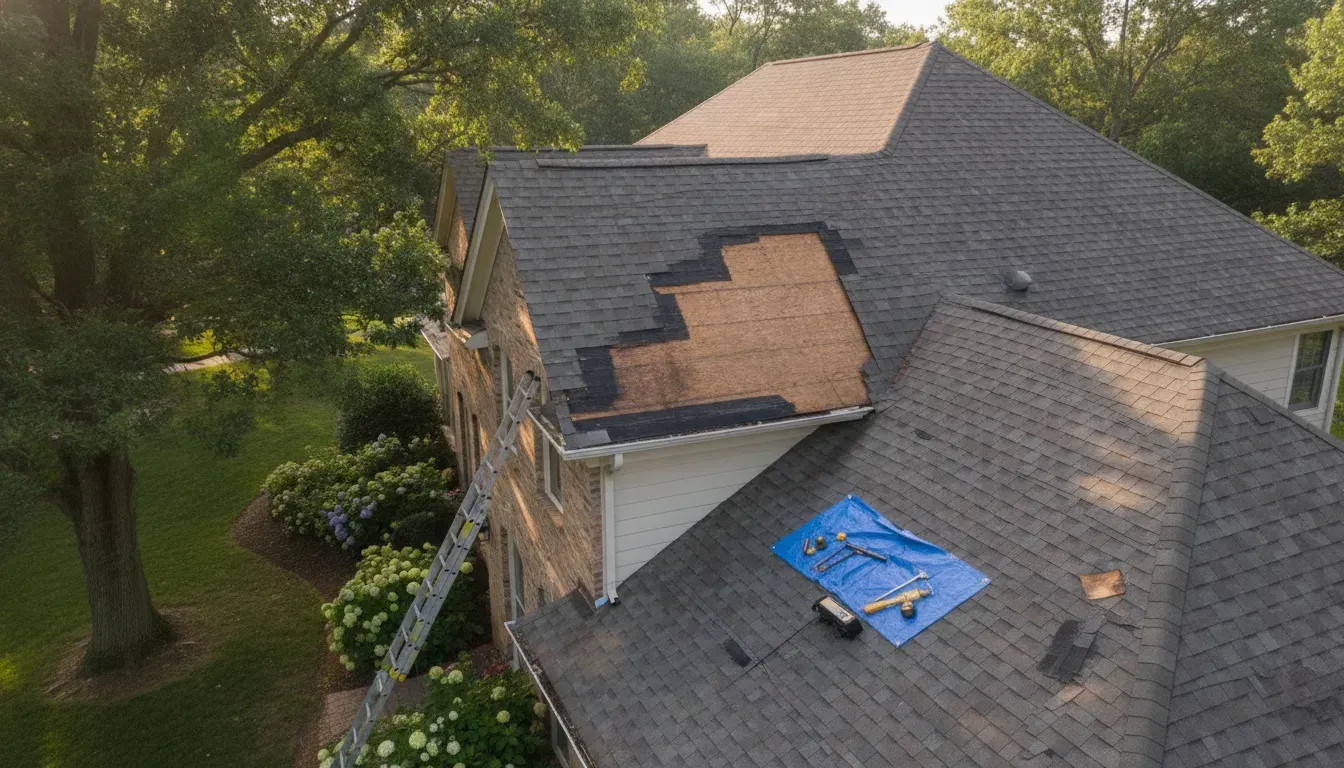
- Address cracked, lifted, curled, or missing shingles as soon as you find them. A single damaged shingle can leave the layers beneath it exposed to rain and wind, and nearby damage may spread during the next storm. Prompt repairs are usually simpler than waiting until water reaches the decking, insulation, or interior ceiling.
Regular care cannot prevent every roofing problem, but it gives your roof the best chance to perform through Georgia's weather. Keep inspection notes and photographs so you can track changes from year to year and make informed repair decisions.
5 Warning Signs Your Asphalt Shingle Roof Is Nearing the End of Its Lifespan
Roof aging is not always obvious from the ground. These five warning signs can help you decide when a closer inspection is appropriate. Especially after severe weather or when your roof is approaching the later years of its expected service life.
1. Curling or buckling shingles
Shingles that curl at the edges, buckle, or no longer lie flat may be losing their ability to shed water. A few isolated defects may be repairable, but curling across a significant area is a recognized sign of roof-system failure. Splitting shingles are another serious concern. The Arizona State Facilities Board identifies both significant curling and splitting as failure conditions in its asphalt shingle guidance: asphalt shingle inspection criteria.
2. Granules collecting in the gutters
It is normal for a new roof to shed some loose granules, but heavy accumulation in gutters or downspouts deserves attention. Significant surface-granule loss is a primary indicator that an asphalt shingle roof may have reached the end of its functional life, according to the same Arizona guidance. Granules also protect the asphalt base from ultraviolet radiation. Research from the National Institute of Standards and Technology explains that once this protection is lost, the underlying asphalt deteriorates more quickly: NIST research on shingle durability.
3. Cracked or missing shingles
Cracks, gaps, and missing shingles leave vulnerable areas exposed to wind-driven rain. Look for damage around roof edges, valleys, vents, and other penetrations. Prompt residential roof repair may address localized damage, while widespread cracking can indicate that the roofing material is becoming brittle throughout the system.
4. Daylight showing through the attic
If you can see daylight through the roof boards from inside the attic, the roof assembly may have gaps or damaged decking. Moisture stains, damp insulation, or active drips make the concern more urgent. Do not assume intact-looking shingles rule out a problem: underlayment failure is considered a failure of the entire asphalt shingle roofing system under Arizona State Facilities Board criteria.
5. Bald spots or worn areas
Bald patches, thin-looking sections, and visibly worn shingle surfaces show that protective granules have been stripped away. These areas can deteriorate faster under Georgia sun and weather. A professional inspection can determine whether the wear is limited to a few shingles or signals that replacement planning should begin.
When To Repair vs. Replace Your Asphalt Shingle Roof
The right choice depends on more than one missing shingle. Our team looks at the size and location of the damage, the roof's age, and whether repair costs make sense for the service life you have left. A roof inspection can turn a stressful decision into a clear plan.
How to compare roof repair and replacementConsiderationRepair may be appropriateReplacement may be appropriateExtent of damageDamage is localized and affects less than 30% of the roof area. Replacing individual shingles or addressing a small leak may restore the roof system.Damage is widespread, recurring, or affects roughly 30% to 50% or more of the roof. Patching one area may not solve problems elsewhere.Age of the roofThe roof is relatively young, and the remaining shingles are in good condition. A targeted repair can protect your investment while preserving its expected service life.The roof is more than 20 years old, especially when several areas show wear. At that point, replacement may provide more dependable protection than repeated repairs.Cost considerationsThe repair addresses a limited issue and costs substantially less than replacing the entire roof. It can be a sensible short-term solution when the surrounding materials remain sound.Repair costs approach 30% to 50% of replacement cost, or multiple repairs are adding up. Comparing the total investment can make a new roof the more practical option.Long-term valueRepair preserves a roof with meaningful remaining life and buys time for planned maintenance or budgeting.Replacement resets the roof's service life and can provide more consistent performance, fewer recurring repair concerns, and a better long-term investment.
Do not decide from age alone. Ventilation, installation quality, storm exposure, and maintenance all influence your asphalt shingle roof lifespan. A roof that is 20 years old may need replacement, while a younger roof with isolated damage may only need a precise repair.
Total Roof Solutions provides free inspections to assess the specific condition of your roof and explain your options without a hard sell. If replacement is the better path, you can review when to choose roof replacement and explore financing options before making a decision.
Why Premium Owens Corning Shingles Outlast Budget Roofing Options
The material selected for a roof affects more than its appearance. It influences how well the system handles Georgia sun, humidity, wind, and storm debris over time. The U.S. Forest Service notes that higher-quality architectural or impact-resistant shingles may provide longer service than standard three-tab shingles, which is one reason material choice matters when planning an asphalt shingle roof lifespan.
Architectural construction adds durability
Budget three-tab shingles are designed around a simpler, flatter profile. They can be a practical choice for some projects, but they generally have less dimensional structure and fewer built-in performance features than architectural shingles. Premium architectural shingles use a heavier, layered design that can provide better resistance to everyday weathering and a more substantial appearance.
That difference helps explain the value gap. Three-tab shingles commonly last about 15 to 20 years, while architectural shingles typically last about 20 to 30 years under normal conditions. Total Roof Solutions offers Owens Corning TruDefinition Duration Architectural Shingles, which are rated for an expected 25 to 30 year service life when properly installed and maintained.
Protection designed for Georgia weather
Owens Corning TruDefinition Duration shingles include features intended to improve performance across several common roofing concerns:
- SureNail Technology: A reinforced nailing zone helps installers place and secure fasteners consistently, supporting stronger wind performance.
- StreakGuard algae protection: Algae-resistant protection helps reduce the dark streaking and moisture-related concerns that are common in Georgia's humid climate.
- Class 3 impact resistance: This rating provides an additional layer of protection against some impact events, although no shingle is completely storm-proof.
- 130 MPH wind resistance: The standard Duration line is designed for strong wind performance when installed according to manufacturer requirements.
Better granule retention also matters. Surface granules shield the asphalt base from ultraviolet radiation, so losing them can accelerate deterioration. A thicker shingle with dependable granule adhesion may preserve that protection longer than a basic product.
Total Roof Solutions is an Owens Corning Platinum Preferred contractor, the manufacturer's highest contractor certification tier. Our team can explain whether premium architectural shingles make sense for your home, roof design, and long-term plans, rather than recommending an upgrade simply because it costs more.
Frequently Asked Questions
How long do asphalt shingle roofs last on average?
Most asphalt shingle roofs last about 15 to 30 years. The actual result depends on shingle quality, installation, Georgia weather, attic ventilation, and how consistently the roof is maintained. A professional inspection can give you a more useful estimate than age alone.
What is the lifespan of 3-tab asphalt shingles?
Three-tab shingles generally last about 15 to 20 years. Their service life can be shorter when the roof experiences intense heat, storm damage, poor ventilation, or deferred maintenance. Choosing a higher-grade shingle may provide a longer service life when it is installed correctly.
How does attic ventilation affect asphalt shingles?
Balanced intake and exhaust ventilation helps control heat and moisture in the attic. Proper ventilation is considered critical for roof longevity because excess heat can bake shingles from underneath. The National Roofing Contractors Association discusses this relationship in its roofing guidelines.
What are the clearest signs that an asphalt shingle roof needs attention?
Look for curling or splitting shingles, missing tabs, bald areas, leaks, and unusual granule buildup in the gutters. Significant granule loss and curling across a substantial area are recognized indicators of roof failure in this asphalt shingle roofing specification. Have the roof assessed promptly so a localized repair does not become a larger problem.
How often should an asphalt shingle roof be inspected?
Arrange a professional inspection at least once a year and after severe weather. Annual inspections help identify loose, cracked, or missing shingles, ventilation concerns, and flashing problems while repairs are still manageable. The National Roofing Contractors Association recommends annual inspection by a qualified professional in its roofing guidelines.
Ready to Protect Your Roof's Remaining Life?
A professional inspection can help you understand your asphalt shingle roof's current condition and prioritize practical maintenance. Total Roof Solutions offers a low-pressure assessment for homeowners across Georgia. Schedule a free roof inspection, and our team can help you decide which next steps make sense for your home.