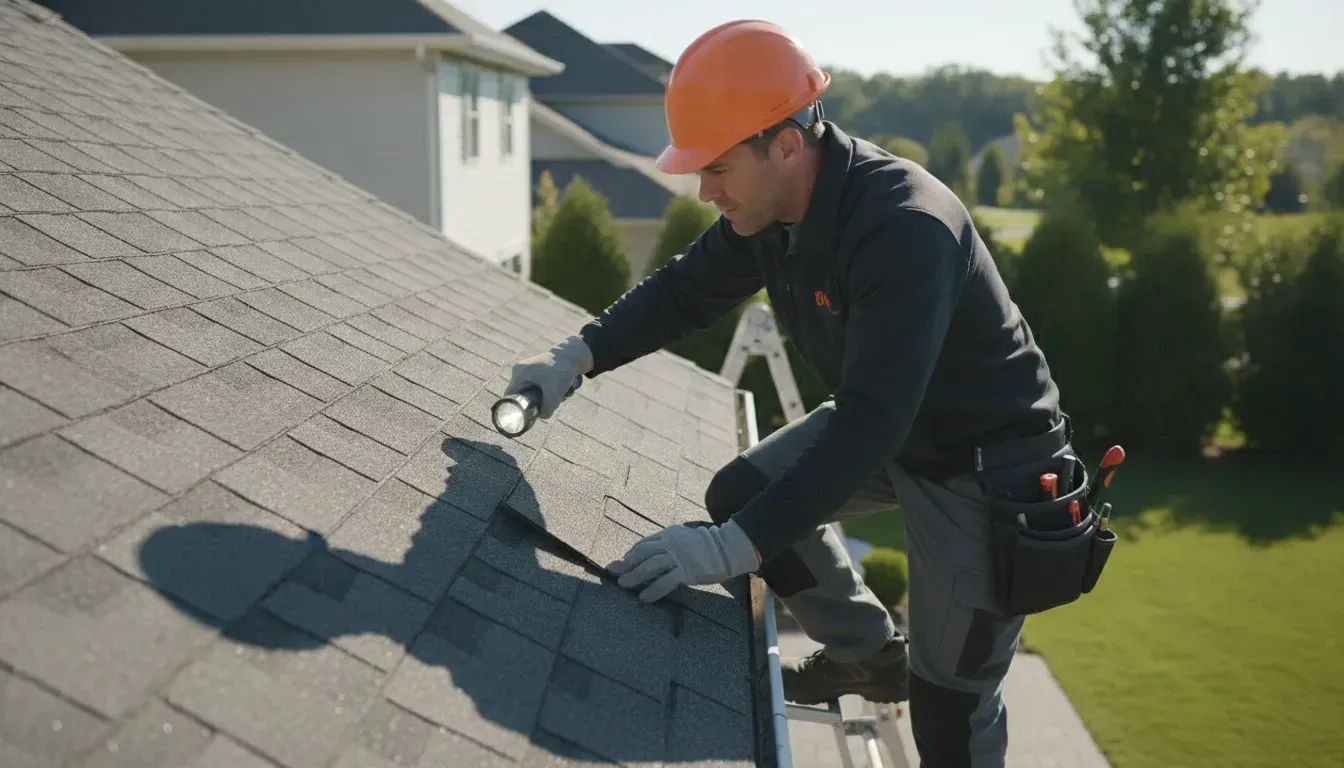
Metal Roof Leaking at an Overlap? A Georgia Homeowner's Guide
MEGA MEGA • September 4, 2026
Learn what causes a metal roof leaking at overlap in Georgia, how to inspect safely, and when a targeted repair or broader roofing work may be needed.

A leak near a metal roof overlap deserves attention, but it does not automatically mean the entire roof must be replaced. In Georgia, water may enter through a failed seal, loose fastener, damaged flashing, or a gap where panels meet, then travel along the roofing assembly before appearing indoors.
Request a free roof inspection and written estimate
When you notice a metal roof leaking at overlap, start with safe indoor and ground-level observations. Document what you see, then arrange a professional inspection before attempting a repair. The visible drip or ceiling stain may not be directly below the entry point. A targeted fix should address the actual lap, seam, fasteners, and any concealed damage.
Understanding what the overlap is designed to do makes the warning signs easier to interpret. The first step is distinguishing a horizontal panel end lap from a side seam, flashing detail, or water entering farther upslope.
What Does a Metal Roof Leaking at an Overlap Mean?
Answer: A leak at a metal roof overlap usually means water is getting through the joint where two panels meet. The entry point may involve the overlap itself, a side seam, a failed seal, or a nearby fastener. Because water can move along the roof assembly before it drips indoors, the stain you see may not be directly below the problem.
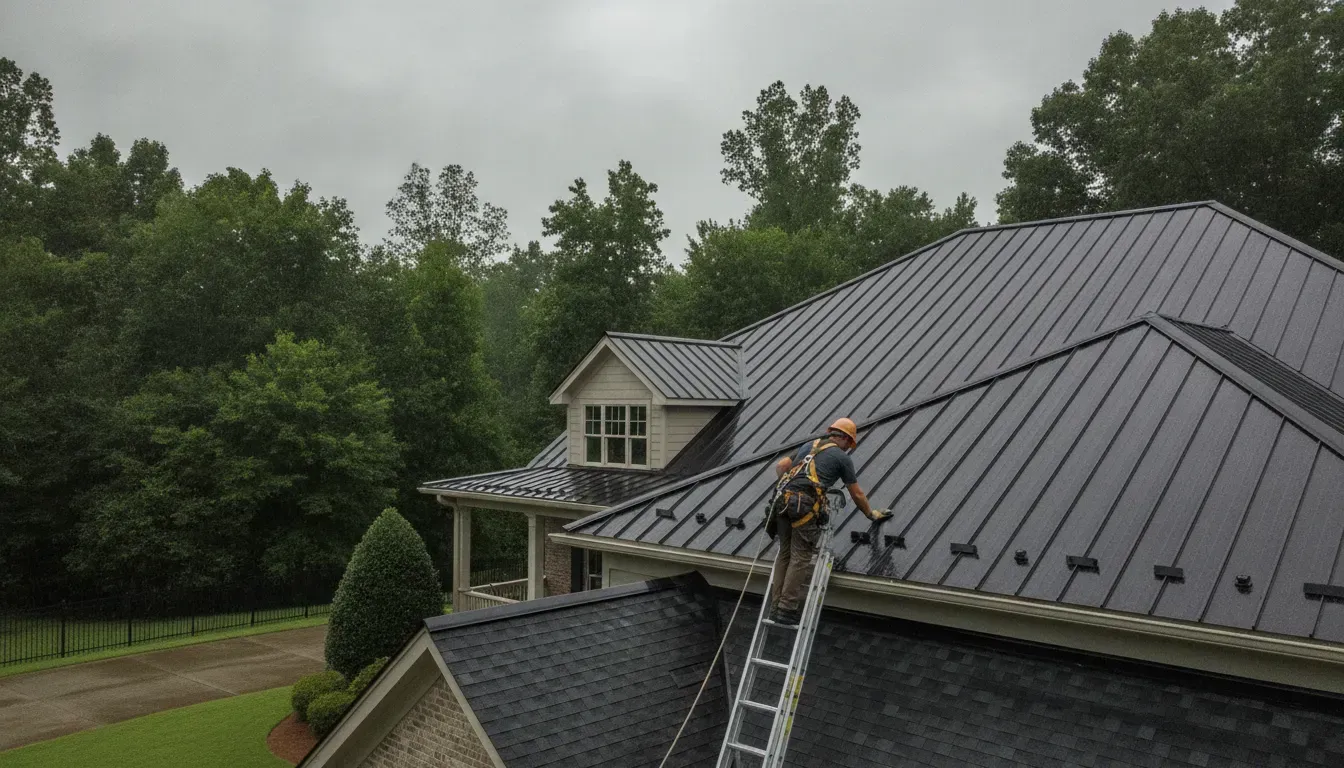
Metal panels are installed with planned joints so the roof can cover a larger area while directing water downslope. An overlap, also called a lap, is where one panel extends over another. These joints need the correct direction, sufficient coverage, and a durable seal so rain cannot work beneath the upper panel.
Horizontal end laps and vertical side seams
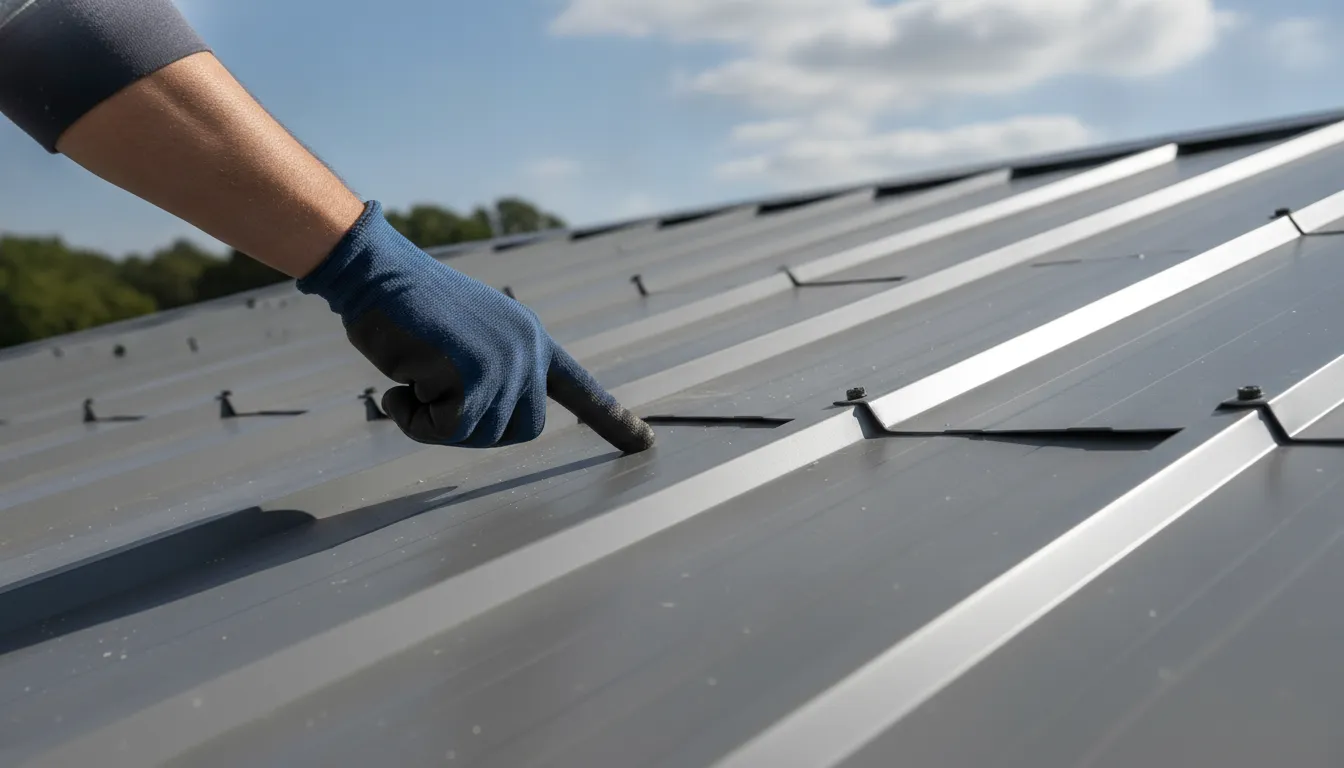
A horizontal end lap joins the ends of two panels across the slope. It is often the joint a homeowner means when describing a metal roof leaking at overlap. A vertical side seam, by contrast, runs along the length of adjoining panels. The two details shed water differently and may require different inspection and repair methods.
It is also important to distinguish either seam from flashing. Flashing protects transitions around walls, chimneys, roof edges, and other vulnerable areas. A drip near an overlap could involve a nearby flashing detail or water entering farther upslope, rather than a failed lap alone. A careful diagnosis starts by identifying which joint is actually present.
How water gets beneath the joint
Rain normally flows over the upper panel and away from the lap. In a narrow gap, however, capillary action can draw water into the space and sometimes move it against the expected direction of flow. This can happen when the joint is not tightly sealed or when the panels do not sit together as intended.
Seals can fail as rubber gaskets or butyl materials age, dry out, or lose contact with the metal. Fastener problems can also open a pathway. A missing washer, loose screw, or bowed panel may leave a small gap where water can collect and slip beneath the lap. The visible condition may be subtle, especially from the ground.
Once inside, water may travel along the underside of a panel, roof decking, or rafters before appearing as a ceiling mark or drip. That is why an interior stain alone cannot prove the exterior source. From a safe vantage point, note the location and pattern, but do not climb onto a wet, steep, damaged, or otherwise unsafe roof.
For a closer explanation of joint layout and installation details, review this guide to metal roof panel overlaps. A roofing professional can then confirm whether the issue is localized to the lap or connected to a seam, fastener, flashing, or concealed portion of the roofing system.
What Causes Overlap Leaks in Georgia?
Answer: An overlap leak can develop when water gets past a panel lap, seam seal, fastener, or nearby flashing detail. In Georgia, sun, heat, humidity, heavy rain, wind, and changing temperatures may place repeated stress on those areas. The location of a ceiling stain can suggest a leak path, but it does not confirm one specific exterior cause.
Metal roofing systems vary. Standing-seam, corrugated, and screw-down roofs use different panel connections and sealing details, so the same symptom can have different explanations. A qualified inspection should distinguish the overlap from a side seam, fastener line, valley, or flashing transition before repair begins.
Weather exposure and thermal movement
Georgia weather can challenge exposed roof components over time. Strong sun heats metal panels, while cooler conditions allow them to contract. That repeated expansion and contraction can stress laps, fasteners, gaskets, and sealants. Heavy rain and wind can also test any small opening, especially when water is driven toward a joint instead of quickly shedding downslope.
Water may enter a narrow gap through capillary action, meaning surface tension can draw moisture into a tight space at the overlap. Once inside the roofing assembly, it may travel along the panel, decking, or framing before appearing indoors. This is why a drip or stain is useful evidence, but not proof that the exterior opening is directly above it.
Sealants, gaskets, fasteners, and corrosion
Sealant and butyl products can age, crack, shrink, or lose adhesion. Rubber gaskets beneath fastener washers can also deteriorate. Their service life depends on the product, roof system, and climate, so there is no universal replacement date. A visible gap or cracked sealant is worth documenting, but a new bead over a dirty or wet surface may not solve the underlying problem.
Loose or damaged fasteners, missing washers, bowed panels, and over-compressed washers can leave a path beneath the lap. Corrosion may thin the metal or weaken the connection around a fastener. These conditions can result from age, exposure, movement, or installation details, and they should be assessed together rather than treated as isolated defects.
Installation details and nearby flashing
An overlap that was not aligned, sized, sealed, or fastened correctly may be more vulnerable to water entry. Nearby valleys, wall transitions, penetrations, and edge conditions can also redirect water toward the seam. Flashing is designed to guide water away from vulnerable transitions, so reviewing the available roof flashing types can help explain why the adjacent detail matters.
Because several conditions can look alike, avoid assuming that a metal roof leaking at overlap has one confirmed cause based only on the weather or the indoor symptom. A professional can evaluate the seam, fasteners, sealant, corrosion, panel alignment, and surrounding flashing to determine the appropriate next step.
How Can You Inspect the Leak Without Creating More Risk?
Answer: Start indoors, then move only to an accessible attic area or a ground-level viewing position. Your goal is to document symptoms and possible entry points, not to prove the exact source or climb onto the roof.
If you are looking specifically at an overlap, these metal roof leak safety steps complement the general heavy-rain guidance on that page. This article keeps the focus on safely tracing a suspected panel overlap or seam, rather than treating every rain-related leak the same way.
- Begin with the interior. Note where you see staining, bubbling paint, damp insulation, soft drywall, or an active drip. Record when the symptom appeared and whether it follows heavy rain, wind, or repeated weather. A ceiling stain can be a useful clue. But it may not sit directly below the exterior opening because water can travel along decking, rafters, and other roofing materials.
- Check the attic only if it is safely accessible. From a stable, properly lit area, look for damp wood, water marks, wet insulation, or signs of water movement. Do not crawl across unsupported ceiling material, disturb insulation unnecessarily, touch wet electrical components, or reach into a dark or confined space. If the attic cannot be entered safely, skip this step.
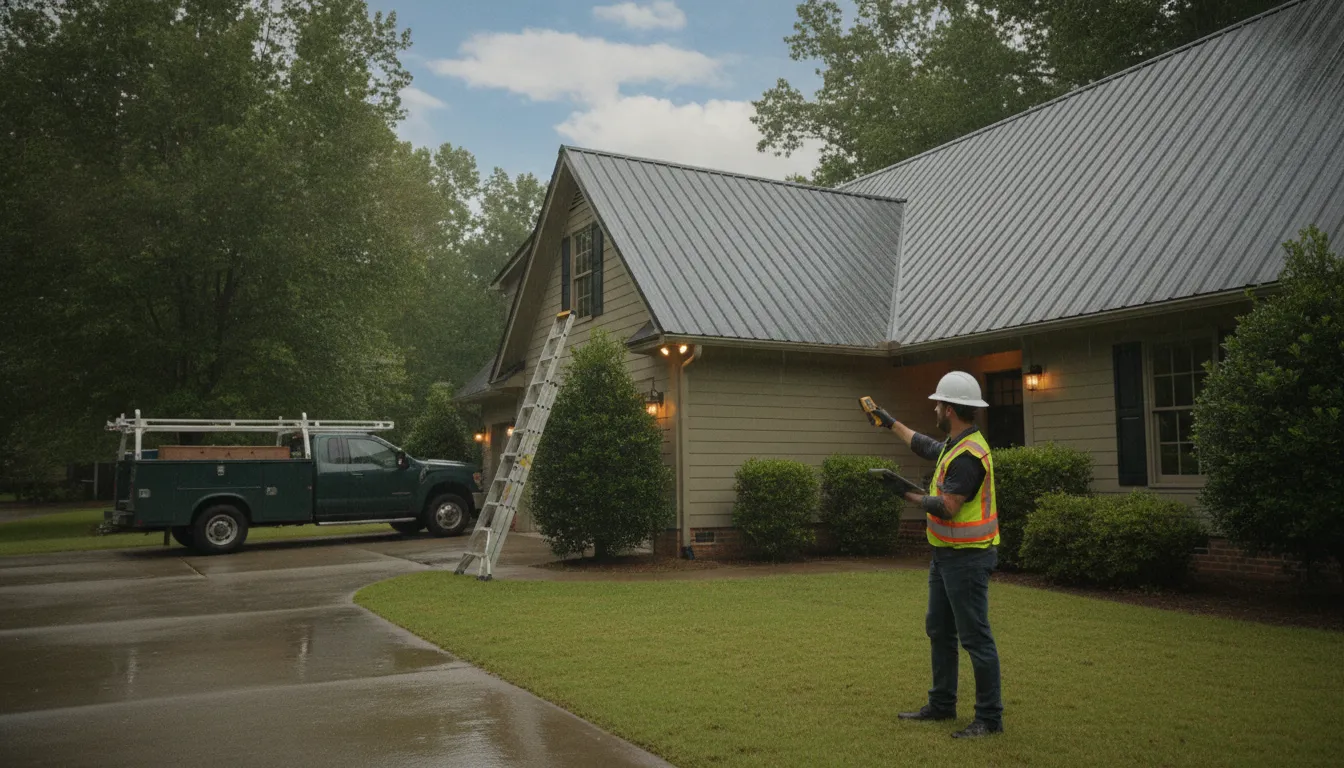
- View the roof from the ground. Use a safe location to look for visible gaps at panel overlaps, cracked or missing sealant, corrosion, displaced fasteners, bent metal, damaged edge flashing, or debris holding water. Binoculars can help you observe details without using a ladder. Never climb a wet, steep, damaged, or otherwise unsafe roof, and do not walk on metal panels to get a closer look. OSHA explains that residential construction workers at six feet or more above lower levels generally need fall protection. Which is one reason roof access is best left to qualified professionals. Read the OSHA fall protection guidance.
- Take photos and keep notes. Photograph interior damage, accessible attic observations, and any visible exterior concern from the ground. Include dates, recent weather, the rooms affected, and whether the leak seems active or intermittent. These details help a roofer compare the symptoms with the overlap, side seam, flashing, and surrounding roof condition during a professional inspection.
- Stop and get qualified help when risk is present. Stop immediately if water is near electrical equipment, the ceiling appears unstable, structural damage is suspected. The roof is high or difficult to access, or you would need to climb to continue. Active water intrusion that threatens electrical or structural safety may require emergency assistance. A professional inspection can assess leak signs, flashing, storm damage, mold, and structural concerns before recommending the next step.
Safe observations can narrow the conversation, but they cannot replace an inspection of concealed areas or confirm that the overlap is the entry point. Share your notes and photos with the roofer, then let the inspection findings determine whether the appropriate response is a targeted repair or broader work.
What Should You Do Before a Roofer Arrives?
Answer: Focus on protecting people and belongings, containing water indoors, documenting what you see, and leaving roof access to a professional. Temporary steps can reduce damage, but they do not repair the leak or prove where water entered.
If water is dripping, place a bucket or other suitable container beneath it and move furniture, electronics, rugs, and other belongings out of the affected area. Protect flooring with appropriate coverings, but keep walkways clear so no one trips. If the ceiling is bulging, sagging, or showing signs of increasing weight, stay clear of the area and contact qualified help promptly.
Take electrical hazards seriously. Do not touch wet outlets, light fixtures, switches, appliances, or extension cords. If water is near electrical equipment, keep people away and contact an appropriately qualified professional or emergency service for immediate safety guidance. A roofing appointment should not be treated as a substitute for urgent help when active water threatens electrical systems or structural safety.
While conditions are safe, record when the leak first appeared and whether it followed rain, wind, or another weather event. Photograph the stain, dripping point, damaged finishes, and any visible moisture without disturbing the ceiling, insulation, or other materials. Note whether the water changes during rainfall. These details can help the roofer compare the indoor symptoms with the roof condition during inspection. If materials become wet, the EPA advises drying water-damaged areas and items within 24 to 48 hours to help prevent mold growth. See the EPA guide to moisture and mold for general home guidance.
Do not climb onto the roof to place a tarp, inspect an overlap, tighten a fastener, or apply sealant. Wet, steep, high, or damaged metal roofing can create serious fall and slip hazards. Avoid sealing a wet surface or applying an unknown product as a permanent fix. In particular, a suspected metal roof leaking at overlap may involve concealed damage or water entering somewhere upslope, then traveling through the roofing assembly before appearing indoors.
You can review more background on common roofing issues, but leave the diagnosis and repair scope to the inspection. Ask the roofer what was found, which detail is being addressed, and whether adjacent seams, flashing, underlayment, or structural areas need attention. A written estimate should reflect the inspection findings, not just the visible drip.
How Are Metal Roof Overlap Leaks Repaired?
Answer: A professional repair starts by confirming where water enters, then correcting the failed overlap detail rather than covering the visible drip with a generic patch. The work may involve cleaning and preparing the seam, securing fasteners or panels, replacing damaged materials. And applying a compatible flexible seal system when the roof design and product requirements support it.
The first step is diagnosis. Water can travel along decking, rafters, and other roofing materials before it appears inside, so the ceiling stain is not always directly below the entry point. A roofer compares interior or attic observations with exterior conditions. This helps determine whether water is entering at the horizontal panel end lap, a side seam, nearby flashing, or an upslope detail. It also prevents an overlap repair from being used when the actual source is adjacent.
Next, the affected area and surrounding details are inspected. The roofer looks for separated panels, gaps, cracked or failed sealant, corrosion, distorted metal. Loose fasteners, damaged washers, and signs that water has reached the underlayment or roof deck. Flashing and transitions matter because a leak can involve more than the seam itself. Depending on the findings, the repair may need to include flashing, underlayment, or structural components as well as the visible overlap.
Before new sealant or reinforcement is installed, the seam must be clean, dry, and properly prepared. Dirt, failed sealant, oxidation, and loose material can prevent a repair from bonding. A qualified roofer selects materials that are compatible with the specific metal, existing coatings, roof configuration, and manufacturer requirements. There is no single product that is appropriate for every metal roofing system.
Fasteners receive their own evaluation. If a screw is loose or its washer no longer seals, simply spreading sealant over it may leave the underlying problem in place. The repair may require correcting the fastener, washer compression, panel position, or condition of the supporting substrate. If the panel is bowed, torn, heavily corroded, or otherwise unable to hold a reliable seal. Replacing the affected panel or overlap detail may be more appropriate than adding another layer of caulk.
Where the roof system permits it, a flexible seal system can be applied across the prepared joint. Reinforcement may be incorporated into the wet sealant when the selected system and its instructions call for it. The objective is a continuous, durable repair that accommodates the roof's movement, not a rigid surface that cracks as panels expand and contract.
Finally, the roofer verifies the repaired area and checks adjacent seams, fasteners, and flashing for related entry points. The scope should reflect inspection findings, not just the location of the drip. Total Roof Solutions provides residential roofing services for homeowners who need a professional assessment and a clear repair plan.
Should You Repair the Overlap or Replace More of the Roof?
Answer: A localized repair may be appropriate when the leak is limited to a sound seam, fastener, seal, panel, or flashing detail. Broader work deserves evaluation when damage is widespread, failures keep returning, or the roof's age and condition make a single repair unlikely to solve the larger problem. These are decision factors, not automatic rules. The correct scope depends on an inspection of the roof system and the concealed areas that may have been affected.
For a homeowner dealing with a metal roof leaking at overlap, the visible drip does not tell the whole story. Water can travel along decking, framing, or underlayment before it appears indoors, so a repair recommendation should identify the entry path and check adjacent roof details. A written estimate should explain what was found, what will be repaired, and whether a panel, flashing, underlayment, or structural component also needs attention.
Factors that can guide a repair or replacement discussionA targeted repair may fitBroader work may deserve evaluationThe affected overlap or seam can be clearly localized.Damage or water entry appears across multiple areas.The surrounding panel, fasteners, seals, flashing, and substrate remain serviceable.Corrosion, panel deterioration, flashing problems, or concealed damage extends beyond the original lap.The leak is an isolated event, and there is no pattern of repeated failures.Repairs have become frequent, or the same area continues to fail after previous work.The repair scope addresses the actual leak path rather than covering a symptom.The roof is more than 15 to 20 years old, or the expected repair scope approaches a substantial share of replacement scope. Roof age is useful context, not a deadline. A well-maintained system may warrant a different recommendation than an older roof with widespread deterioration. Likewise, a roof that is not yet 15 years old may need more extensive work if storm damage, corrosion, or concealed moisture has affected several components. The relationship between repair scope and replacement scope should be explained using actual inspection findings, not a universal percentage or a guess based on one stain.
If replacement enters the conversation, compare the condition, expected scope, and long-term practicality of the available options. Our guide to metal roof replacement decisions can help frame the questions to ask, while an inspection determines what applies to your roof. A qualified roofer should distinguish a manageable overlap repair from a broader system problem and document that reasoning before work begins.
How Can You Prevent Another Overlap Leak?
Answer: Prevent recurrence by making safe visual checks, keeping drainage paths clear, recording every repair, and arranging a professional inspection after severe weather. Ask the roofer to evaluate the overlap and the nearby valleys, edge flashings, fasteners, and drainage details rather than treating the visible drip as the whole problem.
From the ground or another safe vantage point, look for changes around panel overlaps, valleys, and edge flashings. Gaps, cracked or missing sealant, corrosion, displaced metal, or obvious debris are useful observations to photograph and report. Do not climb onto a wet, steep, damaged, or unfamiliar roof. A metal roof can look intact while water enters at a seam or flashing and travels before reaching an interior stain.
Flashing helps direct water away from vulnerable transitions, so understanding common roof flashing types can make a maintenance conversation more productive. You do not need to diagnose the detail yourself. Note what you can see safely, then ask whether the flashing, overlap, and adjacent panel edges were evaluated together.
Keep a clear record of the roof's history
Save inspection reports, photographs, invoices, weather dates, and notes about where water appeared. Record which overlap, sealant joint, fastener area, or flashing detail was repaired, along with the materials used when that information is available. Tracking sealant and repair history can help distinguish a new problem from a recurring failure and gives the next inspector a better starting point.
Keep gutters, downspouts, valleys, and other drainage paths clear of leaves and debris without reaching from a ladder or roof position that feels unstable. Blocked drainage can increase water exposure around vulnerable transitions. If access is high or unsafe, arrange professional maintenance instead.
Schedule a post-storm inspection
After severe weather, look indoors for new moisture, stains, or changes in an accessible attic area, and note when they appeared. Ready.gov notes that severe weather can include damaging winds, tornadoes, large hail, flooding, and flash flooding, so Georgia homeowners should plan around local hazards. Review its severe weather guidance, then have the roof checked if you see damage, repeated dampness, or a recurring drip. Ask specifically: Was the overlap tested or inspected? Were nearby valleys and edge flashings checked? Were fasteners, sealant, drainage, and concealed damage considered?
A written inspection and estimate can clarify whether the issue is localized and what adjacent details need attention. For background on factors that shape leaky roof repair costs, review the linked guide without assuming a generic figure applies to your roof. Prevention is strongest when safe observations, timely inspections, and complete records work together.
Request a free roof inspection and written estimate
Frequently Asked Questions
Can I repair a leaking metal roof overlap myself?
Limit your first steps to containing interior water, taking photos, and checking accessible attic areas without disturbing materials. Do not climb onto a wet, steep, damaged, or otherwise unsafe roof. An overlap repair may involve the panel, fasteners, sealant, flashing, underlayment, or concealed damage, so the visible drip alone may not reveal the full repair.
Why does my ceiling stain appear away from the overlap?
Water can travel along roof decking, rafters, insulation, or other parts of the roofing assembly before it becomes visible indoors. Treat the stain as evidence of water intrusion, not proof of the exact exterior entry point. Note when it appears and what weather preceded it, then have the leak path traced from a safe vantage point.
Should I use caulk or roofing sealant as a permanent fix?
Not without identifying the roof system and the condition beneath the seal. A temporary measure may limit additional intrusion, but sealing over wet materials, loose panels, failed fasteners, or incompatible products can conceal the problem or create another failure. A professional should select materials compatible with the metal roof, existing coatings, and manufacturer requirements.
When does an overlap leak require roof replacement?
A single leak does not automatically mean the entire roof needs replacement. A targeted repair may be appropriate when the damage is localized and the surrounding panels, fasteners, flashing, and substrate remain serviceable. Broader work deserves consideration when damage is widespread, failures keep recurring, or inspection reveals concealed deterioration. Ask for the findings and a written scope before approving work.
Ready to Address a Metal Roof Overlap Leak?
A careful inspection can help clarify whether the problem is limited to an overlap or involves nearby roofing details. If water has appeared inside your Georgia home, avoid unsafe roof access and gather a few photos from the ground or indoors if possible. To request a free roof inspection and written estimate, contact Total Roof Solutions through our contact page. Share what you observed, including where the leak appeared and when you noticed it, so our team can better understand your concern.