What's the Average Cost to Replace an Asphalt Roof?
Stephen Griswell • March 23, 2026
Getting quotes for a new roof can feel a bit like a rollercoaster. The prices can vary widely, leaving you to wonder why one estimate is so different from the next. The truth is, the average cost to replace asphalt roof is just a starting point and doesn't tell the whole story. The real cost is tailored to your home’s unique needs, from its architectural complexity to the condition of the wood decking hidden underneath your old shingles. We’re going to pull back the curtain and explain what truly drives the price, from materials and labor to those potential "hidden" costs, so you can compare quotes fairly and make an informed decision.
Key Takeaways
- Understand what you're paying for: Your final roof cost is a custom figure based on your roof's unique shape, the specific shingles you select, and the expert labor required, which typically accounts for about 60% of the total bill.
- Budget for more than just the shingles: A complete roof replacement often includes necessary steps like tearing off the old roof, repairing the underlying wood deck, and handling permits, so it's smart to plan for these potential costs from the start.
- Focus on long term value, not just the lowest price: To make a smart investment, get multiple detailed quotes to compare, choose durable materials that last longer, and always hire a licensed professional to guarantee quality work.
How Much Does a New Asphalt Roof Really Cost?
Let’s get straight to the point: you want to know how much to budget for your new asphalt roof. It’s one of the most common questions we hear, and for good reason. A roof replacement is a significant investment in your home’s safety and value, and the final cost can feel like a moving target. While there’s no single price that fits every home, understanding the key components of a roofing estimate can help you feel confident about where your money is going.
The final price tag depends on a handful of important variables, including the size and shape of your roof, the specific materials you select, and the labor rates in our area. Think of it less like buying a product off the shelf and more like commissioning a custom project tailored to your home’s specific needs. Below, we’ll break down the national averages to give you a general idea, look at how costs are calculated per square foot, and show you exactly what you’re paying for when you hire a professional team. This will give you a solid foundation for understanding any quote you receive for your residential roofing project.
A Look at National Averages
To get a ballpark idea, it helps to look at what homeowners are paying across the country. Nationally, an asphalt roof replacement typically costs between $7,500 and $16,000. For a standard home with a roof size of about 1,500 to 2,000 square feet, most people find themselves paying somewhere in the $12,000 to $15,000 range.
Remember, these are just averages. They provide a helpful starting point, but costs in the Atlanta metro area can differ based on local material prices and labor demand. Think of these numbers as a general guide to frame your budget, not a final quote. The specific details of your home will ultimately determine the exact cost.
Breaking Down the Cost Per Square Foot
When you receive a roofing estimate, you’ll likely see the price broken down by the square foot. In the roofing world, costs are often calculated "per square," which is a 10-by-10-foot area, or 100 square feet. Depending on the type of shingle you choose and the complexity of your roof, you can expect the cost to range from about $4.25 to $10 per square foot.
This range accounts for everything from basic 3-tab shingles to higher-end architectural styles. A simple, single-story gable roof will fall on the lower end of that scale, while a multi-level roof with steep pitches, dormers, and valleys will require more labor and materials, pushing the price toward the higher end.
Where Your Money Goes: Labor vs. Materials
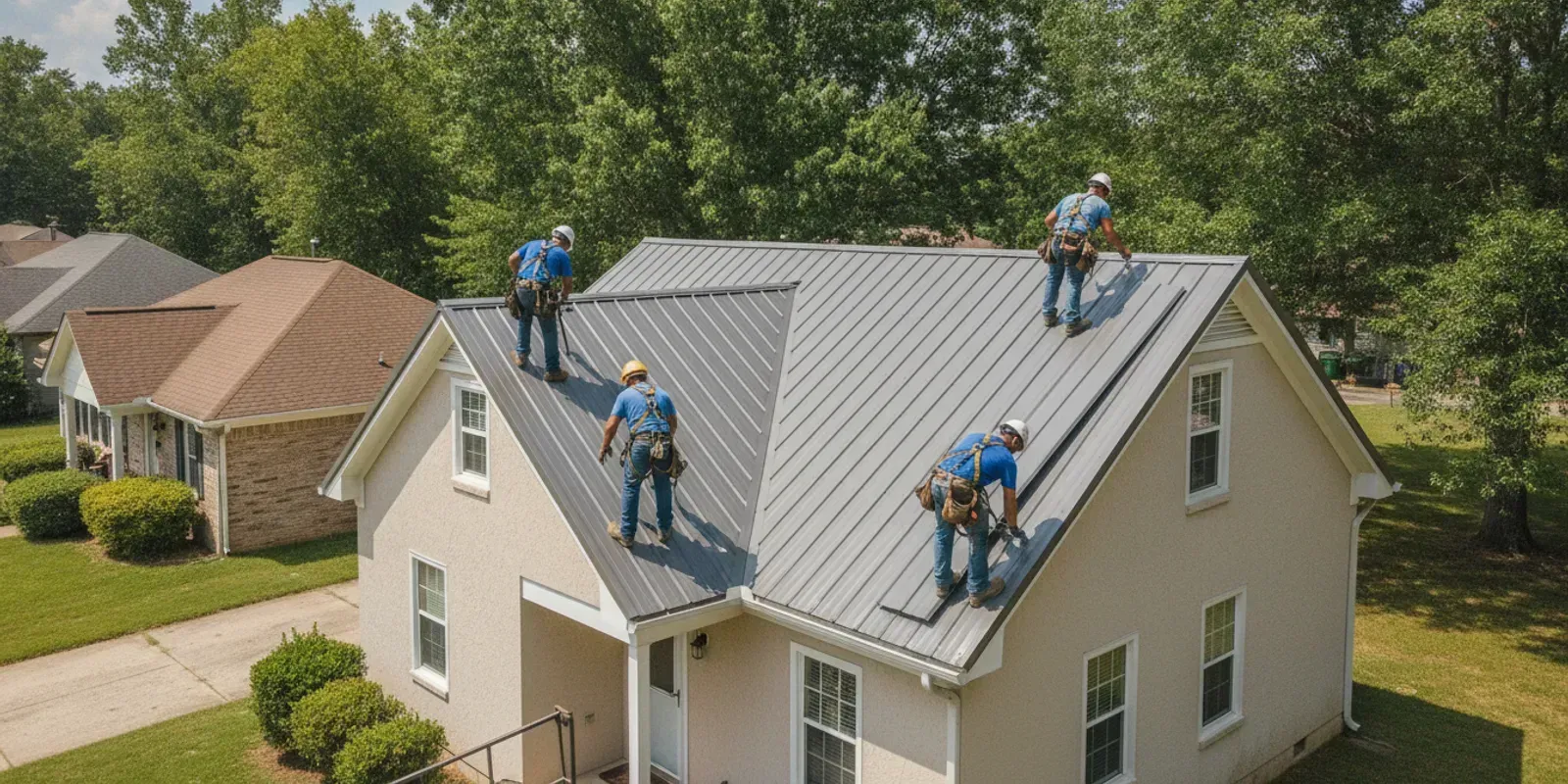
Ever wonder what you’re actually paying for in a roof replacement? The cost is primarily split between two categories: labor and materials. Surprisingly to some, labor makes up the biggest piece of the pie, typically accounting for about 60% of the total project cost. This covers the skilled, experienced crew that safely removes your old roof and installs the new one according to strict industry standards.
The remaining 40% goes toward the physical materials, including the shingles, underlayment, flashing, and ventilation components. Investing in quality labor from a certified and insured team ensures those materials perform as they should for decades. When you work with an experienced company, you’re paying for the peace of mind that comes with expert craftsmanship and strong warranties.
What Factors Change the Price of a New Roof?
When you start gathering quotes for a new roof, you'll quickly notice that the prices can vary quite a bit. That’s because a roof replacement isn't a standard, off-the-shelf purchase. The final cost is a tailored figure based on your specific home. Several key factors come into play, from the sheer size of your roof to the style of shingles you fall in love with.
Understanding these variables will help you make sense of your estimate and see exactly where your money is going. It’s not just about buying materials; it’s about investing in a complex system designed to protect your home for decades. Let's walk through the main elements that shape the price of a new residential roof so you can feel confident in your decision.
Your Roof's Size and Pitch
The most straightforward factor in your roof’s cost is its size. We measure roofs in "squares," where one square equals 100 square feet. The more squares your roof has, the more materials and labor are needed. For example, a standard 2,000-square-foot home might need 22 to 25 squares of shingles to cover the entire surface and account for cuts and waste. Beyond size, the pitch, or steepness, of your roof plays a big role. A steeper roof requires more safety precautions and specialized equipment for our crew to work on, which increases the labor time and, consequently, the cost.
Local Labor Rates
Labor is a huge piece of the puzzle, often making up around 60% of the total project cost. These rates can differ based on your location and the experience level of the roofing team. While it might be tempting to go with the lowest bidder, remember that a quality installation is crucial for the longevity of your roof. When you hire a certified and insured team, you're paying for expertise, safety, and peace of mind. Our experienced professionals at Total Roof Solutions are trained to handle every detail correctly, ensuring your new roof is built to last and backed by strong warranties.
Your Roof's Complexity
Is your roof a simple, flat plane, or does it have multiple angles, dormers, and valleys? The complexity of your roof's design directly impacts the price. Features like chimneys, vents, and skylights require extra time and skill to work around. Each one needs precise cutting and fitting of materials, along with special flashing to create a watertight seal. A roof with many facets and interruptions is more labor-intensive than a straightforward gable roof, which is reflected in the final quote. Our team takes the time to ensure every one of these details is handled with care to prevent future leaks.
The Shingles You Choose
The materials you select are another major cost factor, and you have plenty of options. Asphalt shingles come in a few main categories. Basic 3-tab shingles are the most budget-friendly choice. A popular upgrade is architectural shingles, which are thicker, more durable, and create a beautiful dimensional look. For a high-end appearance, luxury shingles mimic the look of natural slate or wood shakes without the high maintenance. As an Owens Corning Platinum Preferred contractor, we can help you explore a wide range of high-quality options that fit your budget and aesthetic goals.
Comparing Asphalt Shingle Types and Costs
When you hear "asphalt shingles," you might picture one specific style, but there's a whole range of options to fit your home's look and your budget. The shingles you pick are one of the biggest factors in your roof replacement cost, so it helps to know what you’re choosing from. Each type offers a different balance of price, appearance, and longevity. Let's break down the three main categories so you can find the perfect fit for your home.
3-Tab: The Basic Choice
If you're looking for a straightforward, budget-friendly option, 3-tab shingles are a classic choice. They have a flat, uniform appearance that provides a clean, consistent look for any home. Because they are the most economical option, they are perfect for homeowners focused on keeping initial costs down or for rental properties. You can expect to pay between $3.50 and $5.00 per square foot. For a typical 2,000-square-foot roof, this usually adds up to a total project cost between $7,000 and $11,000. While they are a solid, affordable choice, they don't offer the same lifespan as more advanced options, which is an important trade-off to consider.
Architectural: The Popular Upgrade
Architectural shingles are the go-to for most homeowners today, and for good reason. They offer a fantastic balance of curb appeal, durability, and value. Unlike the flat look of 3-tab shingles, architectural shingles have a dimensional, layered appearance that can mimic the look of more expensive materials like wood shake. This added texture makes your roof stand out. They are thicker and more durable, making them a smart investment for your residential roofing project. The cost generally runs from $4.00 to $9.00 per square foot, putting a 2,000-square-foot roof in the $7,500 to $16,000 range. They are a great middle-ground that doesn't compromise on quality.
Luxury: The Premium Look
For homeowners who want to make a statement, luxury shingles deliver maximum performance and a high-end aesthetic. These are the top-of-the-line asphalt shingles, designed to replicate the appearance of natural slate or cedar shake without the high cost and maintenance. They are the thickest and heaviest option, offering superior protection against the elements and a truly distinctive look that can significantly enhance your home's curb appeal. This premium quality comes with a higher price tag, typically between $8.00 and $17.00 per square foot. A full replacement on a 2,000-square-foot home could range from $13,600 to over $28,900, reflecting their superior design and materials.
How They Compare in Durability
When you're investing in a new roof, you want it to last. Durability is where the differences between shingle types really become clear. Budget-friendly 3-tab shingles generally have a lifespan of about 20 to 25 years. That’s a solid run, but architectural shingles take it a step further. Thanks to their thicker construction, they typically last around 30 years, giving you more peace of mind and a longer period before you need to think about another replacement. Luxury shingles, being the most robust, often last even longer. The upfront cost is higher for architectural and luxury options, but their extended lifespan often makes them a better long-term value.
How Your Roof's Shape and Size Affect the Final Bill
When you get a quote for a new roof, you’ll notice it’s not just a simple price-per-square-foot calculation. Two homes with the exact same square footage can have wildly different replacement costs. That’s because the final price tag is heavily influenced by your roof’s specific size, pitch, and complexity. These factors determine how much material is needed and, just as importantly, how much labor is involved. A simple, single-gabled roof on a ranch-style home will almost always be less expensive to replace than a complex roof on a Victorian home with multiple dormers and turrets, even if the houses are the same size. Understanding how these elements work together will help you make sense of your estimate and see where your money is going. It's about more than just the shingles; it's about the unique character of your roof and the skill required to do the job right. From the steepness of the slopes to the number of chimneys and skylights, every detail contributes to the final bill. This knowledge empowers you to have a more informed conversation with your contractor and appreciate the craftsmanship that goes into a durable, long-lasting roof.
Sizing Up Your Home's Footprint
The most straightforward factor in your roof’s cost is its total surface area. A larger roof requires more shingles, underlayment, and other materials, which naturally increases the price. For example, a typical 2,000-square-foot home often needs around 22 to 25 "squares" of roofing material (one square equals 100 square feet). This extra material accounts for cuts and waste. While national averages for a full replacement can range from $10,000 to $20,000, the size of your residential roofing project is the primary starting point for any estimate. The bigger the footprint, the more you can expect to invest in both materials and the time it takes for a professional crew to complete the job.
The Challenge of Steep Slopes and Access
The pitch, or steepness, of your roof plays a huge role in labor costs. A gently sloped roof is relatively easy and safe for a crew to walk on and work from. However, a steep roof is a different story. It requires more safety equipment, specialized techniques, and careful maneuvering, which slows down the installation process. This increased difficulty and risk translate directly into higher labor expenses. Similarly, if your home is difficult to access with equipment or has extensive landscaping that needs protection, the crew will need to spend extra time setting up and taking precautions. These logistical challenges are always factored into the final quote.
Working Around Dormers, Valleys, and Skylights
A simple, flat roof plane is much quicker to shingle than one with multiple angles and features. If your roof has dormers, valleys, chimneys, or vents, each one adds a layer of complexity to the job. These elements require precise cutting, fitting, and sealing to ensure a watertight finish. Technicians must install flashing, a thin metal material, around each protrusion to direct water away and prevent leaks. This detailed work takes significantly more time and skill than laying shingles in a straight line. The more complex your roof’s architecture, the more labor hours will be needed to handle the intricate details and ensure every corner is protected.
What "Hidden" Costs Should You Plan For?
When you get a quote for a new roof, the main figures usually cover materials and labor. But a full roof replacement is a major construction project, and other costs can pop up once the work begins. A trustworthy contractor will always prepare you for these possibilities, but knowing what to expect can help you budget more accurately and avoid surprises. Think of these potential expenses not as "hidden fees" but as necessary investments in the structural integrity and longevity of your home.
Many of these costs are impossible to predict with 100% certainty until the old roofing material is removed. For example, a roofer can't see the condition of the underlying wood deck until they tear off the old shingles. Planning for these variables from the start ensures you have a contingency fund ready. This way, you can address any issues properly without cutting corners, leading to a safer, more durable residential roof that truly protects your home. From disposal fees to unexpected repairs, let's walk through the most common costs that can affect your final bill.
Tearing Off and Disposing of the Old Roof
Before your beautiful new shingles can be installed, the old ones have to go. This tear-off process is a crucial first step that involves labor, equipment, and responsible disposal of the old materials. The cost for this service can range from $1,000 to $2,000 or more, depending on the size and complexity of your roof. While it might seem like an extra expense, removing the old shingles is non-negotiable for a quality job. It allows your roofing team to thoroughly inspect the underlying roof deck for any damage that needs to be addressed before the new materials are laid down. This step ensures your new roof has a solid foundation.
Repairing the Roof Deck
The roof deck is the layer of wood that serves as the foundation for your entire roofing system. Over the years, small leaks or poor ventilation can cause this wood to rot, soften, or become damaged. You can't know the true condition of your roof deck until the old shingles are removed. If your contractor finds issues, these repairs are essential for the stability and performance of your new roof. Depending on the extent of the damage, fixing the roof deck can add $1,000 to $4,000 to your project cost. It’s a necessary investment to prevent future problems and ensure your new roof lasts as long as it should.
Local Permits and Inspection Fees
A roof replacement is a significant structural project, and most local municipalities require a permit to ensure the work meets safety and building codes. The cost of these permits can vary, but they typically fall between $150 and $500. An experienced and professional contractor, like our team at Total Roof Solutions, will handle the entire permitting process for you, from application to final inspection. While the fee itself is a line item on your final invoice, it gives you peace of mind knowing your new roof is fully compliant with local regulations, which is crucial for insurance and future home resale.
Updating Gutters, Flashing, and Vents
Your roof is more than just shingles; it's a complete system designed to protect your home from the elements. Components like flashing (the metal strips around chimneys and vents), vents, and gutters play a critical role in directing water away and allowing your attic to breathe. If these elements are old or damaged, it’s wise to replace them during your roofing project. For example, new roof flashing is vital for preventing leaks in vulnerable areas. It's far more cost-effective to update these components while the roof is already being worked on. We can also install new gutters and gutter guards to create a comprehensive system that protects your entire home.
Understanding Labor Costs
When you get a quote for a new roof, a large portion of the cost goes toward labor. This isn't just for the crew's time on site; it covers their experience, specialized training, insurance, and the safety equipment needed to do the job right. Labor costs aren't a flat rate, either. They can change quite a bit based on where you live, the time of year, and the specific challenges your roof presents. Think of it as paying for craftsmanship. An experienced team knows how to handle unexpected issues and ensure every shingle is perfectly placed for maximum protection. Understanding what drives these costs helps you see the true value in a professional installation from a team of local experts.
How Location Affects Labor Rates
Just like the price of housing or gas varies from one city to another, so do roofing labor rates. The cost of living in the Atlanta metro area, for example, directly influences wages for skilled roofers. Higher demand for qualified crews in a busy market can also play a part. Beyond wages, local factors like building codes and permit requirements can add to the time and administrative work involved in a project, which gets factored into the labor cost. A contractor who is familiar with the specific regulations in counties from Henry to Fulton will handle this smoothly, but it’s still a necessary part of the overall price.
Does the Time of Year Matter?
Timing your roof replacement can definitely impact the price. Roofing has a peak season, which usually runs from late spring through fall when the weather is most predictable. During these busy months, contractors have full schedules, and prices tend to be firm. In the off-season, typically winter, things slow down. With less demand, some roofing companies may offer more competitive pricing to keep their crews working. If your roof isn't in critical condition and you can be flexible with scheduling, asking about an off-season installation could lead to some savings. The trade-off, of course, is the less predictable Georgia winter weather, which can sometimes cause delays.
Why a Complex Job Costs More
Not all roofs are created equal, and a more complex design requires more time, skill, and safety precautions. A simple, low-slope gable roof is far more straightforward to work on than a steep, multi-faceted roof with dormers, valleys, and skylights. Steep pitches require extra safety harnesses and careful maneuvering, which slows down the installation process. Features like chimneys and vents need precise cutting and flashing to prevent leaks, demanding a higher level of craftsmanship. This extra attention to detail on a complex residential roofing project ensures a durable, watertight result, but it naturally increases the labor hours and the final cost.
Common Roof Cost Myths to Ignore
When you’re facing a major home project like a roof replacement, it’s easy to get overwhelmed by all the information out there. Friends, family, and neighbors all have opinions, and a quick internet search can leave you with more questions than answers. Unfortunately, a lot of this "common knowledge" about roofing costs is based on myths that can lead to confusion and poor financial decisions. Believing these misconceptions can cause you to overpay, underestimate your budget, or even take on dangerous risks.
That’s why it’s so important to separate fact from fiction. Understanding what really goes into the price of a new roof helps you become a smarter, more confident homeowner. It allows you to evaluate quotes fairly, ask contractors the right questions, and make choices that protect your investment for years to come. Let’s clear up some of the most common myths about roofing costs so you can approach your project with clarity and peace of mind.
Myth: It's All About Square Footage
It seems simple enough: a bigger roof should cost more, and a smaller roof should cost less. While the size of your roof is definitely a factor, it’s far from the only thing that determines the final price. The idea that cost is based solely on square footage is a huge oversimplification. In reality, the overall cost can vary widely depending on the type of shingles you choose, the complexity of your roof’s design (think steep slopes, dormers, and valleys), and local labor rates. Square footage gives you a starting point, but it doesn't tell the whole story of your project's scope.
Myth: The First Quote Is the Final Price
When you get that first estimate, it can be tempting to just sign on the dotted line and get the project started. However, accepting the first quote you receive is rarely a good idea. Prices can vary significantly between different roofing companies, even for the exact same job. It is always wise to obtain several estimates to compare your options. This isn't just about finding the lowest price; it's about understanding the value you're getting. Comparing detailed quotes helps you see what each contractor includes, vet their professionalism, and ensure you’re getting quality work at a fair market rate.
Myth: DIY Will Save You Money
Tackling a home improvement project yourself can be incredibly rewarding, but replacing a roof is not the place to test your DIY skills. While the goal is often to save money, a DIY roof installation can end up costing you far more in the long run. Roofing is dangerous work that requires specialized safety equipment and training. A small mistake can lead to major leaks, structural damage, or serious injury. Furthermore, improper installation can void your shingle manufacturer’s warranty and even lower your home’s value. Hiring a professional for roofing work ensures the job is done safely, correctly, and is backed by a workmanship guarantee.
Myth: Materials Are the Biggest Expense
When you picture a new roof, you probably think of stacks of shingles. It’s a common assumption that the materials are the most expensive part of the job, but that’s usually not the case. In most professional roof replacements, labor is the biggest line item. In fact, skilled labor accounts for about 60% of the total project cost. You aren't just paying for shingles and nails; you're paying for the expertise, experience, and safety of a professional crew. Their craftsmanship is what turns a pile of materials into a durable, watertight system that protects your home, and that skill is a critical part of your investment.
How to Get the Best Value on Your New Roof
Getting the best value on a new roof isn't just about finding the lowest price. It’s about making a smart, long-term investment in your home’s safety and curb appeal. A high-value roof combines durable materials, expert installation, and a fair price, giving you confidence and peace of mind for decades. When you approach your roof replacement with a clear strategy, you can ensure you get a fantastic return on your investment without overspending. It all comes down to knowing what to look for and what questions to ask. Here are four key steps to make sure you get the most for your money.
Get Several Detailed Quotes
Always get several estimates from different roofing companies to ensure you get good quality work at a fair price. This isn't just about comparing the bottom-line number; a detailed, itemized quote is a sign of a professional contractor. It should clearly break down the costs for materials, labor, tear-off of the old roof, disposal fees, and any necessary permits. Comparing these detailed proposals helps you understand exactly what each company is offering. Be wary of any quote that seems unusually low, as it might signal cut corners or subpar materials. A thorough roof inspection and quote process is the first step toward a successful project.
Time Your Project for Better Pricing
Did you know the time of year you replace your roof can affect the cost? The busiest seasons for roofers are typically late summer and fall, as homeowners rush to prepare for winter weather. If your roof isn't in critical condition, try to schedule your replacement in late winter or early spring. Contractors might offer better prices during these slower times because their schedules are more open. Planning ahead gives you more flexibility and leverage. By avoiding the peak season rush, you not only have a better chance at a more competitive price but also more focused attention from your installation crew.
Choose Materials That Last
It can be tempting to choose the cheapest shingles to lower your upfront cost, but this rarely pays off in the long run. The best value comes from choosing a strong roofing system to protect your home, even if it costs more initially. High-quality materials, like the architectural shingles we install, are designed to withstand harsh weather and last for decades. This durability means fewer repairs and a longer lifespan before you need another replacement. Investing in quality materials from the start is one of the smartest financial decisions you can make for your residential roofing project, saving you money and stress down the road.
Hire a Licensed and Insured Pro
This might be the most important tip of all: always hire a licensed, bonded, and insured professional. This protects you from liability if a worker is injured on your property and ensures the work meets local building codes. A reputable contractor will have certifications, like our status as an Owens Corning Platinum Preferred contractor, which means we're recognized for our high standards of craftsmanship and professionalism. Hiring an unvetted handyman might seem cheaper, but it can lead to costly mistakes, voided material warranties, and major headaches. Working with a proven pro guarantees the job is done right the first time.
How Can You Pay for Your New Roof?
A new roof is one of the most important investments you can make in your home, but that doesn't mean you have to pay for it all at once. Figuring out the finances for a large project can feel like a big hurdle, but you have several great options. From traditional loans to working directly with your contractor or your insurance company, there are paths available to make your roof replacement manageable and stress-free. Let's walk through the most common ways to fund your project so you can choose the one that works best for your budget and your peace of mind.
Exploring Traditional Financing
When you’re looking at a significant home improvement, traditional financing is a common route. The average asphalt roof replacement can cost between $9,500 and $11,000, so spreading that expense over time is often a smart move. You can talk to your bank or credit union about a personal loan, which gives you a lump sum of cash to pay your contractor directly. Another popular choice is a home equity line of credit (HELOC), which lets you borrow against the equity you’ve built in your home. Both options allow you to get the quality roof you need now while making predictable monthly payments.
Ask About Contractor Financing
Did you know your roofing contractor might be able to help with the financing? Many established companies, including us at Total Roof Solutions, offer in-house financing plans to make the process as simple as possible. This is often the most convenient option because you can handle the project details and the payment plan with one team. Some contractors even provide promotional offers, like 0% interest for the first year, which can save you a lot of money. When you get your estimate, always ask about the flexible financing options available. It’s a straightforward way to get your project started without delay.
Check Your Insurance Coverage
Before you assume the full cost is on you, take a look at your homeowner's insurance policy. If your roof needs to be replaced because of specific damage from an event like a hailstorm, high winds, or a fallen tree, your insurance may cover a significant portion of the cost. It’s important to know that policies generally don’t cover replacements needed simply because the roof is old or hasn't been maintained. The best first step is to call your insurance agent to understand your coverage and find out what you need to do to file a claim. This one phone call could save you thousands.
Related Articles
- Choosing the Right Roofing Materials for Lasting Quality
- How to Get Insurance to Pay for Roof Replacement in Georgia
- Average Cost of New Gutters: A Comprehensive Pricing Guide for 2025
- What to Know Before Replacing Your Roof: A Comprehensive Guide
- Seamless Gutter Installation Cost Guide: Pricing Insights for Homeowners
Frequently Asked Questions
How much should I realistically budget for a new roof in the Atlanta area? While national averages suggest a range of $7,500 to $16,000, the final cost for your home depends on a few key things. The specific type of shingle you choose, the size and steepness of your roof, and its overall complexity all play a major role. The best way to get a precise number is to have a professional conduct a thorough inspection and provide a detailed quote tailored to your home's specific needs.
Can I just install new shingles over my old ones to save money? While it might seem like a cost-effective shortcut, we strongly advise against it. Placing a new layer of shingles over an old one adds significant weight to your roof's structure and can trap heat and moisture, shortening the life of your new shingles. More importantly, it prevents us from inspecting the underlying wood deck for rot or damage, which is a critical step for ensuring your new roof has a solid foundation.
Why does labor make up such a large part of the cost? Labor typically accounts for about 60% of the total cost because you are investing in professional craftsmanship. This covers the skill, safety training, and insurance of an experienced crew. Proper installation is what ensures your high-quality materials perform correctly for decades, protecting your home from leaks and weather damage. You're paying for the peace of mind that comes with knowing the job was done right.
Will my homeowner's insurance pay for my new roof? It depends on the reason for the replacement. Insurance policies typically cover damage from specific events like storms, hail, or high winds. They generally do not cover a replacement that is needed simply due to the roof's old age or lack of maintenance. Your best first step is to review your policy or call your insurance agent to understand your specific coverage before starting the process.
Besides the shingles, what other costs should I prepare for? A complete roof replacement is more than just the shingles. Your estimate should also account for the removal and disposal of the old roofing materials. You should also budget for potential repairs to the underlying wood deck, which can only be assessed after the old roof is torn off. Finally, costs for local permits and updating components like flashing or vents are standard parts of a quality roofing project.